


Arrábida Natural Park and Setúbal
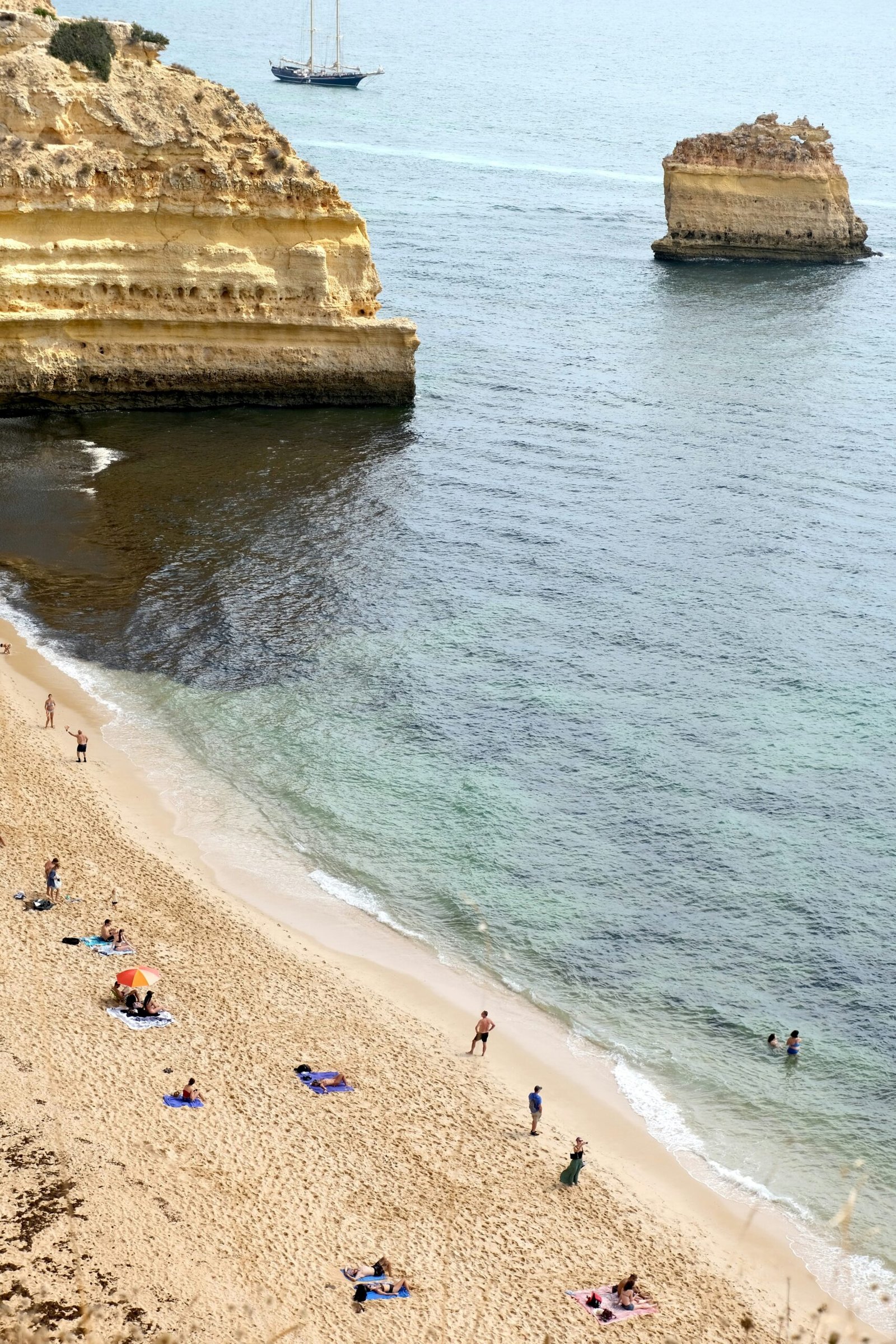
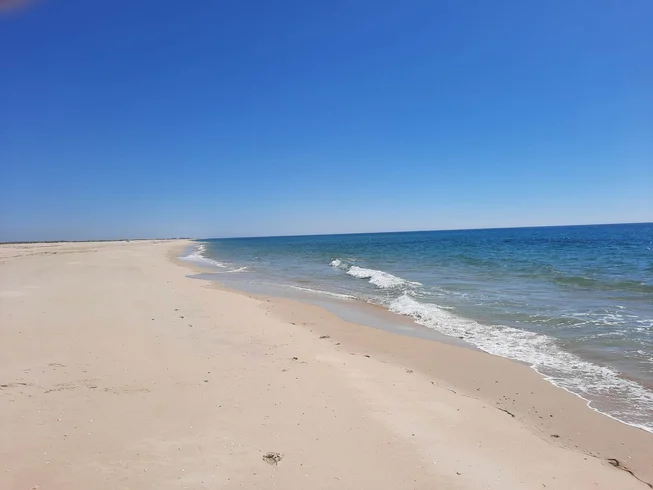
The Arrábida peninsula is July’s best-kept secret in Portugal. Forty-five minutes south of Lisbon, the limestone ridge of the Serra da Arrábida drops steeply to turquoise water above white sand beaches that the park’s protected status keeps almost entirely free of development. In July, when the Algarve is at maximum tourist density, Arrábida’s beaches are accessible only by boat or a long cliff walk — which means they stay genuinely quiet even in peak summer.
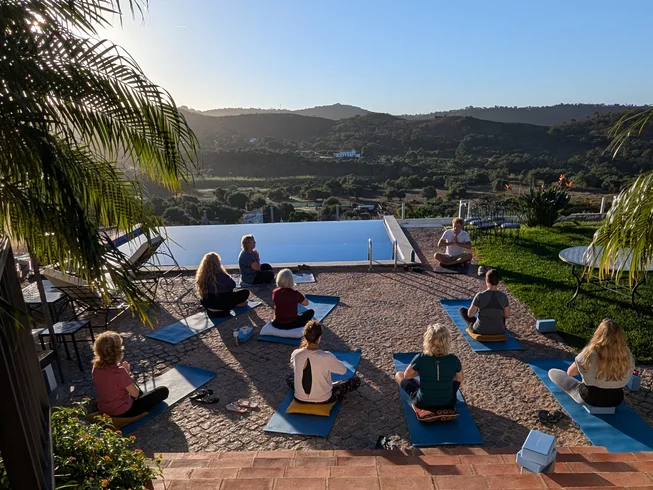
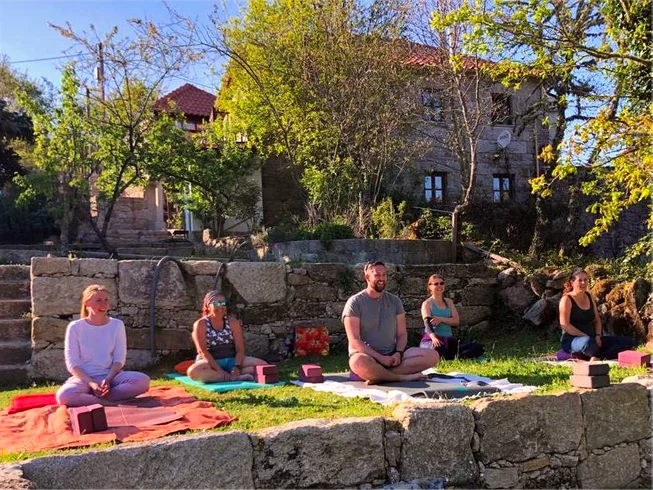
The water temperature at Arrábida in July reaches 21-22°C — the warmest of the year, clear to the bottom at 10 metres in the sheltered coves, and calm in a way the open Atlantic coast is not. Retreat programmes based here in July use morning yoga on cliff-edge terraces facing the bay, afternoon boat trips to the hidden coves, and snorkelling in the clear Arrábida water as core activities rather than optional extras.
The Setúbal fish market is one of the best in Portugal and worth a morning excursion from any retreat base in the area: the squid, sole, and sea bass landed that morning from the Atlantic, the moscatel de Setúbal at the wine shop on the corner, and the covered market’s cheese and olive oil stalls that supply the Setúbal peninsula’s restaurants and households.
The Western Algarve: Aljezur and the Costa Vicentina
The western Algarve in July is a different country from the eastern Algarve in July. While Albufeira and the Algarve resort towns are at maximum tourist density, the Costa Vicentina — protected by national park status — stays genuinely cool. The Alizé winds that blow almost daily along this stretch of Atlantic coast keep Aljezur and Odeceixe at 22-25°C when the interior of Portugal is at 38-42°C. The beaches here in July are busy by Costa Vicentina standards, which means 200 people on a beach that is two kilometres long.
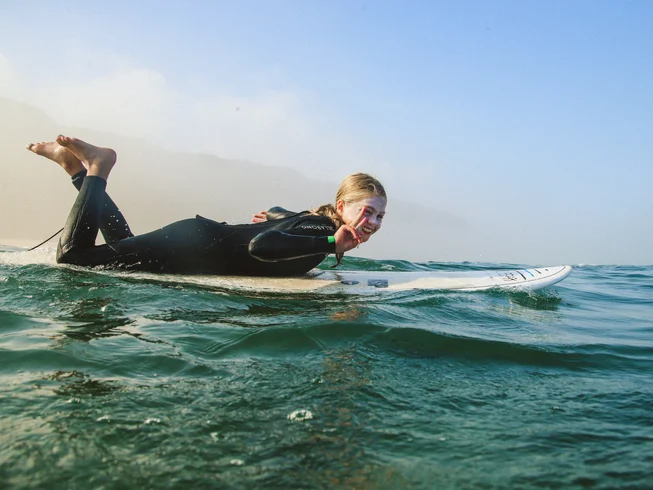
Beginner surf on the Costa Vicentina in July is at its most accessible: the swells are at their summer minimum, the waves are gentle and consistent, and the water temperature at 19-20°C is comfortable with a light wetsuit or without one for shorter sessions. Retreat programmes running here in July calibrate specifically for the summer surf conditions — smaller waves mean more time on the board for beginners, faster progress, and less time being held underwater recovering from wipeouts.
For everything the Algarve offers across the year, our yoga retreats in the Algarve guide covers the three distinct areas of the region.
Viana do Castelo and the Lima Valley
Viana do Castelo in July is the coolest coastal city in mainland Portugal. The north Atlantic facing coast between Porto and the Spanish border receives weather systems that keep temperatures at 22-26°C when the south is at 35-40°C — genuinely summer weather without the heat that makes July retreats in the Alentejo or Lisbon area logistically demanding.
The Lima Valley inland from Viana is one of Portugal’s most beautiful river landscapes: the river running through terraced quintas producing vinho verde, medieval bridges connecting villages that have barely changed in two centuries, and the Ponte de Lima — the oldest town in Portugal, with a Roman bridge, a riverside market, and a scale of human activity that makes it feel more like a large village than a town.
Retreat programmes in the Minho in July combine yoga with vinho verde tastings at family quintas, river walks, and the particular quality of northern Portuguese hospitality that is less polished than the tourist south but more genuine. July is also when Viana do Castelo’s Festas de Nossa Senhora da Agonia — one of the most elaborate folk festivals in Portugal — takes place, with traditional costumes, gold jewellery, and processions that are genuinely ancient in character.
Comporta
Comporta in July is at the peak of its season and the beach scene here is unlike anything else in Portugal. The combination of empty white sand, pine forest, rice paddies, and the design-conscious visitors who have discovered Comporta as Portugal’s answer to Comporta (it gets compared to Saint-Tropez, which is wrong in almost every direction but captures the scale of ambition) creates an atmosphere that is simultaneously relaxed and quietly stylish.
Yoga retreat programmes in Comporta in July run small groups and early mornings — practice at 7am on the beach before the July heat builds, followed by a slow communal breakfast, the middle of the day in the shade or the estuary, and an evening session as the temperature drops. The Sado estuary in July is one of Portugal’s great natural assets: dolphins resident year-round, flamingos on the mudflats, the rice paddies green and full, and the specific quality of water that is warm, calm, and enclosed rather than exposed Atlantic.


