
Marrakech doesn’t make sense on paper as a wellness destination. Yet behind every anonymous door in the medina lies a riad — a hidden courtyard of fountains, orange trees, and silence so deep you can hear your own breathing.
This is where yoga retreats in Marrakech exist: in secret sanctuaries where the city’s intensity becomes backdrop, not distraction.


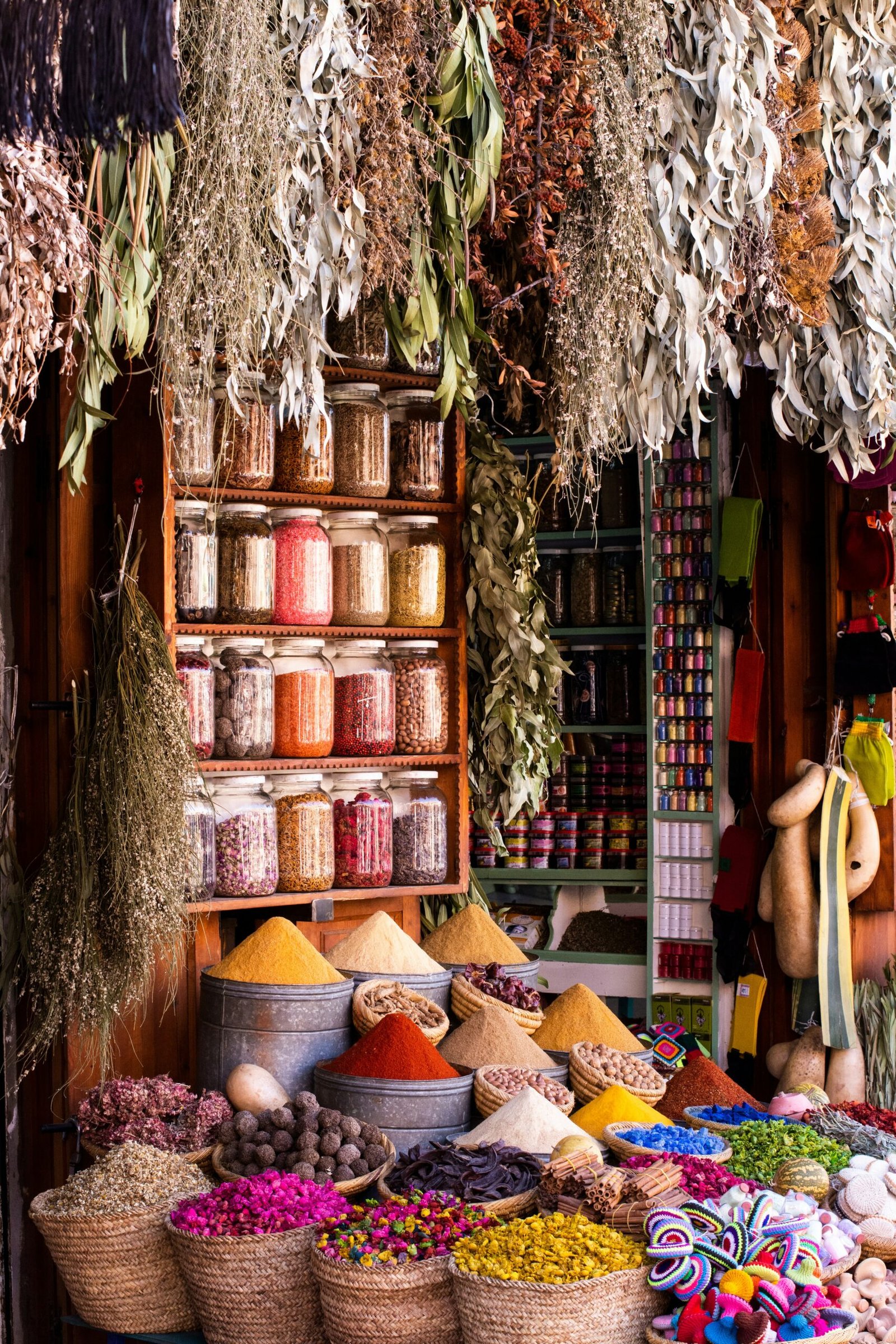
Marrakech doesn’t make sense on paper as a wellness destination. It’s loud, chaotic, overwhelming—a city where motorbikes weave through pedestrian-packed alleys, where vendors call out in four languages, where the central square transforms nightly into a circus of food stalls, storytellers, and snake charmers. The sensory assault is relentless: the smell of leather and spices, the riot of colors in textile shops, the cacophony of haggling and music and prayer calls echoing from a hundred mosques.
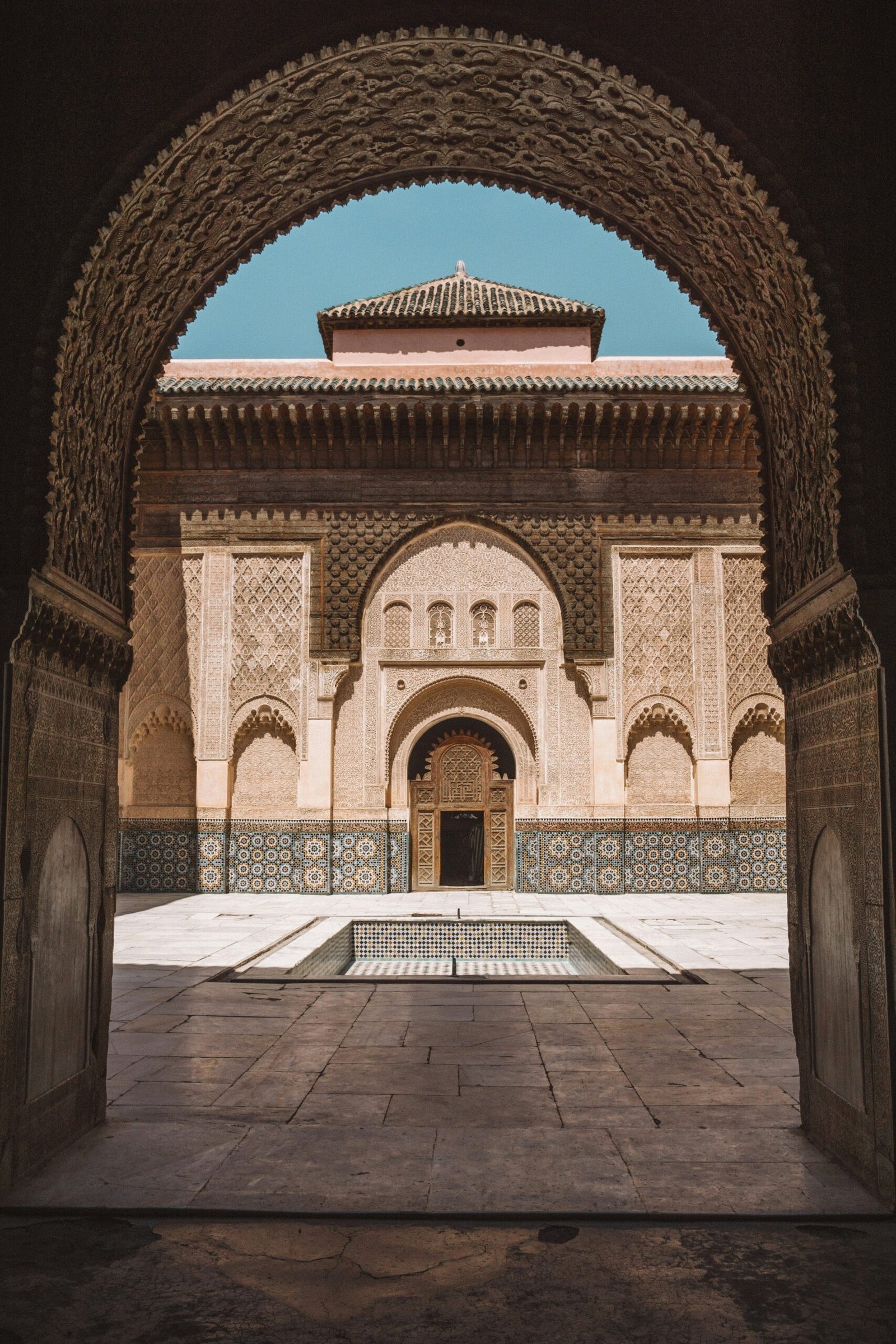
Yet behind every anonymous door in these labyrinthine streets lies the possibility of a riad—a traditional Moroccan house built around an interior courtyard, a secret garden invisible from outside. Step through the right doorway and the chaos vanishes. Suddenly you’re in a world of fountains and orange trees, of geometric tilework and carved cedar, of quiet so profound you can hear birds and water and your own breathing. This is where Marrakech’s yoga retreats exist: in these hidden sanctuaries where the city’s intensity becomes distant backdrop rather than immediate reality.
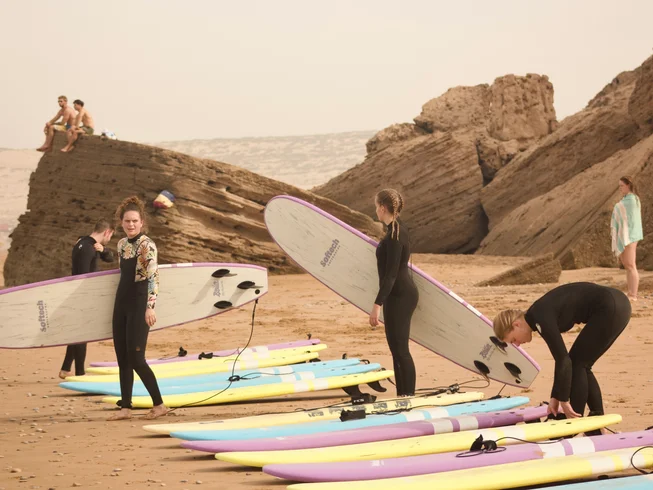
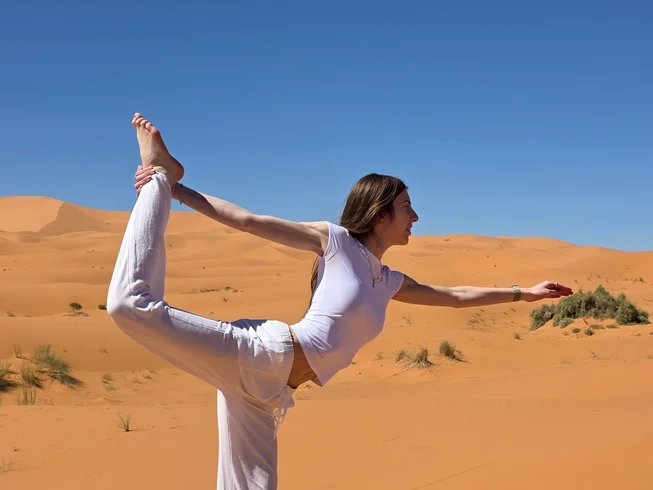
Marrakech retreat schedules typically honor Moroccan rhythms while accommodating yoga practice. Mornings begin early, before the city’s heat builds and sounds intensify. Practice might be Vinyasa flow on a rooftop as the call to prayer echoes across the medina, or gentle Hatha in a courtyard as light filters through orange trees.
Midday brings rest during the hottest hours—siesta is practical in Marrakech’s climate where summer temperatures exceed thirty-five degrees. This pause isn’t wasted time but essential rhythm, honoring the body’s need for rest and creating space for the afternoon to begin fresh. Many retreats offer hammam treatments during midday, the traditional bathhouse ritual providing its own form of purification and relaxation.
Late afternoon and evening allow for both practice and exploration. You might have restorative yoga as temperatures cool, followed by guided medina walks, visits to gardens like the Jardin Majorelle, or simply wandering souks. Dinners are events—multiple courses of Moroccan cuisine, mint tea ceremonies, conversation that extends late into cool evenings because there’s nowhere else you need to be.
Marrakech offers excellent flight connections from Europe—two to three hour flights from most major cities, making it accessible for long weekends or week-long retreats. The airport sits just outside the city, with taxis providing quick transfers to medina accommodations.
Cost of living remains reasonable despite tourism growth. Retreat packages typically range from €800 to €2,000 for a week, including accommodation in beautiful riads, excellent Moroccan cuisine, daily yoga, and often hammam treatments and excursions. This represents remarkable value for the quality of experience offered.
The medina requires alertness but isn’t dangerous. Pickpocketing exists as in any tourist area, but violent crime is rare. Women travelers report feeling safe, though modest dress and basic awareness remain important. The overwhelming aspect is sensory and social—constant vendor interactions, navigation challenges, the sheer intensity—rather than threatening.
March to May is the classic answer — warm but not hot, gardens in bloom, comfortable for both outdoor practice and medina exploration. April is the sweet spot. Wildflowers in the Atlas, roses in the Dadès Valley, and a city that feels fully alive without being overwhelmed.
September to November is equally good and often overlooked. Post-summer calm, warm days (25–30°C), cool evenings, and tourist numbers dropping noticeably from August peaks. October is arguably the best month of the year.
December to February is cooler — evenings require a layer, and mountain views come with snow on the peaks. Riads without heating can be cold at night (check before booking). But the city is less crowded, prices are lower, and there’s a particular quiet beauty to Marrakech in winter that suits reflective practice.
June to August is hot — genuinely hot, with July and August regularly hitting 38–42°C. Riads with pools become essential. Practice shifts entirely to early morning and late evening. Possible for heat-adapted travellers, but not recommended as a first visit.
Most retreats are located in three areas: the Palmeraie (palm grove just outside the city — quiet, resort-style, spacious gardens), the medina (authentic riads with rooftop terraces — walkable to souks but noisy at night), or the Atlas foothills (45 minutes from the city — mountain views, hiking, total silence). Programs typically include daily yoga (morning and evening), vegetarian or vegan Moroccan meals (tagines, couscous, salads with local spices), one or two hammam treatments, and a free day for exploring. Prices are surprisingly accessible: budget retreats start at €300–500 for 4 nights, mid-range €600–1,200 per week, luxury €1,500–3,000 per week. Always check if the retreat includes transfers from the airport (Marrakech Menara Airport) — many do. Avoid July and August unless the retreat has a pool and strong air conditioning.
Marrakech is not a single place. Where your retreat is based will define your experience as much as the program itself.
The Medina — Authenticity and immersion The old city is where Marrakech has always lived. Riads here sit inside the labyrinth — which means navigating narrow alleys to find them, but also waking to the call to prayer, smelling bread baking in communal ovens, and watching the city come alive from a rooftop terrace. Medina retreats tend to be smaller, more intimate, and more culturally embedded. The best ones have internal courtyards large enough for group practice, rooftop terraces for sunrise sessions, and staff who have worked in the same riad for decades. Jemaa el-Fnaa square is walkable, which is either an asset or a liability depending on your noise tolerance at midnight.
The Palmeraie — Space and calm Twenty minutes from the medina, the Palmeraie is Marrakech’s luxury zone — large properties set among palm groves, with pools, extensive gardens, and the kind of space that makes outdoor yoga natural rather than squeezed. Retreat centres here tend to be purpose-built rather than converted riads, which means better yoga studios, more professional equipment, and quieter nights. The trade-off is distance from the medina’s energy — you’ll need a taxi or shuttle to explore the souks.
The Atlas Foothills — Nature and silence Forty-five minutes south of the city, the first villages of the High Atlas begin. Retreat centres here offer mountain views, hiking trails from the doorstep, Berber village visits, and temperatures that drop noticeably at night. If you want to combine Marrakech city exploration with genuine nature, a retreat in the foothills lets you do both — city day trips in one direction, mountain walks in the other. If you’re drawn to this setting, our guide to yoga retreats in the Atlas Mountains covers the deeper mountain experience.
Jardin Majorelle neighbourhood — Design and calm The area around the famous Majorelle Garden and the newer YVES Saint Laurent Museum has developed into a quieter, more design-conscious part of Marrakech. Boutique riads and small hotels here attract a creative crowd. Less chaotic than the medina proper, still walkable to the city’s main sights, and with some of the best restaurants and cafes in the city nearby.
Food is inseparable from the Marrakech experience — and retreat cuisine here is genuinely exceptional, rooted in one of the world’s great culinary traditions.
Tagine is the cornerstone of Moroccan cooking — slow-cooked stews in conical clay pots that have been perfecting their technique for centuries. Lamb with prunes and almonds, chicken with preserved lemon and olives, vegetable tagines fragrant with ras el hanout — the variety is endless and the flavour is deep. Most retreats serve tagine multiple times a week, and you’ll stop treating it as repetition by day three.
Couscous appears on Fridays in traditional households and regularly on retreat menus — steamed semolina piled with vegetables and meat, served with rich broth and harissa on the side. Eating it properly, with your right hand, rolled into small balls, is a skill worth learning.
Harira is the soup that breaks the Ramadan fast and appears on every table year-round — tomato-based, thick with chickpeas and lentils, scented with coriander and cinnamon, finished with a squeeze of lemon. A bowl of harira with msemen (flaky flatbread) is one of the great simple meals.
Street food around Jemaa el-Fnaa is its own education: merguez sausages grilled over charcoal, fresh-squeezed orange juice for a few dirhams, snail soup that sounds alarming and tastes of anise and cumin, dried fruits and nuts sold by the handful. Retreats usually include a guided medina food walk — don’t skip it.
Pastilla is Marrakech’s most celebrated dish — a flaky pastry filled with spiced pigeon (or chicken), almonds, and eggs, dusted with powdered sugar and cinnamon. The sweet-savoury combination is genuinely extraordinary and unlike anything in European cooking.
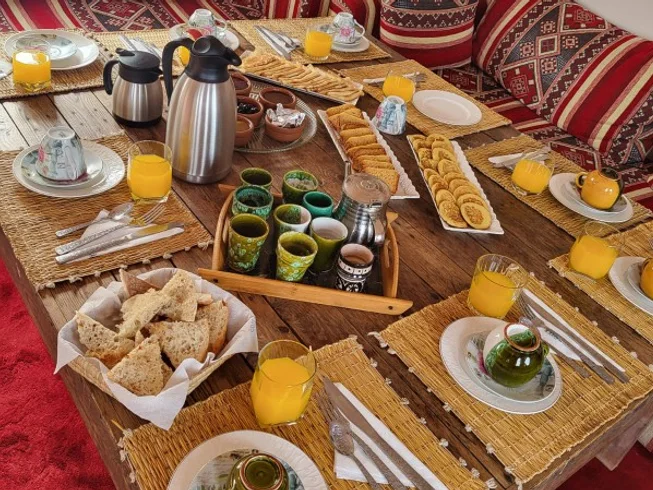
Mint tea is not a beverage but a ritual. Served in small glasses from a height that creates foam, poured multiple times, sweetened heavily and non-negotiably. Refusing tea is refusing hospitality. Accepting it, sitting with it, letting the conversation slow to the tea’s pace — this is part of what makes Marrakech feel different.
For restaurant meals beyond the riad, Nomad in the medina serves modern Moroccan cooking on a stunning rooftop. Le Jardin occupies a garden riad and is one of the most beautiful lunch spots in the city. Cafe Clock runs cooking classes alongside its menu. La Maison Arabe serves some of the finest traditional Moroccan food in the city in a room that feels like a set from a film.
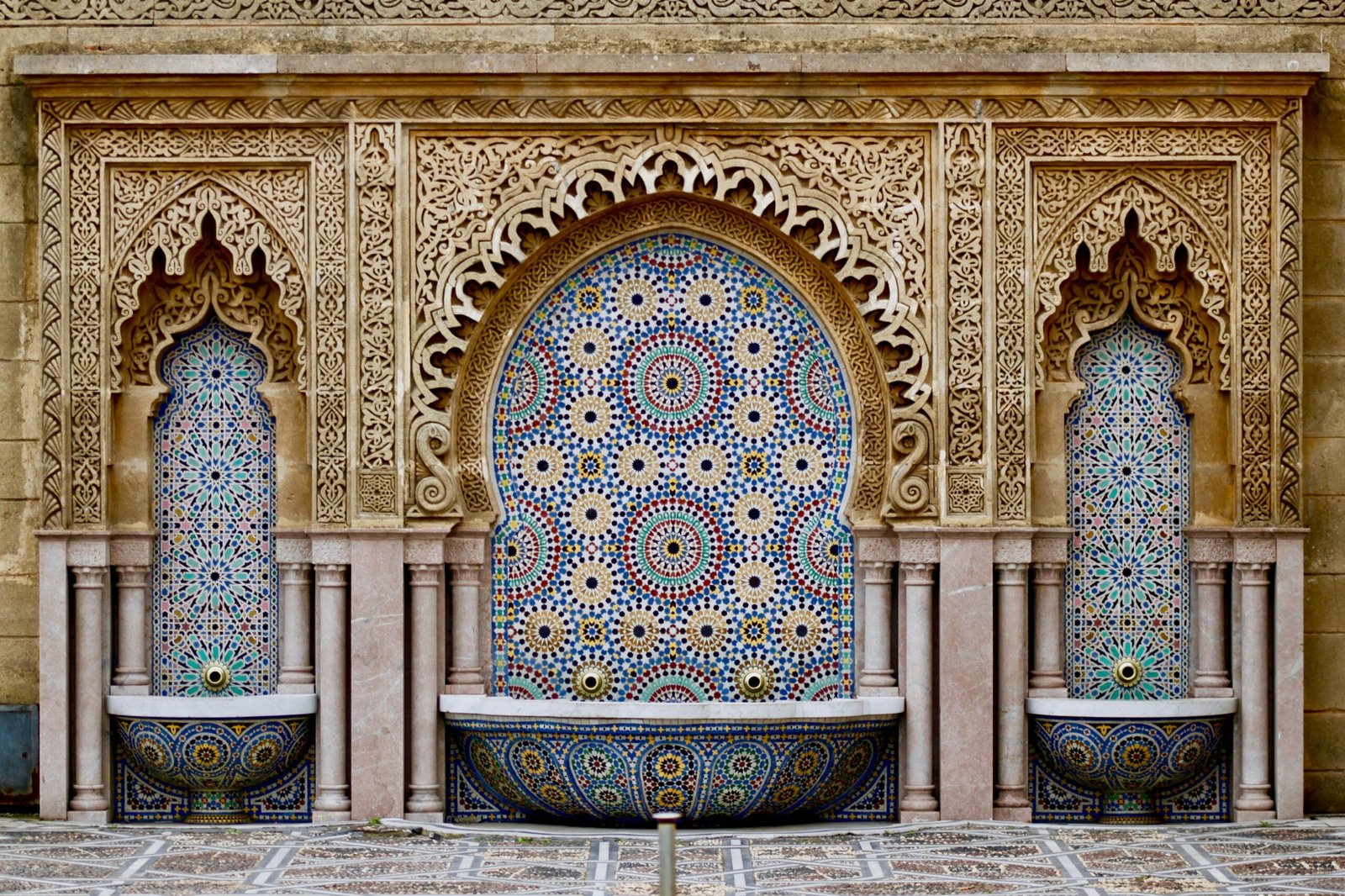
A yoga retreat in Marrakech works best when you allow yourself to be genuinely curious about the city. The practice is the anchor; the city is the teacher.
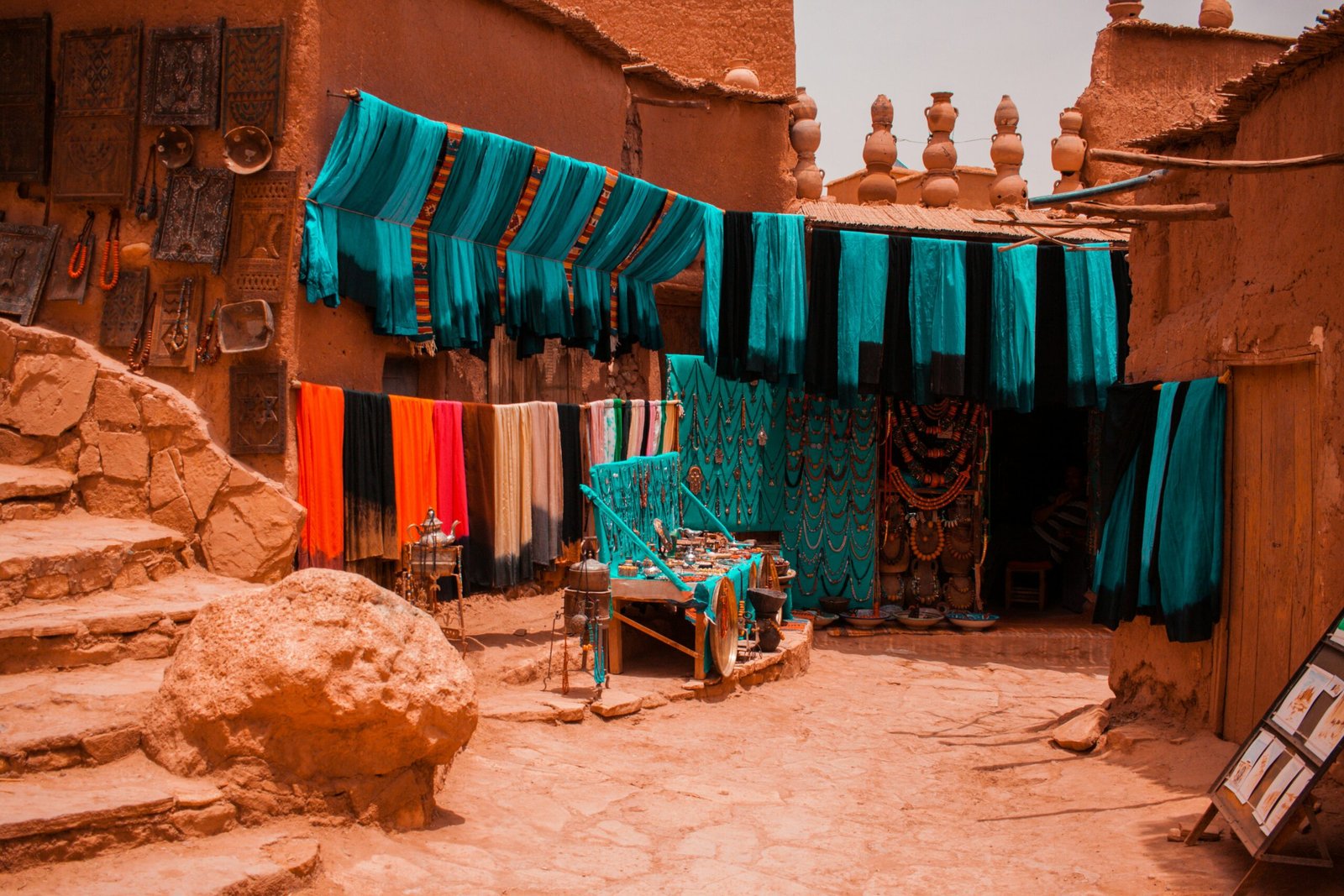
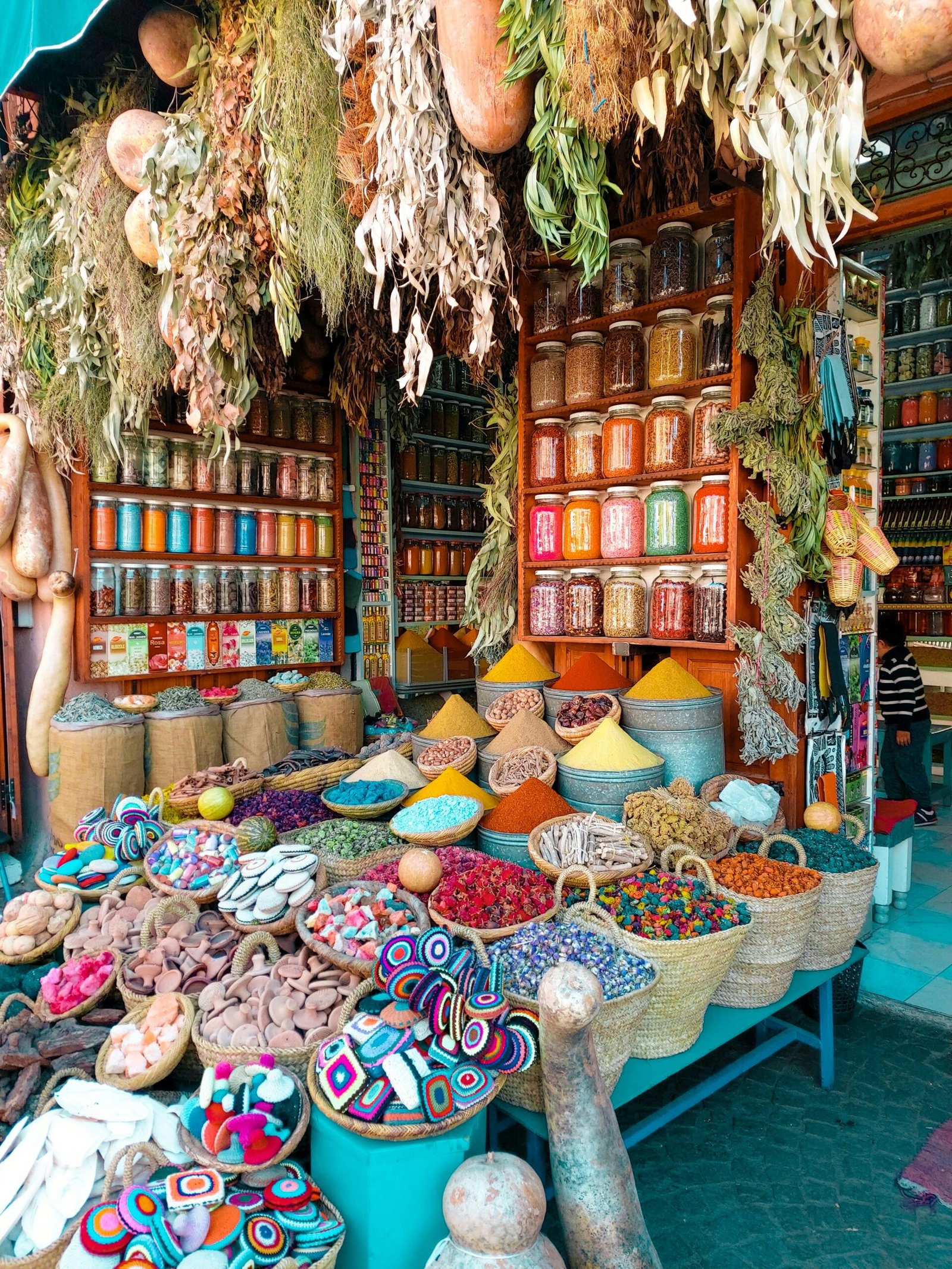
The Medina and Souks The souks are organised by trade — carpet sellers, spice merchants, leather workers, brass craftsmen, textile dyers — each quarter with its own smell and sound. Getting lost is part of the process, and eventually you stop fighting it and start enjoying it. The Mellah (old Jewish quarter) is quieter and more atmospheric. Rue des Epices for spices. Souk Cherifa for local designers. Give yourself at least two hours and no specific agenda.
Jardin Majorelle The garden created by French painter Jacques Majorelle and later rescued and restored by Yves Saint Laurent is one of the great gardens of the world — cobalt blue buildings, cacti, bamboo groves, fountains, and the particular peace that comes from somewhere intensely cared for over decades. Go early morning before the crowds arrive. The adjacent YSL Museum is worth an hour.
Bahia Palace Nineteenth-century palace built for a grand vizier, room after room of painted ceilings, carved stucco, mosaic floors, and courtyards — an architectural meditation on Moroccan craftsmanship at its height. Less visited than it deserves to be.
Hammam The hammam is not optional in Marrakech — it’s the experience that makes everything else make sense. The traditional sequence (hot room, scrub with kessa mitt, black soap, rinse, rest) takes an hour and leaves you feeling more thoroughly clean and more thoroughly relaxed than anything else on offer. Most retreats include at least one hammam session. If yours doesn’t, book one independently at Hammam de la Rose or the traditional local hammam on your street.
Day trips Ouarzazate (the gateway to the Sahara and filming location for Game of Thrones, Gladiator, and dozens of other productions) is three hours south by car. The Ouzoud Waterfalls are two hours north — Morocco’s largest waterfall, surrounded by olive trees and swimming holes. The Atlas villages of Imlil and Aroumd (starting points for Toubkal, North Africa’s highest peak) are forty-five minutes away. If you want to extend into the desert, our guide to yoga retreats in the Sahara covers what that experience looks like.
The Mellah and Dyers’ Quarter The old Jewish quarter has a different quality from the rest of the medina — quieter, with carved wooden balconies and a slightly melancholy beauty. The dyers’ quarter nearby shows the city’s artisan traditions alive and working: skeins of wool being dyed in vats of colour, hung to dry between buildings. It’s confrontational and beautiful simultaneously.
Music and Performance Jemaa el-Fnaa transforms at dusk — storytellers, acrobats, Gnawa musicians, and the general theatre of a city putting on a show. Pull up a plastic chair at a food stall, order kefta and chips, and watch it happen. Gnawa music (percussion-based, trance-inducing, rooted in sub-Saharan African traditions) is worth seeking out in dedicated venues: Cafe Clock hosts regular performances.
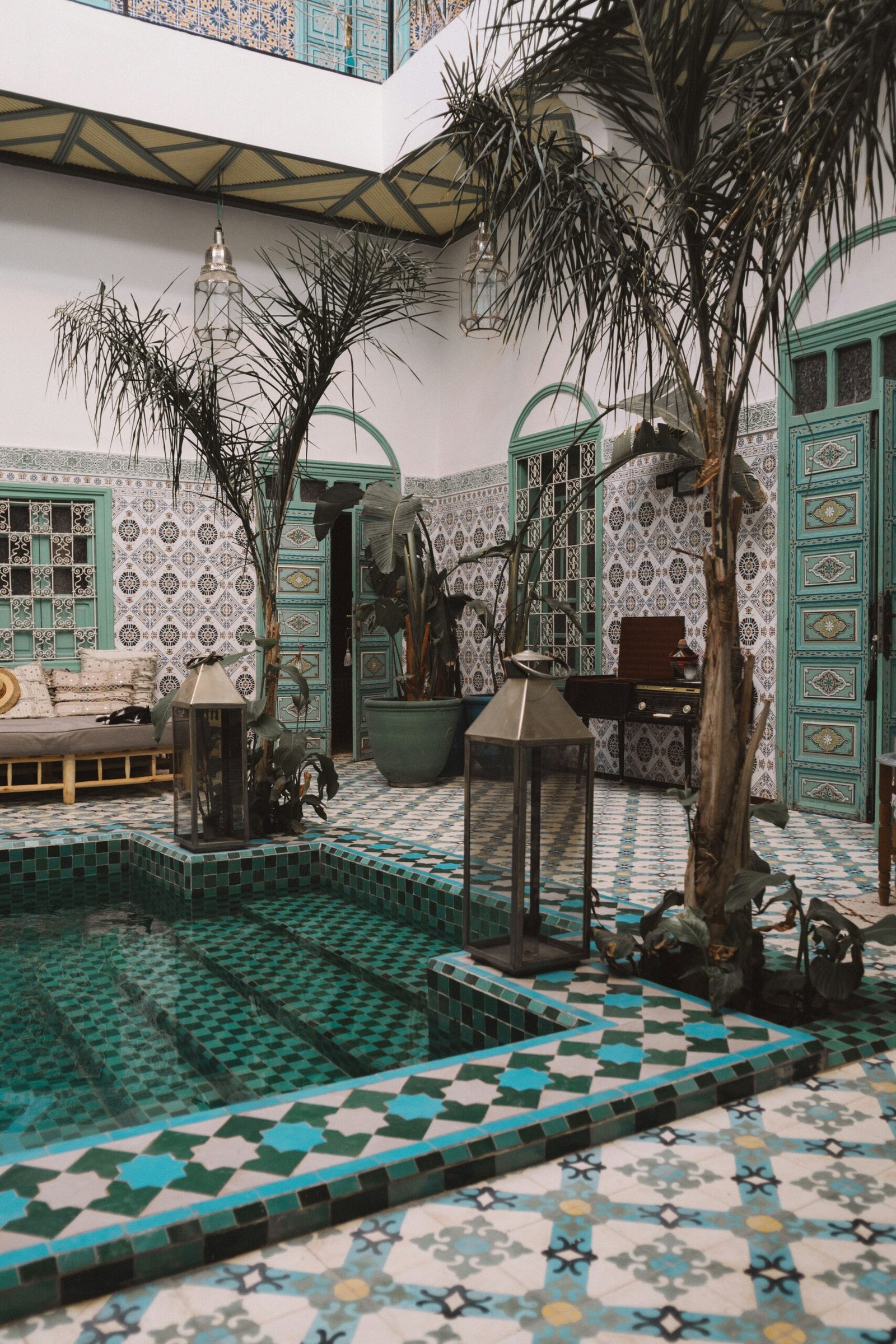
Marrakech appeals to practitioners who want cultural immersion alongside wellness, who can embrace intensity and find stillness within it rather than requiring isolation. It suits travelers comfortable with some chaos and unpredictability, who view the medina’s challenges as part of the experience rather than obstacles to it.
This is the retreat for those who’ve been to Bali and the Greek islands and want something different, more complex, less polished. For people interested in Islamic culture and architecture, in how ancient cities function, in the particular beauty that emerges from centuries of craft traditions. For those who understand that transformation sometimes requires leaving comfort zones, engaging with difference, practicing presence amid distraction.
Marrakech isn’t for everyone. Those seeking complete escape, pristine nature, or predictable Western comfort should look elsewhere. But for those it calls—and you’ll know if you’re among them—Marrakech offers yoga retreat experiences that are challenging, beautiful, culturally rich, and utterly unlike anywhere else.
Marrakech offers something no other yoga destination quite matches: the contrast. The chaos of the medina makes the stillness of the riad feel earned. The noise makes the silence deeper. The sensory overload of the souks makes the simplicity of the mat feel like relief. Nowhere else does the act of closing a door carry such transformative weight.
Practically speaking, Marrakech is also one of the most accessible destinations in our full Morocco yoga retreat guide — direct flights from London, Paris, Amsterdam, Madrid, and most major European cities take two to three hours. The airport is fifteen minutes from the medina. You can leave a grey European morning and be on a riad rooftop watching the Atlas Mountains turn pink at sunset the same day.
Do I need to be an experienced yogi to join a retreat in Marrakech? No. Most retreats in Marrakech welcome all levels, from complete beginners to advanced practitioners. When booking, check the retreat description for any specific level requirements — most list them clearly. Beginners often find that the immersive environment of a retreat accelerates their practice more than months of weekly classes at home.
Is Marrakech safe for solo travellers and women travelling alone? Yes, with normal awareness. Marrakech is a well-established tourist destination with a strong hospitality culture. Solo women travellers report feeling safe, though modest dress (shoulders and knees covered) is respectful and practical in the medina. Retreat centres provide secure, welcoming environments, and most organise group excursions so you’re rarely navigating alone unless you choose to be.
What is the best neighbourhood for a yoga retreat in Marrakech? It depends on what you want. The medina offers authenticity and cultural immersion — you’re in the city, part of it. The Palmeraie offers space, quiet, and resort-style facilities. The Atlas foothills offer nature and mountain views. Most first-time visitors prefer a medina riad for the experience, and find the mix of chaos and sanctuary precisely what they came for.
What should I pack for a yoga retreat in Marrakech? Light, breathable clothing for practice (the studios are warm). Modest clothing for medina exploration — loose trousers or skirts, light long-sleeved tops. A warm layer for evenings, especially October through March. Comfortable walking shoes that can handle cobblestones. Sunscreen. A small daypack. You can buy almost everything you forget in the medina, often at better prices than at home.
How does the hammam experience work, and is it included in retreats? The traditional hammam involves moving through progressively hotter rooms, being scrubbed with a kessa mitt (exfoliating glove) and black soap (savon beldi, made from olive oil), rinsed, and left to rest. The whole process takes 45–60 minutes. Many retreats include one or two hammam sessions in the program price. If not, a local hammam costs around €5–10; a more luxurious riad hammam runs €30–60. Either is worth doing — it’s one of the defining experiences of being in Morocco.
Your email address will not be published. Required fields are marked *