
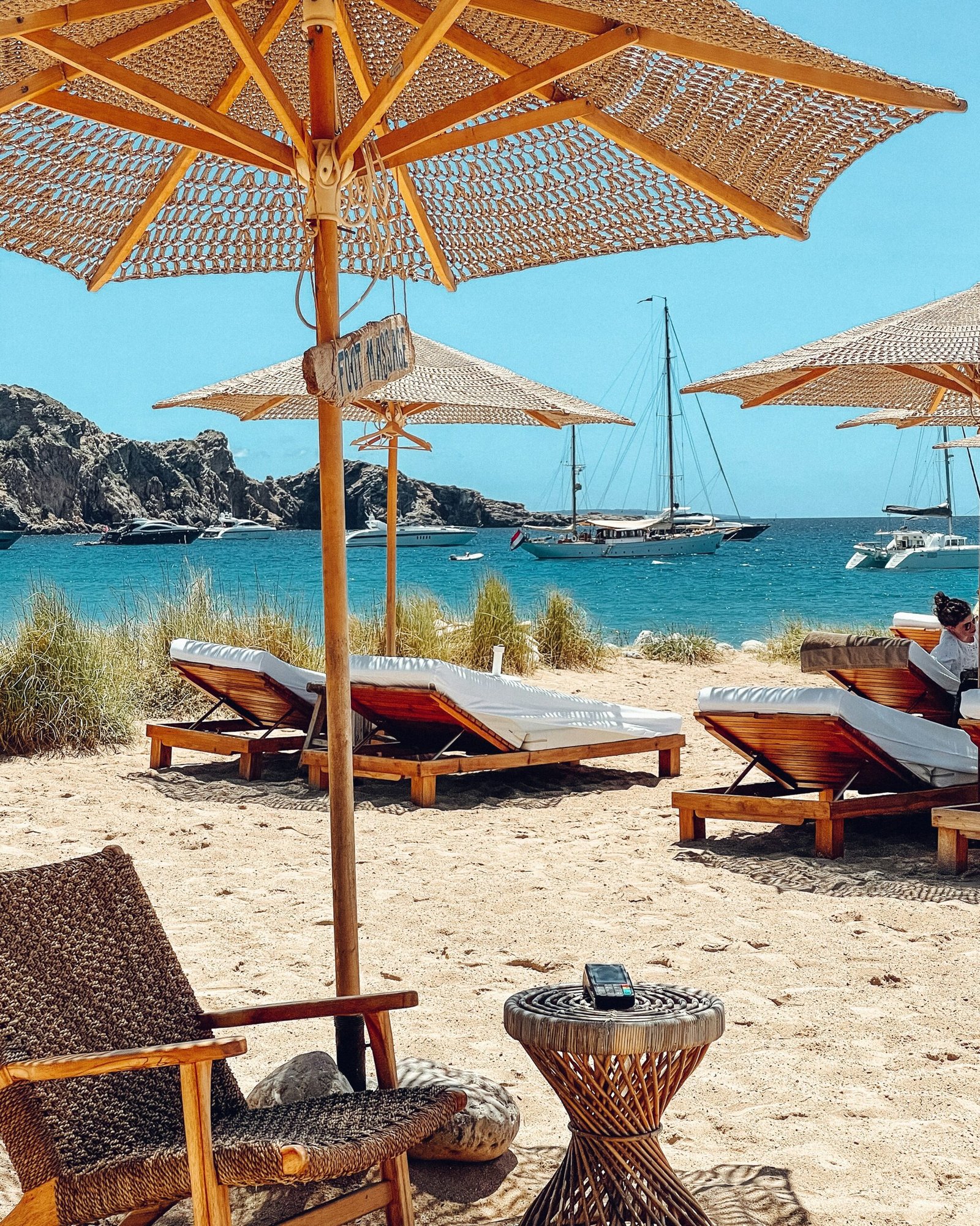
Ibiza has two distinct identities that coexist without much overlap. The one most people know — clubs, summer crowds, the party circuit concentrated around Ibiza Town and San Antonio — occupies a small slice of the island and a specific season. The other Ibiza is quieter: pine forests and almond groves in the north, secluded coves on the west coast, whitewashed villages that have changed little in decades. It’s in this second Ibiza that the island’s yoga retreat scene is rooted.
The retreat infrastructure here has been growing since the 1990s, when the first wave of international wellness practitioners settled in the north. What exists now is a mature, varied scene that attracts serious teachers and draws participants specifically because of — not despite — the contrast with the island’s louder reputation. This guide covers the main retreat areas, what formats are available, when to go, and what to expect on the ground.


The practical case starts with access. Ibiza Airport (IBZ) connects directly to most major European cities from April through October, and increasingly year-round as the island’s off-season appeal grows. Journey times from London, Amsterdam, or Berlin are under three hours. The island is small — about 570 square kilometres — which means transfers from the airport to most retreat venues are 20 to 40 minutes regardless of where you’re based.
The climate is reliably good. The island averages over 300 days of sunshine annually, with mild winters (13–16°C) and warm summers tempered by sea breezes. The northern interior, where most retreat venues are concentrated, stays noticeably cooler than the south in peak summer — an important practical detail for outdoor practice.
What Ibiza offers that other Balearic islands don’t is a genuine established wellness community. Teachers, bodyworkers, nutritionists, and practitioners of various disciplines have been based here for decades. The retreat programmes that result from this community tend to have more depth and more varied formats than the newer, more tourism-driven scenes you find in more recently trendy destinations.
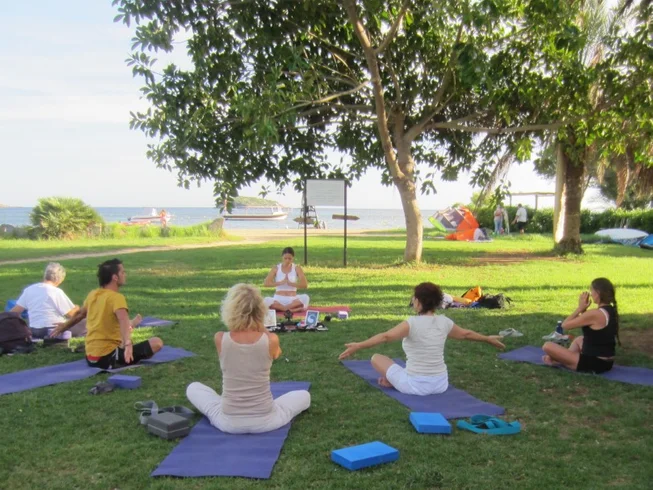
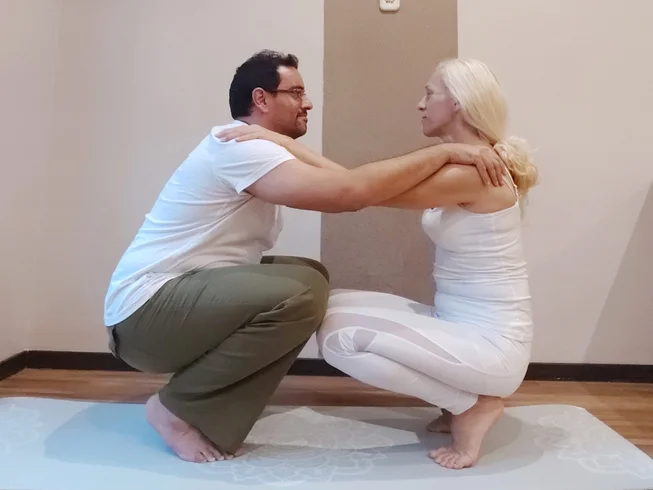
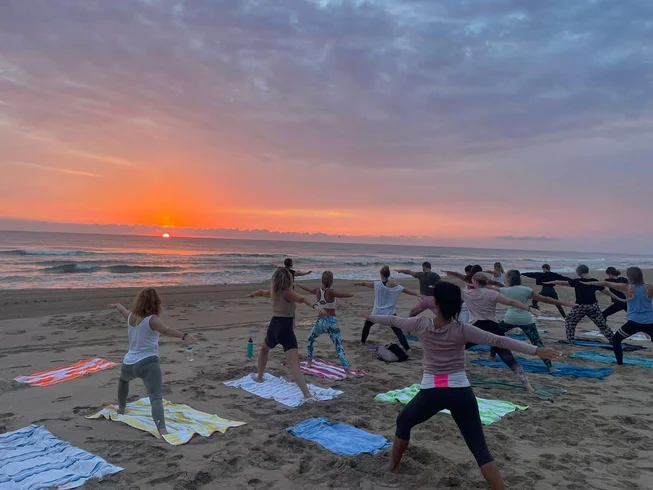
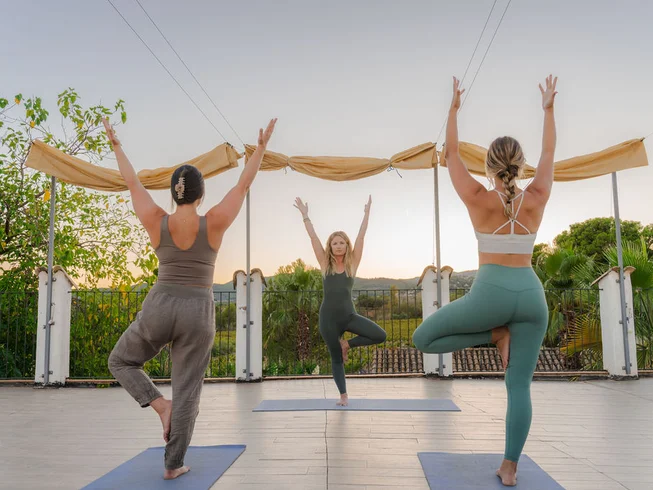
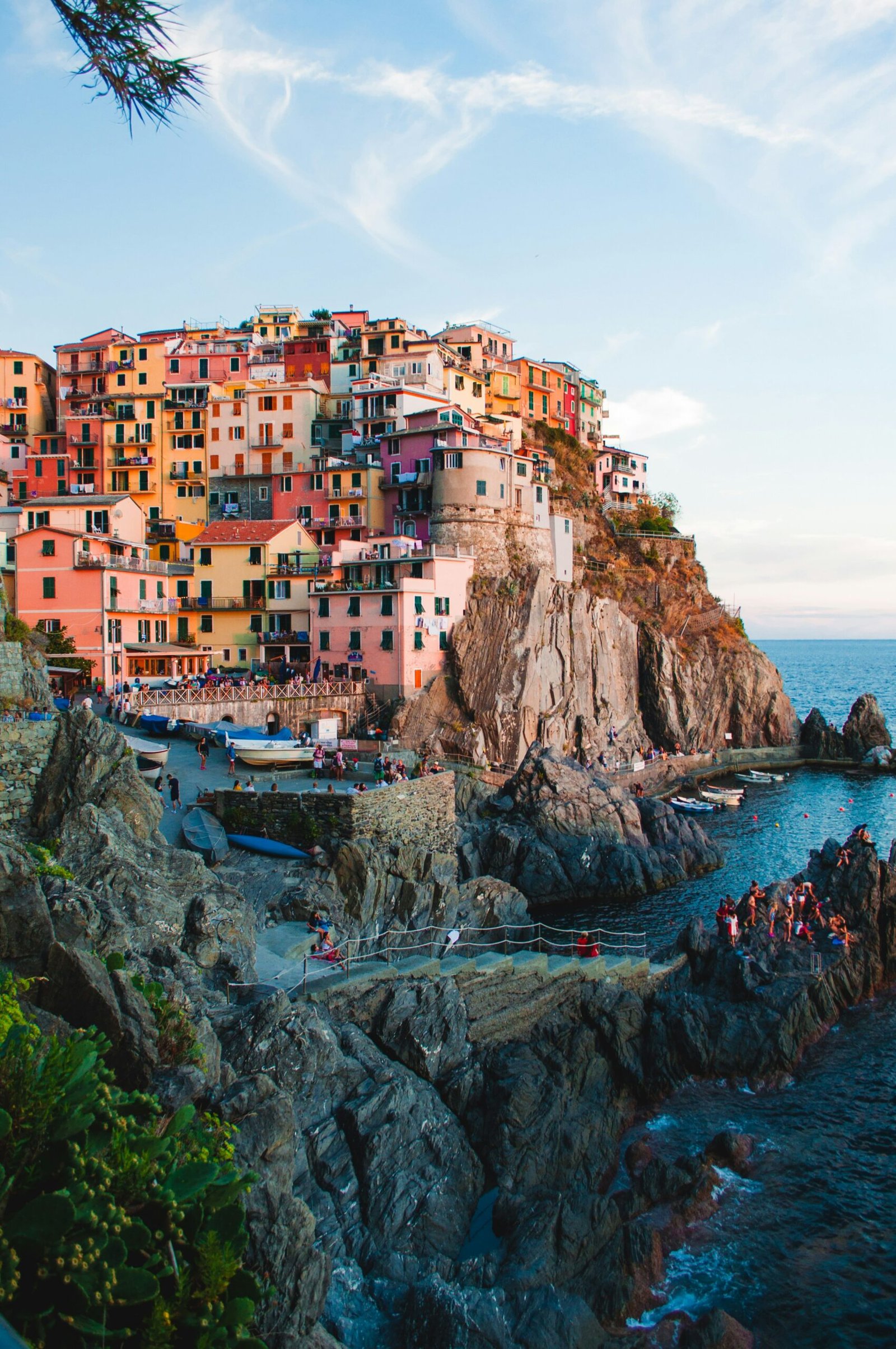
The north is where Ibiza’s wellness scene is most concentrated and most established. The landscape is the greenest on the island — pine forests, almond and fig groves, terraced hillsides — and the pace is the slowest. San Juan (Sant Joan de Labritja) is a small whitewashed village that functions as an informal hub for the wellness community, with organic food shops, herbalists, and practitioners within walking distance of each other.
Retreat venues here range from small eco-fincas with 6–10 guests to larger rural properties running structured week-long programmes. The formats lean toward the contemplative: mindfulness, restorative yoga, sound healing, breathwork, and raw or plant-based food. Benirràs beach — famous for its Sunday drum circles — is nearby, giving the area a cultural texture that isn’t purely wellness-focused. Portinatx on the northern tip has calmer coves suitable for morning swims.
Best for: first-time retreat participants, restorative and meditation-focused programmes, anyone specifically seeking the established Ibiza wellness community, and people who want quiet without remoteness.
Santa Eulalia is the island’s third-largest town and the most family-oriented — calm, well-maintained, with a seafront promenade and a genuine local community alongside the tourist infrastructure. The surrounding countryside, particularly around San Carlos (Sant Carles de Peralta), has a number of boutique retreat venues and rural hotels that run wellness programmes.
The format here tends toward shorter stays: weekend retreats, three-night programmes, and single-day workshops hosted by boutique hotels. The proximity to the airport (around 20 minutes) makes this the easiest area for participants flying in for a long weekend. Styles available include Vinyasa, pilates, and spa-integrated wellness. Less immersive than the north but more convenient for shorter formats.
Best for: weekend retreats, people new to Ibiza, shorter formats combining yoga with spa access, and families who want one adult doing a wellness programme while others have beach access.
The west coast is defined by its sunsets. The coves around Cala Conta and Cala Vedella face directly west over the open Mediterranean, and the light here in the hour before sunset is genuinely exceptional — warm, amber, and extended. It’s no accident that the island’s most famous sunset viewpoints (Cap des Falcó, Es Vedrà) are concentrated on this coast.
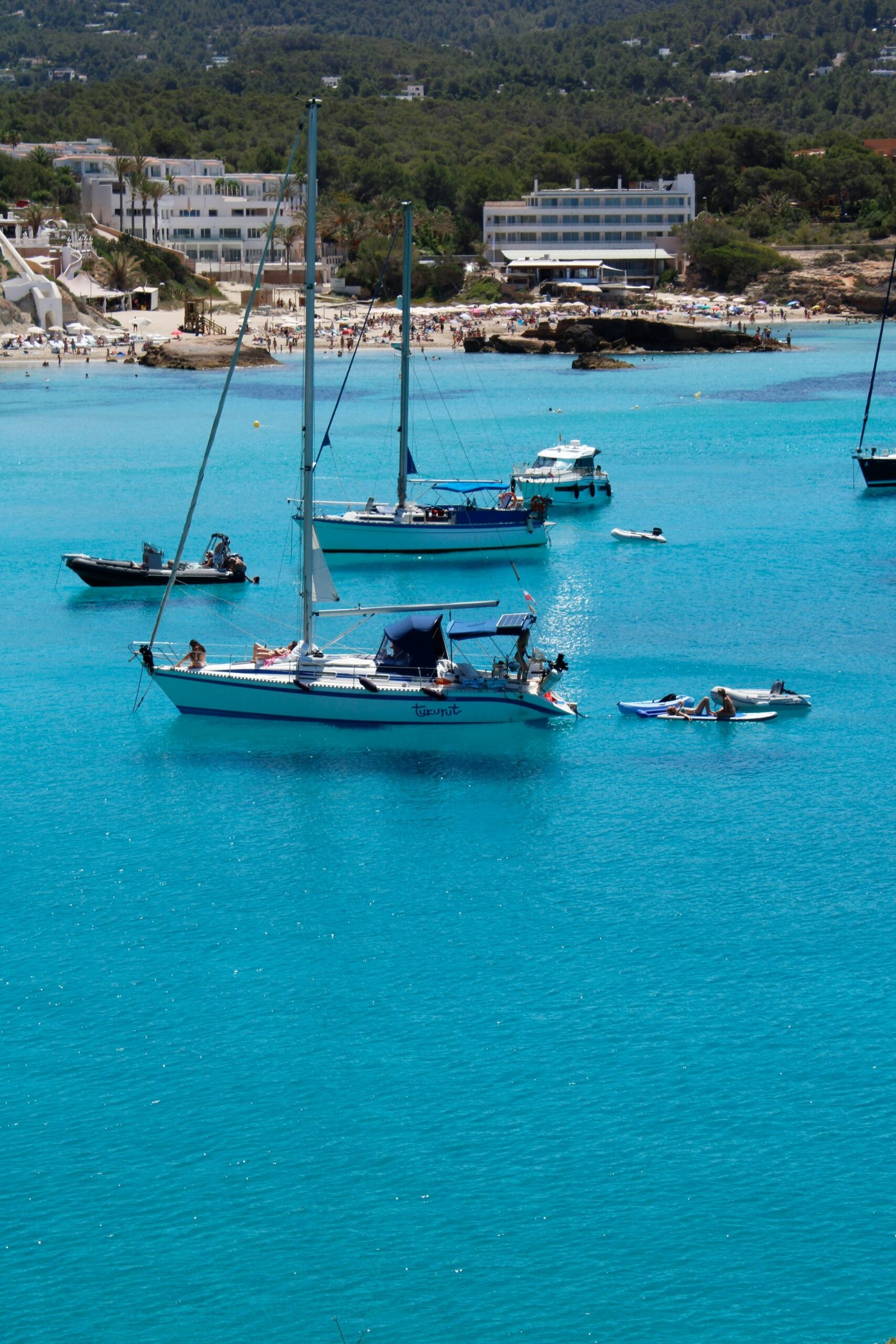
Retreat venues in the west tend toward a slightly higher price point and a more design-conscious aesthetic — boutique villas and converted farmhouses with pools and terraces built around the sunset view. Programmes often blend yoga with SUP (stand-up paddleboard) sessions, free diving, and ocean swimming. The spiritual site of Es Vedrà — a dramatic limestone island rising from the sea offshore — is incorporated into the narrative of several retreat programmes, though its main value is visual and atmospheric rather than literal.
Best for: couples, people who want a higher-comfort retreat experience, sunset-focused programmes, and active formats combining yoga with ocean activities.
The central interior of Ibiza — rolling hills, vineyards, almond groves, old stone farmhouses — is the quietest and least touristic part of the island. A small number of retreat venues operate here, typically in converted fincas with large gardens and a pace that feels more like rural Spain than the Ibiza of popular imagination. Santa Gertrudis has a good restaurant scene and a local arts community that gives the area a relaxed cultural character.
Best for: people who want Ibiza’s good weather and accessibility without any connection to the coastal tourist scene, and longer immersive programmes where the retreat is genuinely self-contained.
The north for established wellness community and contemplative formats. The west for sunset-focused programmes and higher-comfort venues. The east for shorter stays and convenient airport access. The interior for genuine quiet and self-contained immersion. The key is knowing which Ibiza you’re coming for — the contrast with the island’s other identity is part of what makes the retreat experience here distinctive, but only if you’ve positioned yourself in the right part of the island to begin with.
Browse Om Away’s curated yoga retreats in Spain, including programmes across Ibiza — all reviewed for quality of teaching, venue character, and programme structure.

Most Ibiza retreat programmes follow a structure shaped by the climate and the island’s rhythm. Morning practice starts early — 7:30 to 8am — to use the best light and coolest temperatures before midday. In the north this is typically on a terrace under pine trees or in an open-sided shala; on the west coast, facing the sea. The morning session tends to be more dynamic: Vinyasa, Hatha flow, or a movement practice that builds heat.
Breakfast is communal and genuinely good — the island’s produce (figs, almonds, local honey, olive oil) features prominently at well-run venues, and the plant-based or Mediterranean menus at most Ibiza retreats reflect the community’s long engagement with conscious eating rather than being a generic wellness menu.
Afternoons are typically unstructured or loosely programmed. A cove for swimming, a hike to Es Vedrà viewpoint, time at the market in San Juan or Santa Gertrudis, or simply rest. Optional afternoon workshops — breathwork, sound healing, journalling, herbalism — are common additions at northern venues. The evening session is restorative or meditative, designed to close the day rather than stimulate it. Sunset is treated as a shared event at most west coast retreats: wherever you are in the programme, you stop for it.
Group sizes average 10–16 in most programmes, though smaller intimate retreats of 6–8 exist particularly in the north. Teacher trainings and women’s circles run through the quieter winter months at several established venues.
Your email address will not be published. Required fields are marked *