
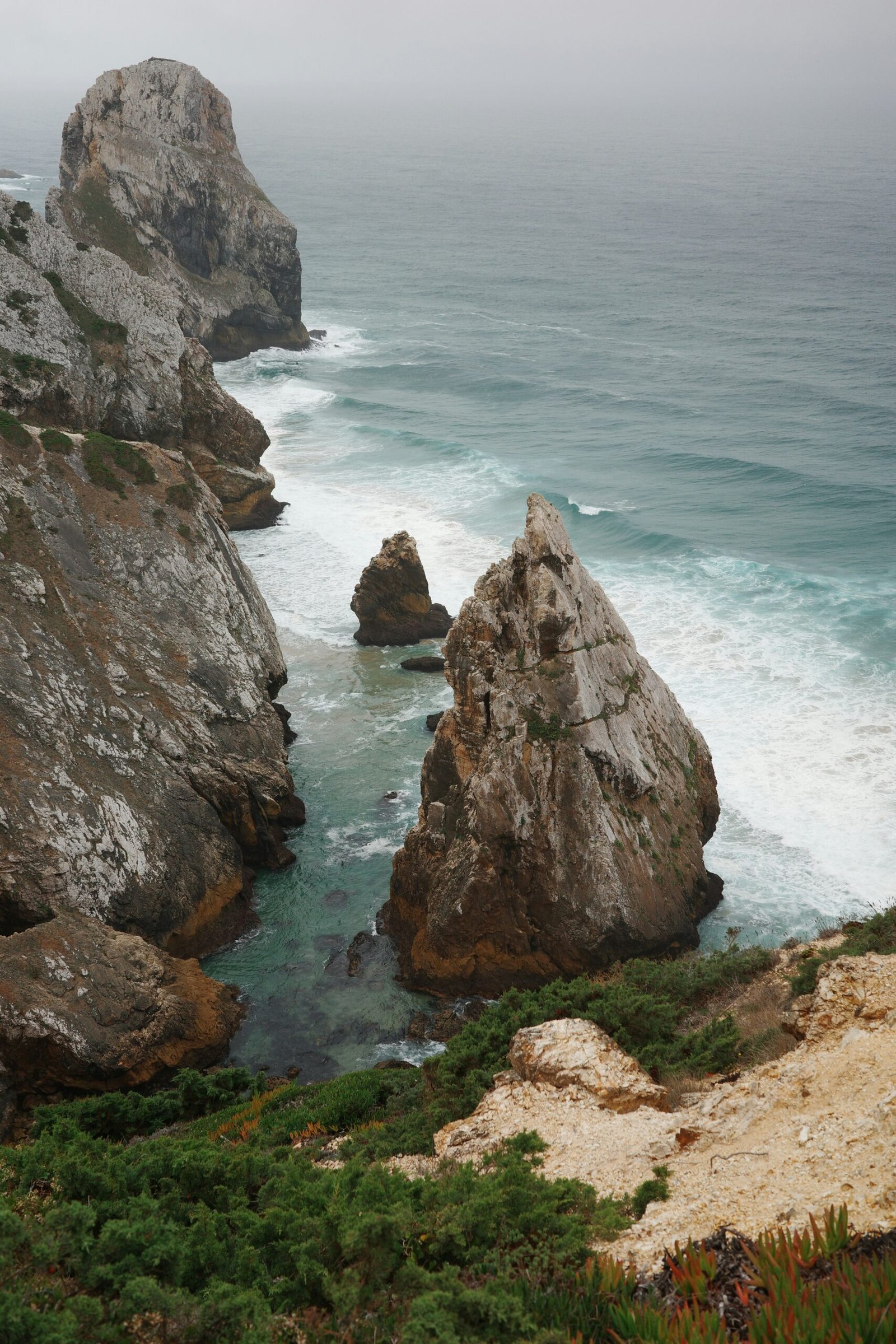
The area around Lisbon is one of the most varied retreat environments in Portugal. Within an hour of the city, you have forested hills with mist and silence (Sintra), a world-class surf coast with a well-established yoga community (Ericeira), an elegant Atlantic shoreline popular with professionals looking for short resets (Cascais), and rural countryside that barely registers on the tourist map (Mafra, Colares, Setúbal peninsula). The retreat scene here suits people who want to fly into Lisbon and be somewhere genuinely different within 45 minutes.
This guide breaks down what each area offers, what retreat formats work best where, and how to choose between them depending on what you need from the week — or the weekend.


The practical case is straightforward: Lisbon Airport is one of Europe’s best-connected hubs, with direct flights from most major cities in under three hours. From the airport, retreat venues in Sintra, Ericeira, and Cascais are reachable in 30 to 60 minutes by taxi or transfer — making this one of the lowest-friction retreat destinations in Europe. No internal flight, no long train journey, no logistical complexity on arrival.
Beyond logistics, the landscape variety within a small radius is exceptional. The Sintra-Cascais Natural Park covers forested hills, Atlantic cliffs, and historic royal palaces within 40 kilometres of the city centre. Ericeira to the north is a designated World Surfing Reserve — the only one in Europe — with consistent Atlantic swells and a genuinely established surf culture. The Arrábida Natural Park to the south of the Setúbal peninsula offers limestone cliffs above turquoise water that look more like the Adriatic than the Atlantic.
The retreat scene benefits from Lisbon’s cosmopolitan character. The city attracts international yoga teachers, wellness practitioners, and digital nomads in significant numbers, and a portion of that community runs retreats in the surrounding area. The quality of instruction available near Lisbon is generally higher than in more remote Portuguese regions precisely because the talent pool is larger.
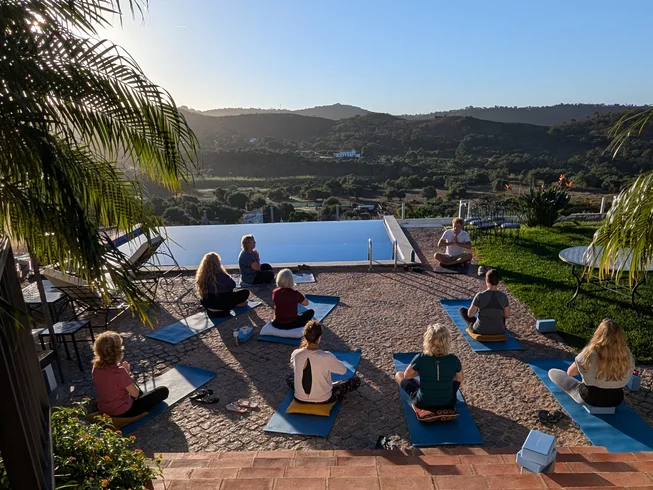
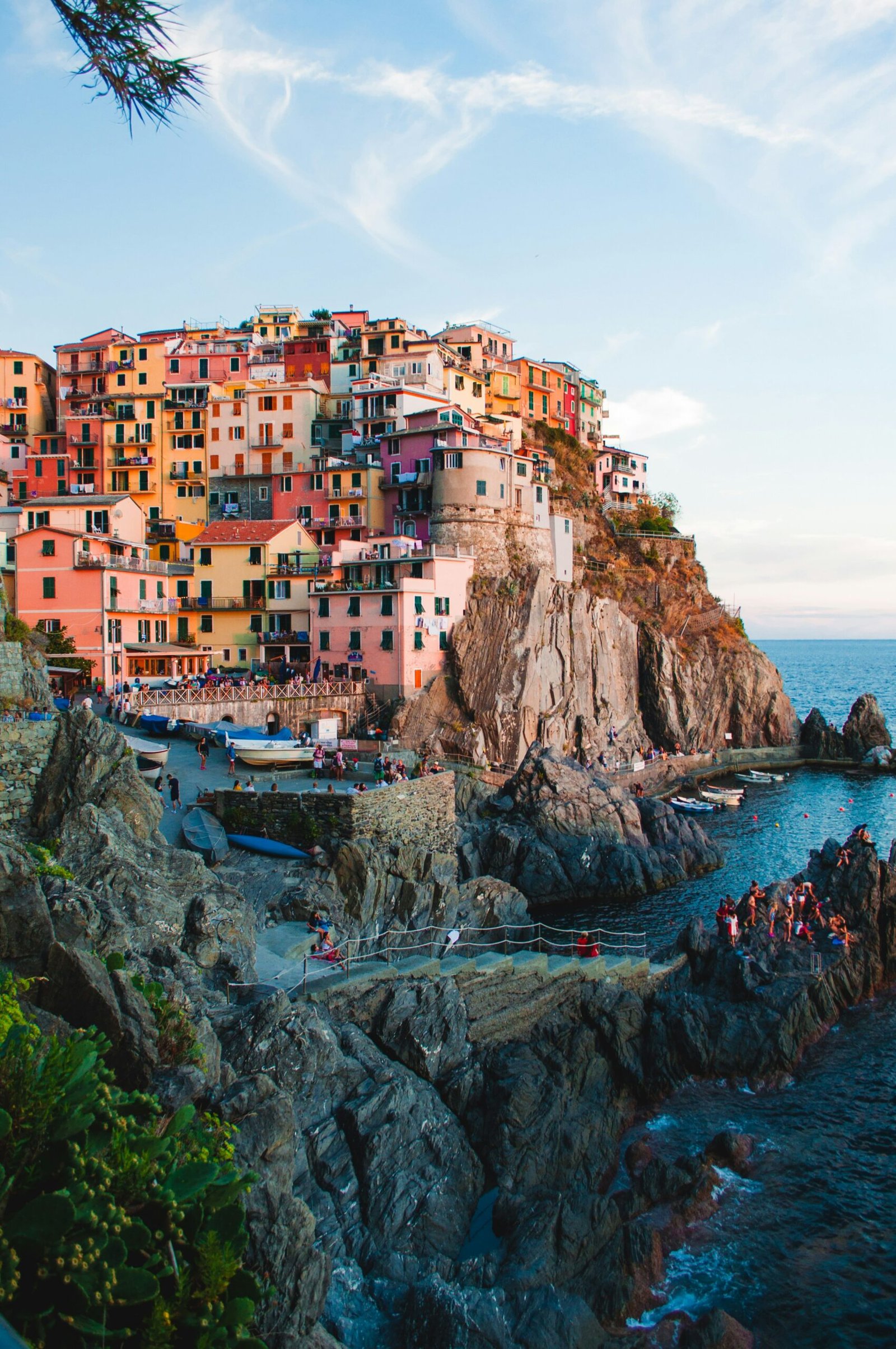
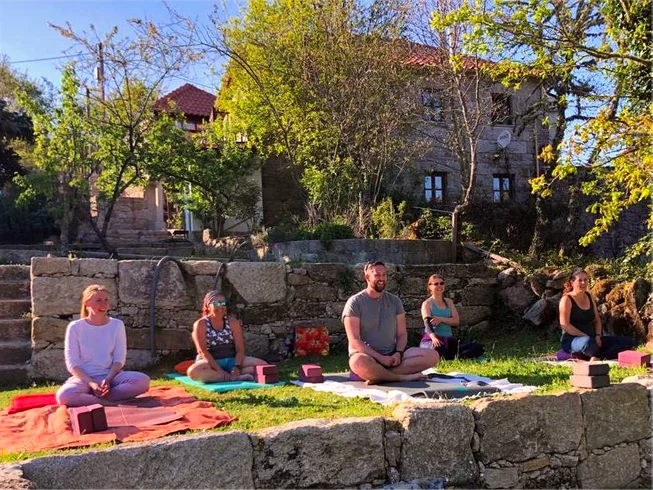
Sintra is the most atmospheric of the areas near Lisbon for retreat purposes. The forested hills of the Serra de Sintra are genuinely unusual — ancient trees, year-round moisture from the Atlantic, the ruins of Moorish walls, and a density of palace and monastery architecture that gives the whole area a slightly removed-from-time quality. The mist that settles over the hills on autumn and winter mornings is a feature, not a drawback.
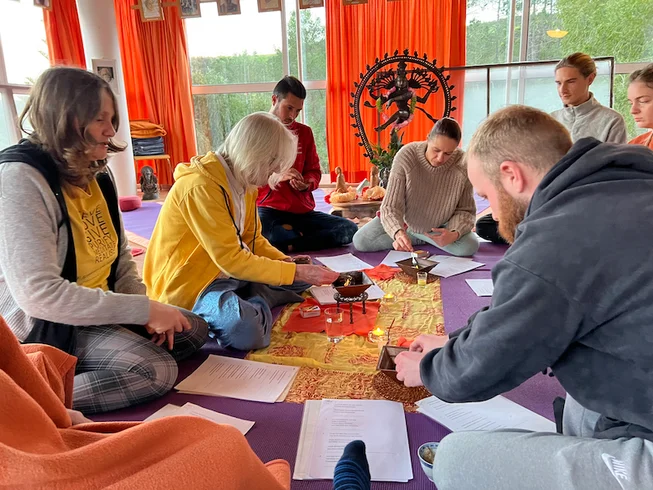
Retreats here lean toward the contemplative: meditation-heavy programmes, restorative and Yin yoga, digital detox formats, and nature-immersion weekends. The lack of beach culture means the afternoon programme tends toward forest walks, journalling, and stillness rather than surf or swimming. This suits some people perfectly and would frustrate others — know which you are before booking.
Accommodation ranges from converted manor houses within the natural park to smaller rural properties in the villages around Colares and Azenhas do Mar. Group sizes tend to be small. Best season: autumn and spring, when the mist and green are at their most distinctive. Summer works but the area gets crowded with day-trippers from Lisbon, which affects the retreat atmosphere.
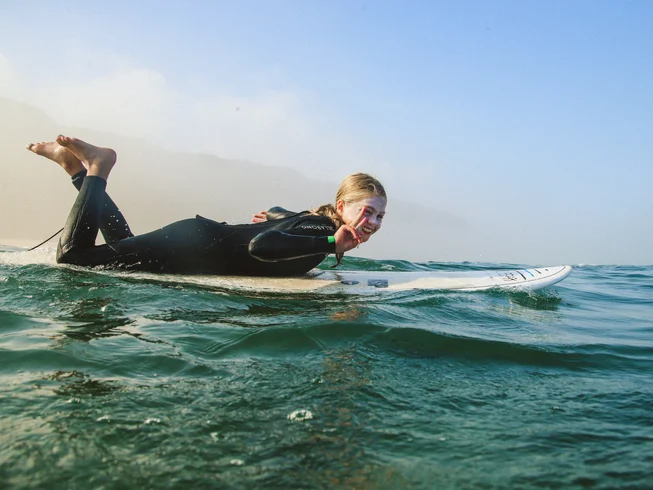
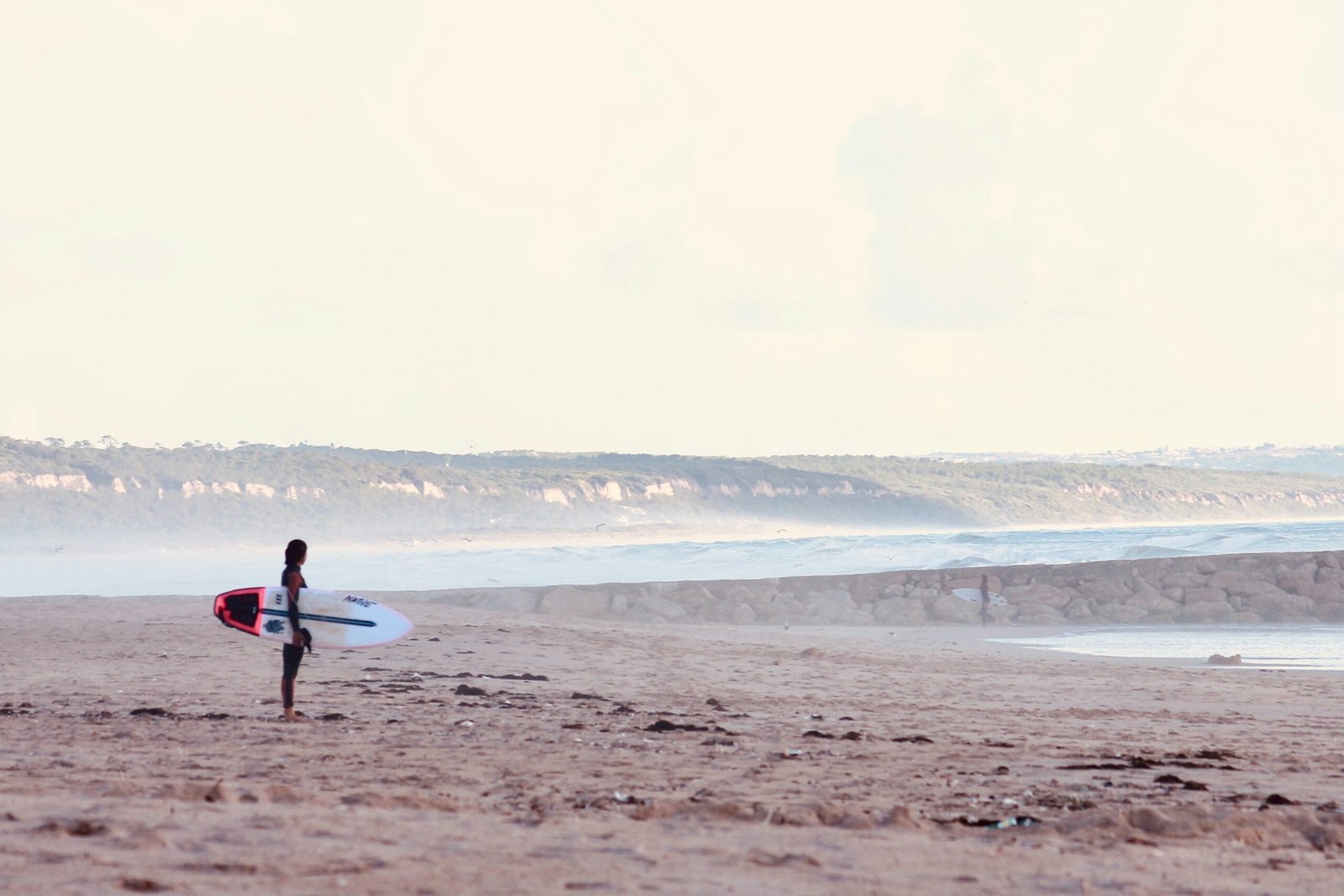
Ericeira is the most socially active of the retreat areas near Lisbon. Our Ericeira yoga retreats guide covers the town and its programmes in full detail. The town has a genuine surf culture — consistent Atlantic breaks, a bohemian café scene, and a community of instructors, practitioners, and nomads who have made it a base. Yoga retreats here are typically surf-and-yoga combinations or active wellness programmes that use the ocean as the central feature.
The daily rhythm on an Ericeira retreat: morning Vinyasa or flow class, surf lesson or open water session in the late morning, lunch, free afternoon, Yin or restorative session at sunset, dinner. The pace is more active than Sintra and less polished than Cascais. It suits people who want movement, sea, social energy, and practice in roughly equal measure.
Accommodation ranges from surf lodges with shared rooms to small boutique hotels and private villas. Prices are generally mid-range. Group sizes vary — larger surf-and-yoga packages can take 20 or more participants, which changes the dynamic considerably. If intimacy matters, look specifically for smaller programmes. Best season: autumn and spring for surf quality and lower crowds; summer is busy but works for the beach element.
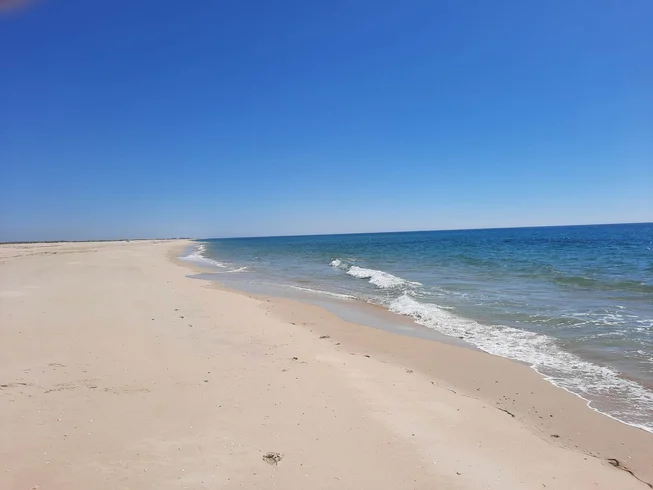
Cascais sits at the end of the Estoril coast — well-maintained, historically elegant, and with direct train access from Lisbon centre. The town itself is more polished than Ericeira: better restaurants, a working marina, and a seafront that attracts a professional and expat crowd. Guincho beach, a few kilometres west, is windswept, dramatic, and backed by dunes — a very different character from the sheltered resort beaches of the town.
Retreats in this area tend to be shorter-format — weekend programmes, three-night stays, or intensive days rather than week-long immersions. They suit people based in Lisbon looking for a reset without taking a full week, or international visitors who want coastal access and comfort without the surf focus of Ericeira. Yoga styles tend to be broader: Hatha, Vinyasa, Yin, and sometimes pilates or barre integrated. Spa and treatment add-ons are more common here than elsewhere near Lisbon.
Accommodation tends toward boutique hotels and luxury villas. This is the most expensive area in the Lisbon region for retreats. Best for: weekend escapes, professionals, and anyone who wants the coast without the surf-camp atmosphere.
The area between Sintra and Ericeira — and the villages inland from the Sintra hills — hosts a smaller number of eco-focused retreat venues that offer something different from all three coastal options. These tend to be community-driven operations: small organic farms, permaculture properties, or converted rural houses with solar energy and garden-grown food. Group sizes are small, facilities are simple, prices are lower, and the emphasis is on slow living rather than either surf or luxury.
This suits people who specifically want an eco or off-grid retreat experience near a major city — which is a rarer combination than it sounds. The proximity to Lisbon makes it logistically easy while the setting feels genuinely rural. Best for: solo travellers, eco-focused retreats, first-timers who want to test the retreat format without high costs, and anyone whose priority is community over comfort.
Less covered in most Lisbon retreat guides but worth knowing about. The Arrábida peninsula south of the city has limestone cliffs, protected turquoise coves, and almost no commercial development. A small number of retreat programmes operate here, particularly in spring and early summer when the water is clear and the crowds haven’t yet arrived. The setting is exceptional — genuinely one of the most beautiful coastlines in Portugal — and the relative obscurity means retreats here tend to attract people who’ve done their research rather than first-time visitors. Harder to reach without a car, but worth the logistics.


The simplest framework: match the area to the primary thing you need from the experience.
Within each area, the same evaluation criteria apply as anywhere: check teacher credentials, read reviews for specifics, verify the cancellation policy, confirm group size, and send a message before paying a deposit.
The Lisbon area’s cosmopolitan character means the range of quality is wide — the best retreats here are genuinely excellent, and the less careful operations are easy to book if you’re going only on photography.
The area around Lisbon offers more genuine variety within a 60-minute radius than almost any other European city.
The key is being specific about which kind of variety you need — the forest quiet of Sintra and the surf energy of Ericeira are both excellent, but they serve different purposes. Arrive knowing which one is yours, and the logistics will take care of themselves.
If you’re combining a retreat with time in Lisbon, a day in the city before or after is well worth it — the pace of the capital feels noticeably different once you’ve spent several days breathing sea or forest air. That contrast is part of what makes this area work so well for retreat travel.
Browse Om Away’s curated yoga retreats in Portugal, including programmes near Lisbon across all areas and formats.
Your email address will not be published. Required fields are marked *