
November in Italy is for those who know. The October visitors have gone home, the Christmas crowd has not yet arrived, and the country returns to its own rhythm entirely. The olive harvest is at full production across the south. The white truffle season continues in Piedmont and Tuscany.
The thermal springs of Tuscany and Campania are at their most atmospheric — the steam over the pools in the November air, the surrounding landscape in its bare autumn form. Prices are at their autumn low. And the retreat centres that stay open through November are doing so because the format specifically works in this month.


November is the quietest month of the Italian wellness calendar and one of the most rewarding for those who choose it deliberately. The retreat groups are the smallest of the year. The retreat centres are running their most focused programmes. And the seasonal ingredients — the olive oil at peak freshness, the truffle at its November intensity, the first radicchio of the Veneto, the new wine — are specifically of this month. Our wellness retreats in Italy guide covers every year-round destination.
November is the peak of the Tuscan olive harvest. The October beginning — the first lowland groves picked, the first oil pressed — has now extended across the region, and the frantoi are running continuously. The new-season oil in November has a slightly more settled character than the October pressing — still intensely flavoured and peppery, but with the most volatile compounds beginning to integrate into the oil’s fuller flavour profile. The oil pressed in November from the Chianti and Lucca hill groves is the one that serious producers prefer for their own consumption.
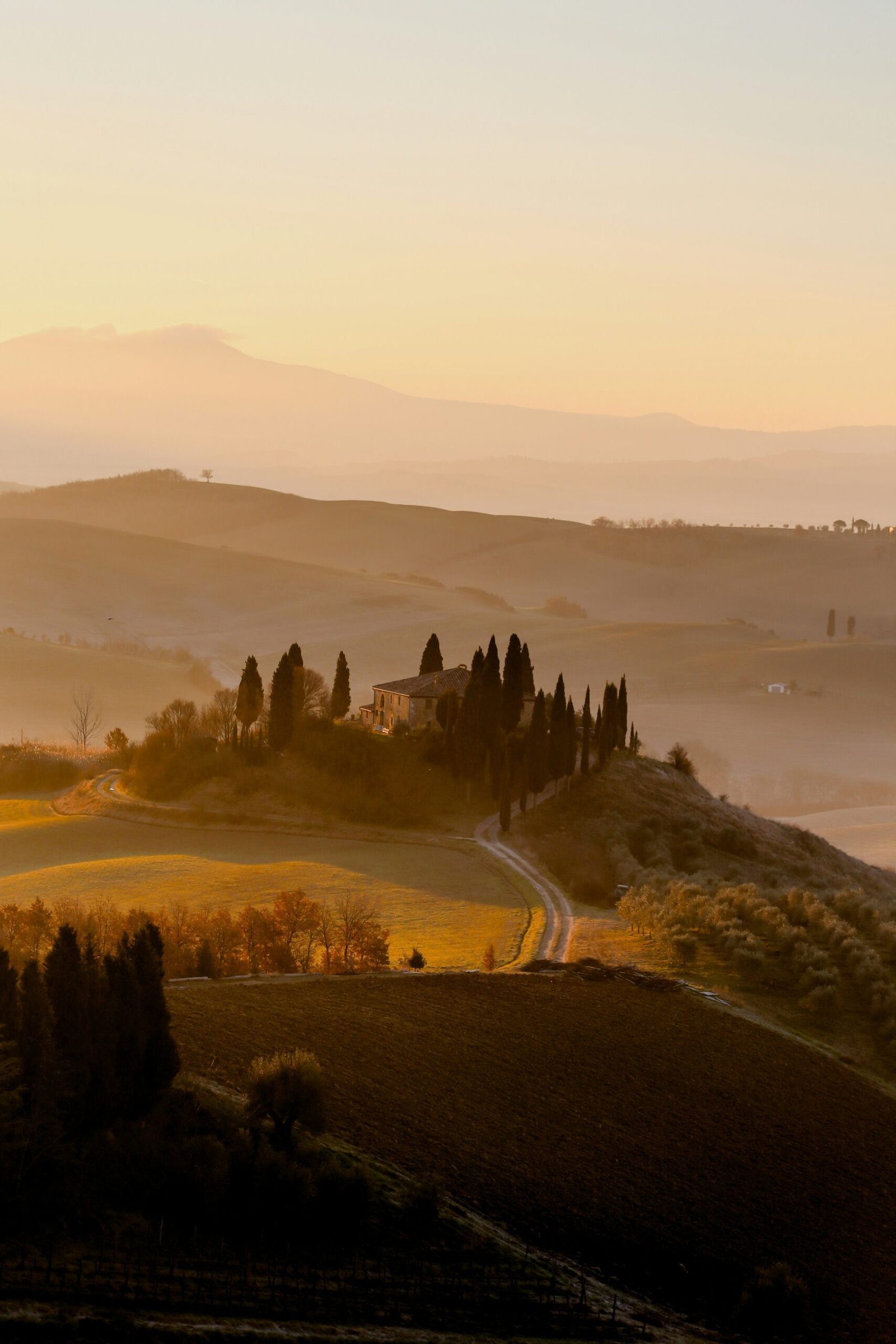
The thermal springs in November are at their most atmospheric of the year. The Saturnia cascades with the air at 10-12°C and the water at 37°C produce the most dramatic steam of any month — the white mist rising from the limestone pools into the November air, visible from the road above the valley. Arriving at Saturnia at dawn in November, with the mist dense and the landscape visible only in silhouette, is the version of this experience that photographers and retreat guests who have been here in every month consistently describe as the most specific.
The Maremma coast in November — the stretch of Tuscany between Grosseto and the Argentario promontory, with the Orbetello lagoon and the Monte Argentario — is at its most authentic. The summer beach culture that fills the Maremma from June through September is entirely absent. The lagoon has the flamingos and the migratory birds that use it as a winter feeding ground. The thermal springs of Saturnia and Petriolo are a 45-minute drive from the coast. And the Maremma food culture — the cinghiale (wild boar), the pecorino of Manciano, the new-season olive oil — is at its November specificity.
Campania in November has the most complete thermal wellness offer of the Italian autumn. The thermal island of Ischia stays operational year-round, and November on the island has the specific quality that September and October approach but November fully delivers: the summer visitors entirely gone, the thermal parks and hotel facilities running for the small groups of wellness-specific travellers who chose this month deliberately, and the island in its own character without the beach culture overlay.
The Terme di Ischia in November run their most immersive programmes of the year. The volcanic spring water at its constant temperature regardless of the November air, the Ischian fango treatments (the volcanic mud applied at 37-39°C), and the thalassotherapy circuits using the November Tyrrhenian seawater — which at 18-19°C is cooler than summer but still usable for the contrast immersion sequences — produce the most complete thermal wellness week available in Italy in this month.
Naples in November is the city in its authentic November form: the Napoli sotterranea (the underground city of Greek and Roman tunnels beneath the centro storico) accessible without queues, the Capodimonte museum and the San Martino Charterhouse with their extraordinary collections navigable without the summer compression, and the Neapolitan street food culture — the pizza fritta, the sfogliatella, the ragù that simmers for hours — operating for the local population rather than for visitors.
Puglia in November is the warmest mainland region in Italy at this time of year — temperatures of 14-18°C on the coasts, the sea still at 18-19°C on the most sheltered Ionian bays, and the masserie and farmhouse retreat centres operating in the November quiet that the summer made impossible. The olive harvest is at full production across the Bari plateau and the Salento — the Ogliarola and Coratina varieties being pressed at the frantoi that run day and night through November, and the new-season Puglian oil arriving at the retreat kitchens.
The Salento in November has a quality that the summer entirely obscures: the whitewashed trulli and masserie without the summer rental market around them, the ancient olive groves of the Fasano and Ostuni areas (the monumental olive trees, some estimated at over 2,000 years old, whose gnarled trunks the Puglian olive oil tradition is built around) visible in the bare November light that the summer’s canopy conceals, and the weekly markets of the inland towns operating for the Puglian families who source from them year-round.
The Piedmont white truffle in November has a character that October’s first specimens do not — the mycological complexity that develops as the season deepens, the larger specimens that the November soil produces, and the specific aroma that the November truffle hunters describe as its most concentrated and most complete form. The Alba fair continues through November, and the restaurant scene of the Langhe is in November at its most focused: the Michelin-starred restaurants of Barolo, La Morra, and Serralunga d’Alba cooking the truffle with the seasonal ingredients that November provides (the fonduta of the local Fontina, the fresh egg pasta made the same morning, the aged Barolo in the glass alongside).
November is the month the extended thermal circuit — moving between multiple thermal facilities over the course of a retreat week — is most rewarding. The Euganean Hills near Padua (fango therapy and thermal pools), Ischia (volcanic spring water and thalassotherapy), Saturnia and Bagno Vignoni (geothermal springs), and the Terme di Stabia near Naples: each produces a different therapeutic water with different mineral content and different temperature, and November is the month when none of them have queues and all of them are operating at full capacity.
The November truffle hunt in Piedmont and Tuscany (the scorzone season in Tuscany, the white truffle in Piedmont) is at its most productive of the year. The November soil conditions — the combination of the autumn rains, the cooling temperature, and the specific fungal maturation cycle — produce more truffles per hectare than any other month. The trifolao who guides the November hunt is working at their most intense period of the year, and the chance of finding a significant specimen — a truffle of 200 grams or more — is highest in November.
The November frantoio visit is the most specific food experience available in Italian wellness travel in this month. The frantoio during the harvest run — the olives arriving, the press turning, the centrifuge separating the oil from the vegetation water, and the oil emerging at the output tap — is one of those production processes that is both industrially significant and intimately connected to the agricultural tradition around it. Tasting the oil directly from the tap, comparing different grove varieties pressed on the same day, and understanding why the November oil from the Moraiolo olive tastes different from the Frantoio pressing: this is the food education that no restaurant or oil shop can provide.
The November forest is the stripped-back version of the July and October forest — the leaves fallen, the structure of the trees visible, and the forest floor covered in the chestnut cases and the fallen leaves that the seasonal cycle produces. The phytoncide research that documents the physiological effects of forest immersion finds November forest air — with the mycorrhizal activity of the soil at its autumn peak and the bark compounds released by the deciduous trees as they prepare for dormancy — particularly rich in the bioactive compounds associated with the immune-boosting effects of forest exposure.
The November white truffle from the Langhe is at its full season complexity — the specimens larger on average than September’s first finds, the aroma at its most developed, and the truffle market in Alba operating at its highest weekly volume. The November truffle eaten at a Langhe retreat kitchen has the specific weight and the specific perfume of the ingredient at its annual best. At this point in the season, the simple preparations are the correct ones: the tajarin pasta, the fried egg, the fonduta — each designed to carry the truffle rather than compete with it.
Radicchio di Treviso Tardivo — the most prized of the Italian winter chicories, available only from November through February, with the IGP designation protecting the forced-growth method that produces the elongated, white-ribbed, intensely bitter leaves — appears at Veneto markets and at the better northern Italian restaurants in November. The bitterness of the Tardivo (from the inulin and lactucin compounds that the forcing process concentrates) has both a specific flavour — sharp, slightly sweet behind the bitterness, with a mineral quality — and a specific nutritional profile: the inulin acts as a prebiotic, the bitter compounds support digestive function, and the overall effect is the kind of ingredient that the Italian food tradition has always used for the post-harvest detox and that nutritional research increasingly validates.
November chestnuts from the Apennine forests are at their full October-November season. The distinction between castagne (the smaller, wild variety) and marroni (the cultivated, larger variety with a single kernel rather than two or three per case) is important at the quality level: the Marrone del Mugello IGP from the Florentine Apennines, the Marrone di Castel del Rio IGP from the Bologna hills, and the Castagna del Monte Amiata IGP from the Tuscany-Lazio border each have a specific sweetness and texture that the generic chestnut cannot replicate. At the retreat kitchen using the local variety in November, the chestnut appears in every form: roasted for the mid-morning break, in the chestnut flour pasta (pasta di farina di castagne), in the castagnaccio (the olive oil and rosemary flatbread of the Florentine tradition), and in the monte bianco (the chestnut and cream dessert of the northern Italian autumn table).
Artichokes from Paestum in the Campania plains — the large, round variety grown in the flat coastal land below the Greek temples of the ancient city, with the IGP designation protecting the specific growing area and the traditional cultivation method — are at their November first harvest. The Paestum artichoke is specifically prized for its tenderness and the absence of the choke in the younger specimens, making it possible to eat the entire artichoke raw in the traditional Campanian preparation (sliced thin, dressed with olive oil, lemon, and Parmigiano), braised, or stuffed. At a Campanian retreat kitchen in November, the Paestum artichoke is the seasonal centrepiece of the vegetable table.
Every weekend of November in Alba. The truffle fair that opened in October continues through November with the market, the auction, and the tastings at the Langhe restaurants. The November fair has the largest specimens of the season — the weekly price per kilo at the Alba market fluctuates with the supply and the quality of the finds, reaching its November peak when exceptional specimens arrive. The opening weekend of November, when the October demand has passed and the November supply is at its highest, is often the best combination of quality and relative accessibility.
The white truffle fair of San Miniato in the Pisan hills — the second most important after Alba for the white truffle of the San Miniato variety (considered by some to equal the Alba specimen in flavour) — runs for three Sundays in November with truffle market, tastings, and the auction of exceptional specimens. For retreat guests based in Tuscany who cannot reach Piedmont, the San Miniato fair provides the November truffle experience closer to the Tuscan thermal retreat circuit.
The feast of Saint Martin — November 11th — is the traditional date for the first tasting of the new wine in Italy. The saying “a San Martino ogni mosto diventa vino” (at Saint Martin’s, every must becomes wine) marks the point in the fermentation cycle when the new vintage from the September and October harvest is considered wine rather than fermenting grape juice. At the wine estates of Chianti, Montalcino, and the Langhe, the November 11th tasting of the new vino novello alongside roasted chestnuts and the new olive oil is the Italian autumn ritual that the retreat context makes specifically worth participating in.
November programming is the most inward-facing of the autumn. The outdoor activity that September and October offered continues where the weather allows — the Campanian and Puglian coasts are mild enough for afternoon walks — but the shorter days and cooler temperatures shift the balance toward indoor sessions, extended thermal treatments, and the evening restorative practice that the November darkness makes specifically right.
The olive press visit is the November programming event with the most direct agricultural connection. Arriving at the frantoio during pressing, watching the process, tasting the oil at the tap: this is the November version of the September harvest participation, and it connects the retreat guest to the food culture at its most foundational moment.
The San Martino evening on November 11th — new wine, roasted chestnuts, and the new olive oil at the communal retreat table — is the November programming event with the most specifically Italian seasonal character. The retreat centres in Tuscany, Piedmont, and Umbria that mark San Martino explicitly are acknowledging the rhythm of the Italian agricultural year in a way that makes the retreat feel specifically of its time and place.
November programming is the most inward-facing of the autumn. The outdoor activity that September and October offered continues where the weather allows — the Campanian and Puglian coasts are mild enough for afternoon walks — but the shorter days and cooler temperatures shift the balance toward indoor sessions, extended thermal treatments, and the evening restorative practice that the November darkness makes specifically right.
The olive press visit is the November programming event with the most direct agricultural connection. Arriving at the frantoio during pressing, watching the process, tasting the oil at the tap: this is the November version of the September harvest participation, and it connects the retreat guest to the food culture at its most foundational moment.
The San Martino evening on November 11th — new wine, roasted chestnuts, and the new olive oil at the communal retreat table — is the November programming event with the most specifically Italian seasonal character. The retreat centres in Tuscany, Piedmont, and Umbria that mark San Martino explicitly are acknowledging the rhythm of the Italian agricultural year in a way that makes the retreat feel specifically of its time and place.
Your email address will not be published. Required fields are marked *