
Almond trees flower in February before their leaves appear — white blossom against bare branches, red earth, blue sky. It is one of the more quietly spectacular things Morocco produces, and it happens in February specifically, in the valleys below the Atlas, while the rest of the country is still deciding whether winter is over.


February holds the year’s lowest prices and some of its best conditions. Days are clear and climbing toward spring without the heat that arrives later. The almond blossom in the Atlas foothills peaks between roughly February 5 and February 20 — a narrow window worth planning around if you can.
Retreat centres have availability. The surf on the Atlantic coast is at its most powerful. And Essaouira, which can feel overrun in summer, is in February almost entirely itself. Our full Morocco retreat guide covers every region if you are still deciding where to base yourself.
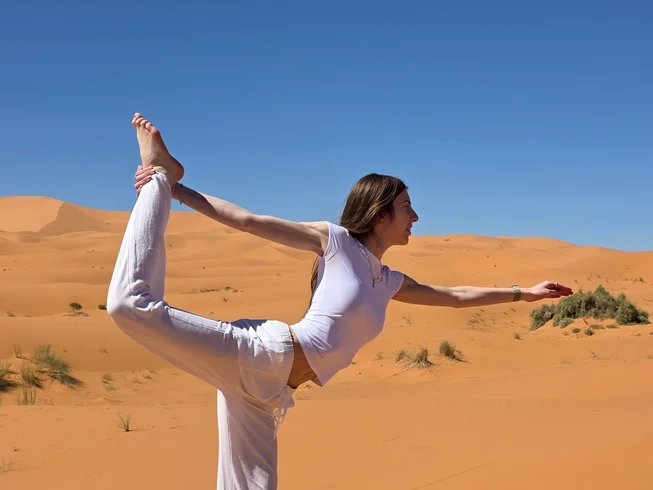
February’s signature event is almond blossom in the Atlas Mountains and certain valleys. From mid-February through early March, thousands of almond trees bloom with pink and white flowers. The contrast against red-brown earth and snow-capped peaks is extraordinary.
Some retreats specifically plan around almond blossom season. Valley hikes when trees are in full bloom, visits to Berber villages during this celebrated season, photography workshops capturing the spectacular displays. This ephemeral beauty lasts only 2-3 weeks, making it genuinely special.
The blossoms signal spring’s arrival to Moroccans—a promise that winter will end, warmth will return, the agricultural year begins again. Participating in this seasonal marker adds depth to retreat experiences.
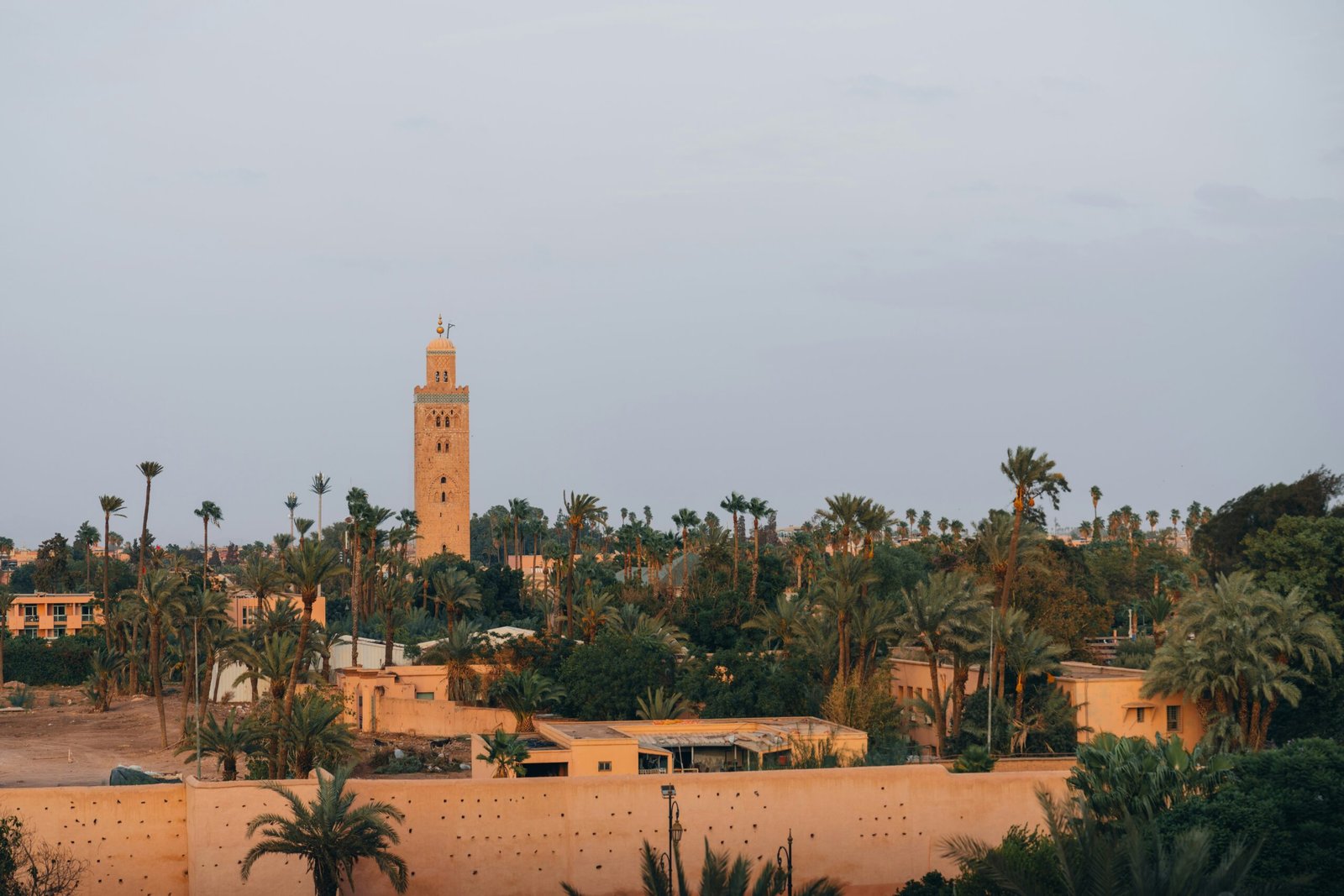
February is Essaouira’s best month, and if you only go once, go now. The Alizé winds are present but not at their summer ferocity — 20-30 knots rather than the 40+ that make July challenging for anyone not on a board. The medina has almost no tourists beyond a small core of regulars and long-term residents who chose this town precisely because it empties in winter. The light on the whitewashed walls in February, low and slightly golden even at midday, is the light that painters came here for.
The argan cooperatives in the countryside around Essaouira are active in February, processing the previous autumn’s harvest. Visiting one now shows the production at work: women cracking shells by hand, grinding kernels on stone, pressing oil in a process unchanged for centuries. The oil you buy directly from a cooperative in February is as fresh as it gets. Most Essaouira retreat centres include a cooperative visit in their weekly programme; if yours does not, it is worth arranging independently.
The Atlantic in February is cold and powerful. Kitesurfers and windsurfers come specifically for these conditions. If your retreat includes water sports, February off Essaouira delivers. If it does not, the beach is still the best walk in the region: long, empty, and with the particular visual drama of big Atlantic swells arriving from the northwest.
For everything Essaouira offers as a retreat base, our yoga retreats in Essaouira guide covers the town in full.
The almond blossom is the only reason you need to go to the Atlas in February, and it is reason enough. Between roughly February 5 and 20, the valleys below the snow line — the Ourika, the Amizmiz, the Aït Benhaddou road, the lower Dadès — produce white blossom on bare branches that is one of the most specific and beautiful seasonal events in Morocco. It lasts three weeks and then it is gone. Planning a retreat in the Ourika Valley during blossom week, with the flowering orchards visible from the yoga terrace and the snow still on the ridges above, is the kind of thing people describe years later.
The Tafraoute region in the Anti-Atlas holds its Almond Blossom Festival in mid-February: a genuinely local celebration with Amazigh music, almond and argan product stalls, and traditional food in a setting of pink granite boulders surrounded by blossoming trees. It is two hours south of Agadir and worth building an excursion around from any coast-based retreat.
Snow above 1,500 metres keeps the higher trails closed, but the lower Atlas walking is excellent in February: cold, clear air, blossom in the valleys, and the particular silence of mountain villages when the day-trippers from Marrakech stay home.
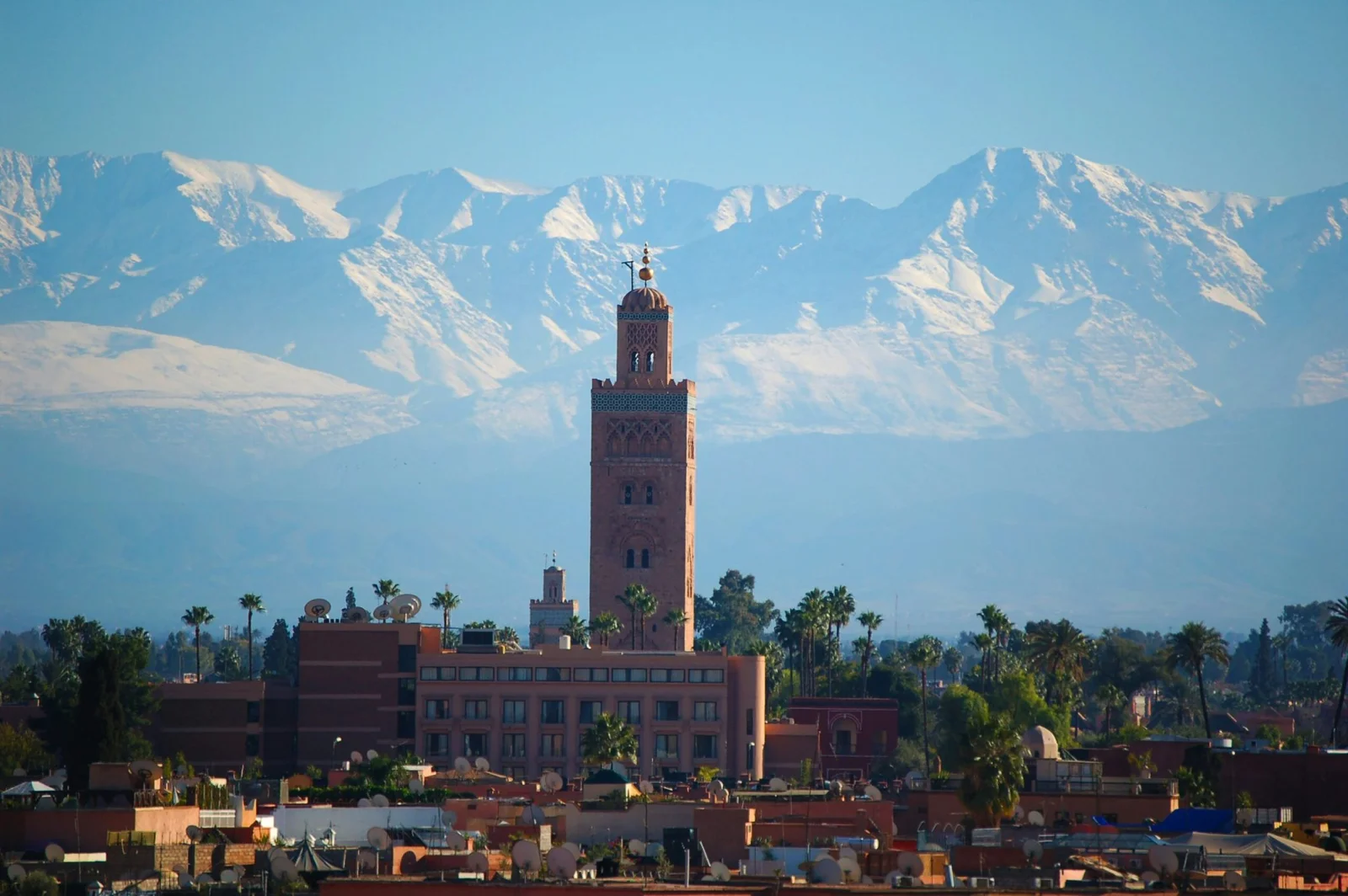
Marrakech in February is Marrakech waking up. The narcissus that appeared tentatively in January riad courtyards are now properly in bloom. The first wisteria buds are forming on trellises. The orange trees have been harvested and the gardens look slightly stripped but fresher for it. By the last week of February, the evening temperature has climbed enough that sitting outside after dinner with a glass of mint tea is possible rather than merely brave.
The souks remain local in character: vendors selling to residents rather than tourists, prices reflecting what things actually cost rather than what foreigners will pay. The Rahba Kedima spice market in February is at its most honest — the winter spice trade, turmeric and cumin and dried ginger shifting in serious quantities for household use rather than decorative display. The weekly market at Ait Ourir on Tuesdays, 30 kilometres south on the Atlas road, is one of the most authentic rural markets accessible from the city.
Riad heating is still non-negotiable. Nights in Marrakech in February drop to 10-12°C and a room without proper heating is uncomfortable. Ask specifically before booking.
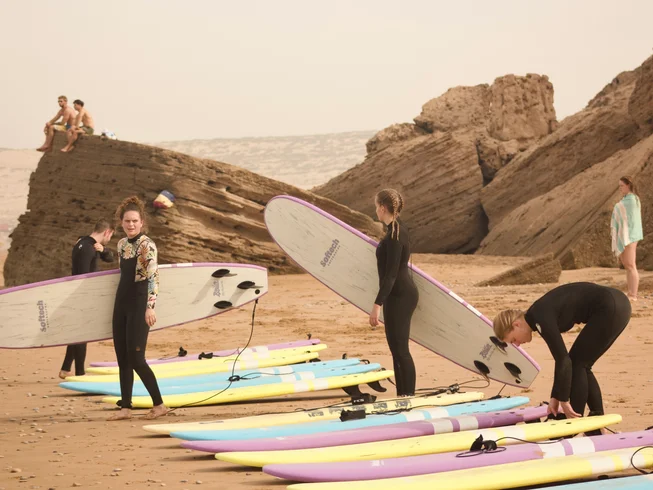
February is when the Atlantic surf coast operates at its most serious. The North Atlantic storm systems that generate Morocco’s best waves are at their winter peak in February, and Anchor Point north of Taghazout is producing the kind of long, powerful right-handers that experienced surfers travel specifically to find. The surf community on the coast in February is focused and unpretentious — people who chose winter precisely because the waves are best and the scene is most real.
For beginners this is a harder entry point than summer: the waves are bigger and the water is cold enough to require a 4-3mm wetsuit. Most retreat centres provide wetsuits; confirm before booking. The trade-off is that progression is faster in serious conditions, and a week of February surf instruction on this coast advances beginners further than two weeks in July.
Beyond the surf, the Souss plain around Agadir is green from the winter rains in February, the argan forest north toward Essaouira at its most lush. Paradise Valley, the palm gorge in the Anti-Atlas foothills an hour northeast of Agadir, is worth a half-day excursion in February for the landscape even if the water temperature makes swimming inadvisable.
If Ramadan falls in February — check the current year’s Islamic calendar, as the date shifts approximately 11 days earlier each year — the Sahara experience changes in ways that are worth knowing about before you go. During Ramadan, desert camps adapt their schedule entirely around sunrise and sunset: no food or drink before iftar at sunset, the communal breaking of the fast becoming the day’s central event, and an atmosphere of collective focus and quietness during daylight hours that is unlike any other time in the desert.
Experiencing Ramadan iftar in a Sahara camp, with dates and harira served as the sun disappears behind the dunes and the temperature drops sharply, is one of those experiences that has no equivalent elsewhere. It requires some adjustment — retreat programming adapts, restaurant hours change, the social energy is different from outside Ramadan — but for those who engage with it rather than around it, it offers access to Morocco’s deepest cultural layer.
Outside of Ramadan, February in the Sahara is cold at night and magnificent by day. The desert in February has almost no visitors midweek. The clarity of the winter air makes the light on the dunes sharper and more photogenic than the slightly hazy quality that summer produces.
The almond blossom that defines the landscape in February translates directly into food. Fresh almonds, still soft and slightly milky inside, appear at Atlas valley markets in February before the main harvest dries and hardens them. Eaten out of hand with a pinch of salt they have a sweetness that roasted almonds cannot replicate.
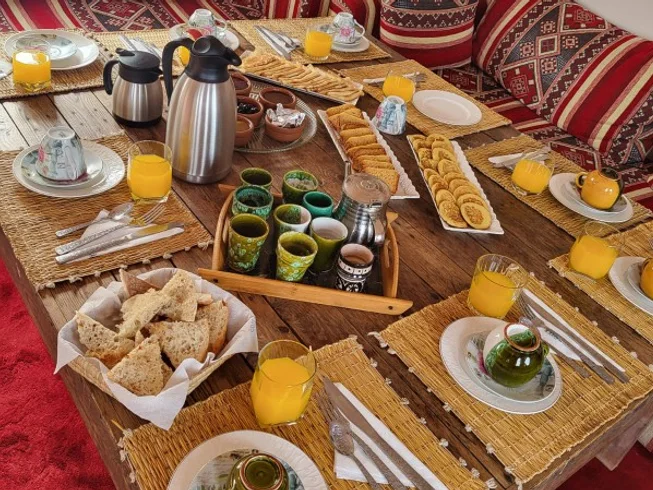
Amlou, the Atlas Mountains breakfast paste of ground almonds, argan oil, and honey, is at its best in February when the ingredients are fresh from the most recent harvest. Served with msemen flatbread at a mountain guesthouse breakfast, it is one of those simple combinations that stays in the memory long after the trip.
Blood oranges from the Souss plain are at their most intensely coloured and flavoured in February. The juice pressed fresh at street carts in Marrakech from blood oranges in February is a genuinely different drink from the navel orange juice of January: darker, more complex, with a slight bitterness behind the sweetness that regular oranges lack.
Shebakia, the honey-and-sesame pastry associated with Ramadan but available year-round in good pastry shops, is worth seeking out fresh and warm in February. Twisted into a flower shape, fried in oil, coated in honey and sesame seeds, and eaten with a glass of mint tea, it is the kind of confection that is exactly right eaten one piece at a time, slowly. When Ramadan falls in February, shebakia is everywhere and freshly made daily.
Tagine in February remains in its winter form: slow-cooked and rich, with dried fruits and warming spices. The lamb tagine with almonds and prunes takes on a slightly different character when you have seen the almond orchards in blossom on the hillside that morning.
Bissara, the broad bean street soup, continues through February. The dried broad beans of winter give way in late February to the first fresh beans of the approaching spring season, and the soup made with fresh beans has a lighter, more delicate flavour than the winter version. In some markets, vendors sell both versions side by side as the seasons overlap.
For restaurant meals in Marrakech, February is the best month to try the tables that are genuinely difficult to book in April and October. Nomad in the medina takes reservations weeks in advance in spring but is accessible in February. Cafe Clock runs cooking classes alongside its cafe menu and is less booked in February than at any other time.
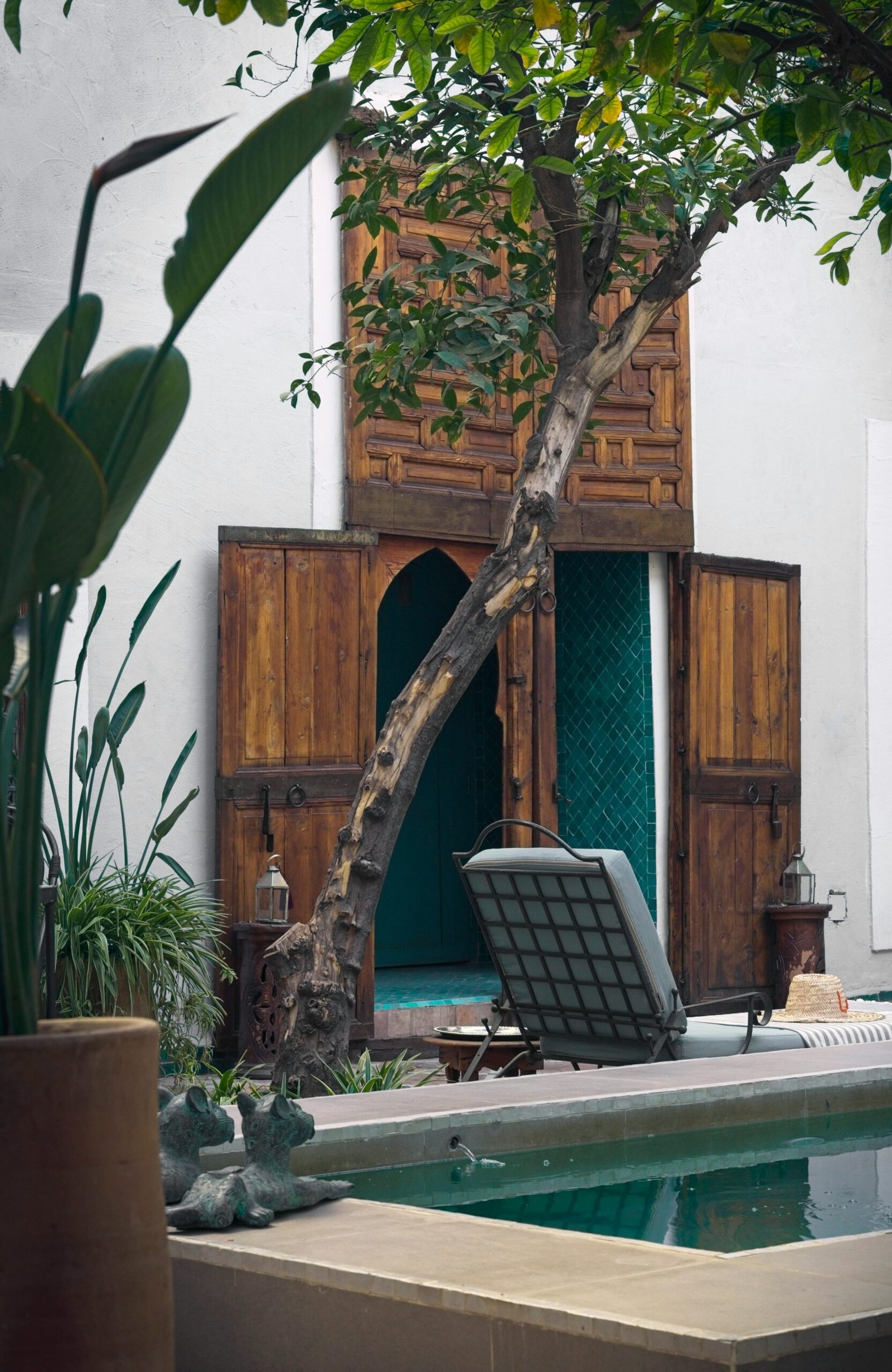
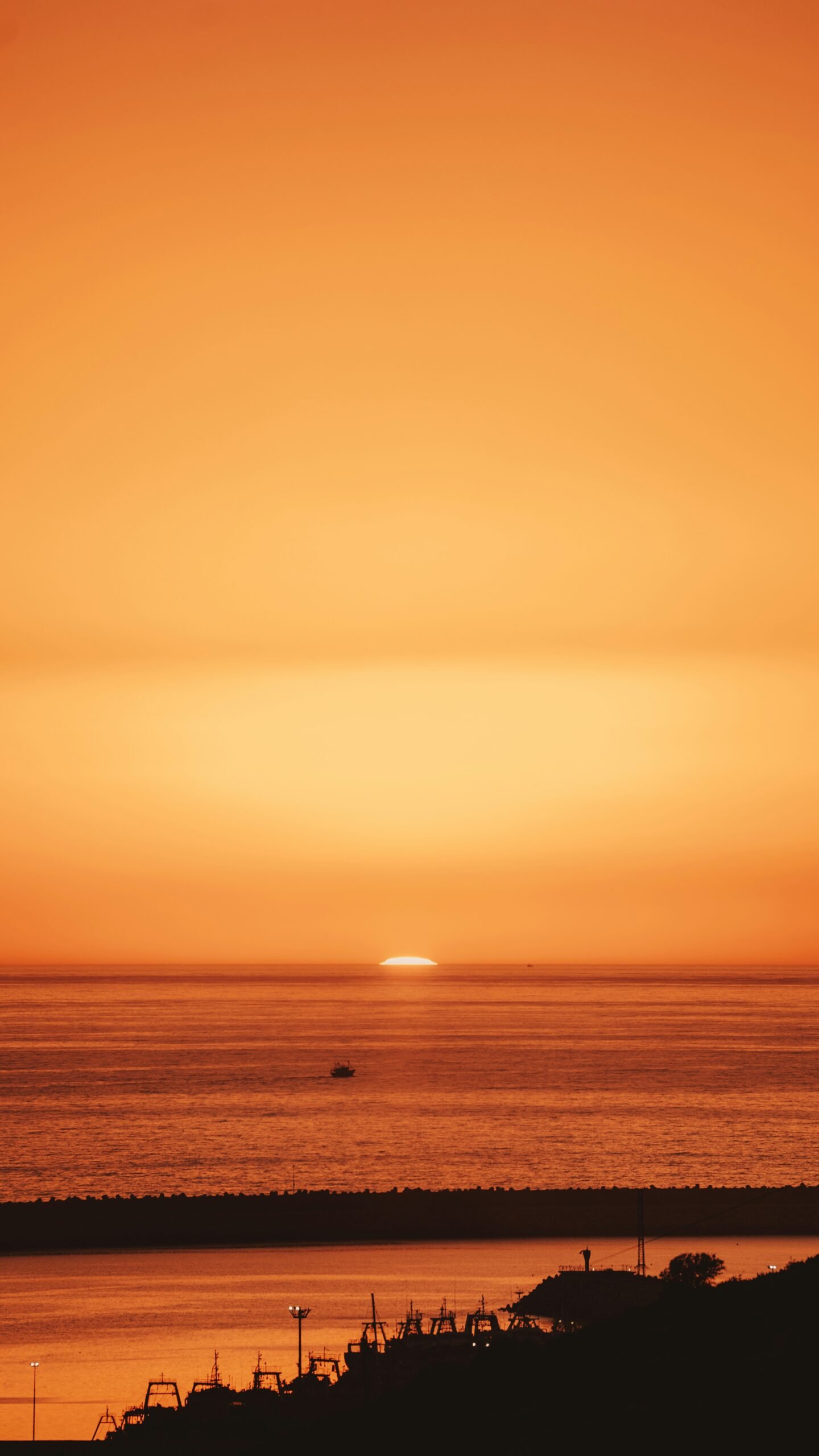
The Almond Blossom Festival in Tafraoute is the defining February event and the one worth planning a trip around if timing is flexible. The exact dates vary year to year, usually the second or third week of February, and are announced by local authorities each year. The festival itself is modest in scale — a market, traditional Amazigh music performances, local food producers — but the setting in the Anti-Atlas, with pink granite boulders surrounded by blossoming trees, is extraordinary. It is one of the most authentically local festivals in Morocco.
Ramadan: if Ramadan falls in February, the country’s rhythm changes entirely from sunset. The day is quiet; the hour after sunset is when Morocco comes fully alive, with iftar meals, music, and the communal energy of a fast broken together. Eating iftar at a traditional restaurant in Marrakech — harira, dates, chebakia, the communal spread — is one of the more genuine cultural experiences Morocco offers.
Carnival: Casablanca and some northern cities hold modest Carnival celebrations in February, a legacy of French and Spanish colonial cultural influence. Nothing approaching European scale, but worth knowing about for those based on the coast.
Weather: Marrakech 10-20°C, nights still cold, days climbing toward spring. Atlas Mountains: snow above 1,500m, 8-15°C in the valleys. Agadir: 13-22°C, mild year-round. Sahara: near freezing at night, 18-24°C days, clear skies.
Almond blossom timing: peaks approximately February 5-20 in the lower Atlas valleys, a week later at higher elevations. Check with retreat centres in the Ourika or Amizmiz valleys for current-year conditions.
What to pack: warm layers, a proper jacket, waterproof outer layer. By the last week of February, daytime temperatures in Marrakech are warm enough for lighter layers by early afternoon, but mornings and evenings remain cool.
Prices: the lowest of the year, on par with January except during any European school half-term week that falls in February.
February retreat programming sits between the full winter model of January and the more outdoor-oriented spring model that arrives with March. The first half of the month is essentially winter: hammam-centred, indoor practice prioritised, medina exploration scheduled for the warmest part of the afternoon. The second half starts to open up as days lengthen and temperatures climb: rooftop yoga becomes viable in the warmest part of the day, outdoor excursions to the blossom valleys become the highlight of the week.
The almond blossom excursion is the February programming event that has no equivalent in other months. Retreat centres in the Ourika Valley build it into the week as a matter of course. For Marrakech-based retreats, a half-day excursion to the blossom valleys — a guided drive through the foothills, a walk through orchards, a traditional lunch at a local guesthouse — is the experience that participants most often cite when describing why they chose February specifically.
Cooking classes in February have a seasonal character that other months cannot replicate. Learning to make amlou with freshly harvested almonds and argan oil, or a tagine with fresh almonds and preserved lemon, while blossom is visible through the kitchen window, connects the food directly to its landscape. The best culinary retreat programmes in Morocco in February build this connection deliberately, sourcing ingredients from the valleys they visit.
Is February worth choosing specifically for the almond blossom? Yes, if it coincides with your schedule. The blossom lasts two to three weeks and is one of those seasonal events worth timing a trip around rather than treating as a bonus. The landscape in the Atlas foothills during peak blossom is extraordinary, and it exists for a narrow window before the petals fall and the leaves come.
How does February compare to January for a Morocco retreat? February is incrementally better in almost every respect: slightly warmer, slightly more activity available outdoors, the almond blossom as a specific seasonal event, and the same low prices and empty retreat centres. The main reason to choose January over February is if the first two weeks of the year work better for your schedule, or if you specifically want Yennayer (the Amazigh New Year on January 13th) as a cultural experience.
What happens to retreat programming if it rains in February? February is one of Morocco’s rainier months. Good retreat centres have indoor yoga spaces not dependent on the courtyard or rooftop, a full schedule of hammam and cooking class alternatives, and a flexible approach to excursions that can shift by a day when conditions require. Ask about indoor backup programming when booking.
Is the surf good in February? February is one of the best months for experienced surfers on the Atlantic coast. Swells are at their winter peak, Anchor Point is producing powerful right-handers, and the surf community is at its most serious. For beginners, the surf is more demanding than summer: bigger waves, colder water, proper wetsuit required. See our yoga retreats in Morocco in March for when conditions begin to moderate into something more accessible.
Your email address will not be published. Required fields are marked *