
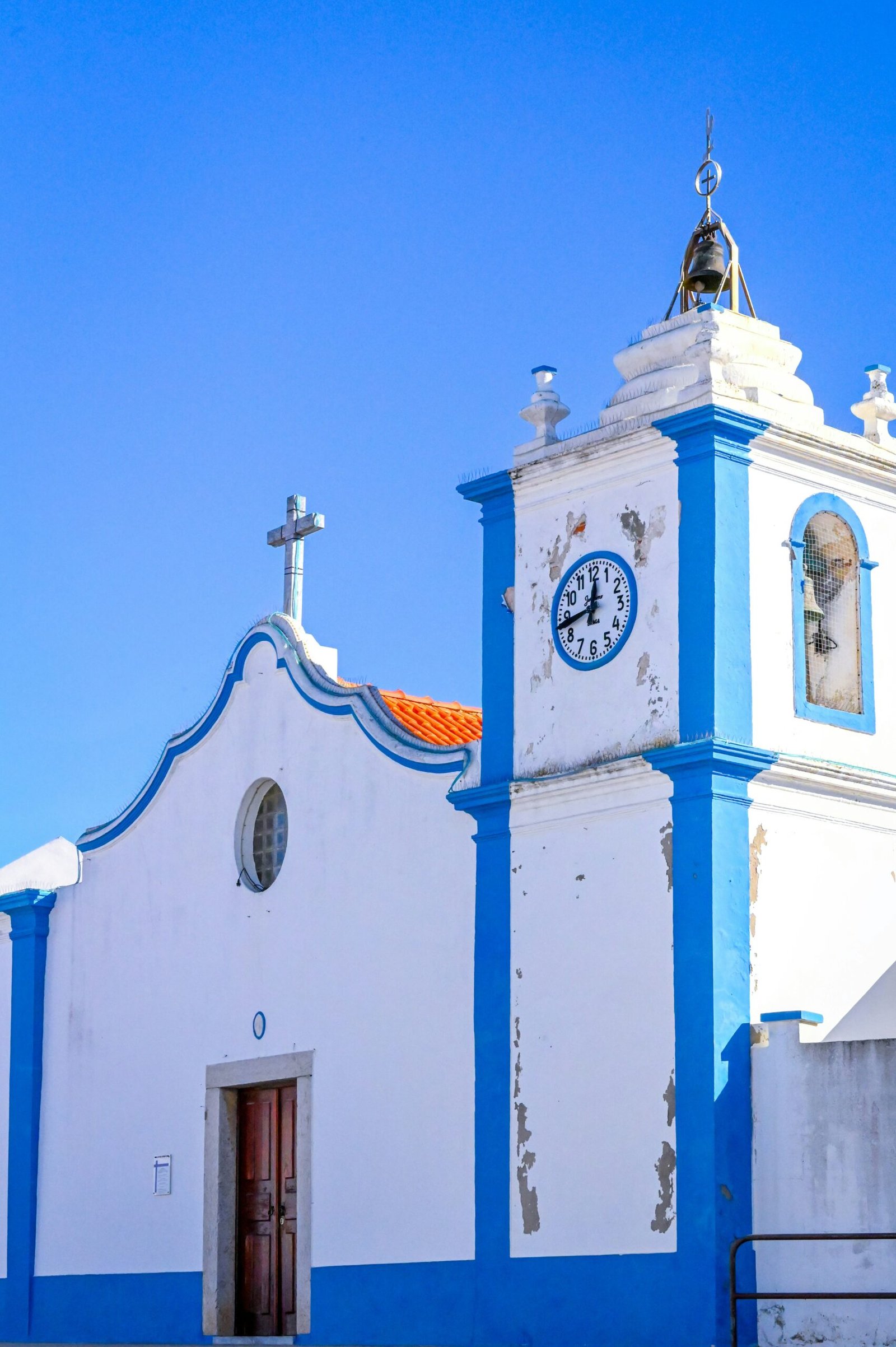
The Alentejo is the least obvious choice for a yoga retreat in Portugal — and often the best one. It has none of the coastal drama of the Algarve, none of the surf culture of Ericeira, and none of the tourism infrastructure of Lisbon’s surroundings. What it has instead is space, quiet, heat in summer and stillness in autumn, and a landscape — rolling plains, cork oak forests, whitewashed villages, olive groves — that asks very little of you and returns a great deal.
This makes it particularly well-suited to retreat formats where the point is to slow down rather than be stimulated. If what you need is genuine quiet and time to think, the Alentejo tends to deliver it more reliably than anywhere else in Portugal.


Several features of the region make it particularly well-matched to retreat travel, and most of them are structural rather than aesthetic.
The landscape is genuinely spacious in a way that affects how you feel within it. The plains of the Alto Alentejo stretch to a wide horizon with almost no vertical interruption — no mountains, no tall buildings, very few roads. That openness has a measurable effect on the nervous system. Studies on restorative environments consistently show that wide, low-complexity natural landscapes reduce cortisol and increase a sense of calm more quickly than enclosed or high-density settings. The Alentejo does this passively, without any effort on your part.
The region also has a long tradition of small-scale agriculture — cork, olive oil, wine, grain — which means local food supply chains are real. Retreats here that describe locally sourced food are usually telling the truth; the infrastructure to support it exists in a way it doesn’t in more tourist-oriented areas. Farm-to-table is a description of how the region actually works, not a marketing angle.
Accessibility is better than its reputation for remoteness suggests. Most Alentejo retreat venues are a 90-minute to two-hour drive from Lisbon Airport — far enough to feel genuinely removed from urban pace, close enough for a straightforward transfer. The Évora area and the Alentejo coast (Costa Vicentina) are the most accessible from Faro Airport in the south.
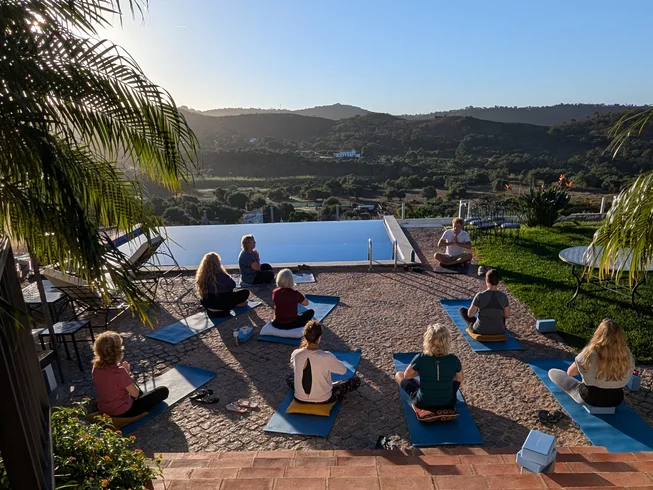
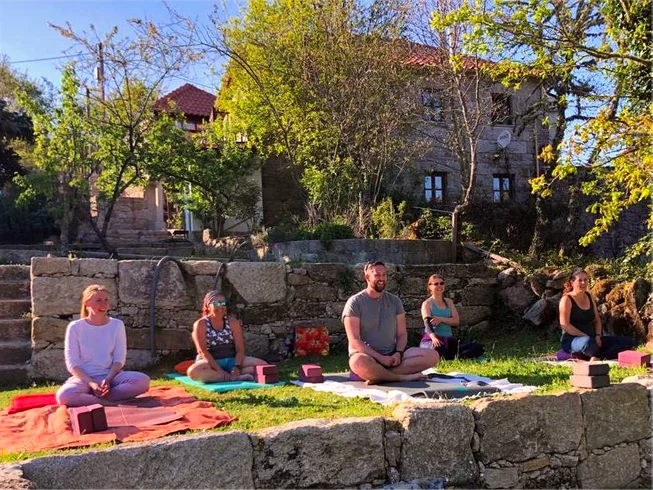
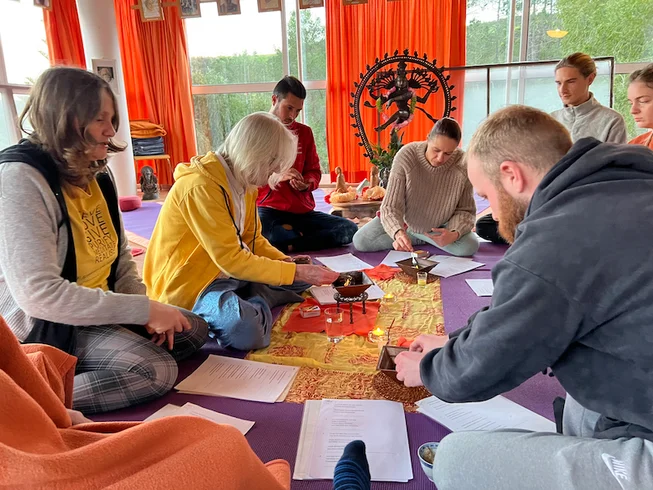

The daily rhythm of a well-run Alentejo retreat is shaped as much by the landscape as by the programme. Early morning practice — usually starting between 7 and 8am — takes advantage of the cool air before the day heats up. Sessions in this region tend toward grounding styles: Hatha, Yin, or slow Vinyasa, with extended floor work and longer holds. The pace matches the landscape.
Breakfast follows, typically communal and built around local produce — olive oil, bread, fruit, eggs if the retreat is not fully plant-based. The quality of food at Alentejo retreats is one of their distinguishing features; the region’s agricultural tradition means genuinely seasonal, genuinely local ingredients are available without effort.
Afternoons in the Alentejo are long and warm in spring and autumn, hot in summer. Most retreat schedules leave this time unstructured or loosely programmed — walks through cork oak forests, time in a natural pool, reading, journalling, or simply sitting. Optional workshops in the late afternoon — breathwork, yoga nidra, sound healing — bring the group back together before an evening meal and a quieter second practice or meditation to close the day.
The evenings are distinctive. The Alentejo sky at night is among the darkest in Portugal — there is very little light pollution across most of the region, and the stars on a clear autumn night are exceptional. Many retreats build this into the programme informally: dinner outside, a fire, time to sit and look up.
The Alentejo is large — roughly a third of Portugal’s total land area — and different parts of it have distinct characters worth understanding before you choose.
The most accessible and historically rich area. Évora is a UNESCO World Heritage city and makes a useful base for pre- or post-retreat exploration. The landscape around it — rolling plains, megalithic monuments, cork and olive estates — is the Alentejo most people picture. Retreat venues here tend to be converted herdades (farmhouses) or rural quintas with significant land. Good year-round, though summer heat is intense and pushes practice fully into early morning and evening.
Quieter and less visited than the Alto Alentejo, with a more remote feel. The landscape is flatter and more austere, and the retreat venues that operate here tend to be smaller and more off-grid. Best for people actively seeking isolation rather than just quiet. Fewer options overall, but those that exist tend to be serious about what they do.
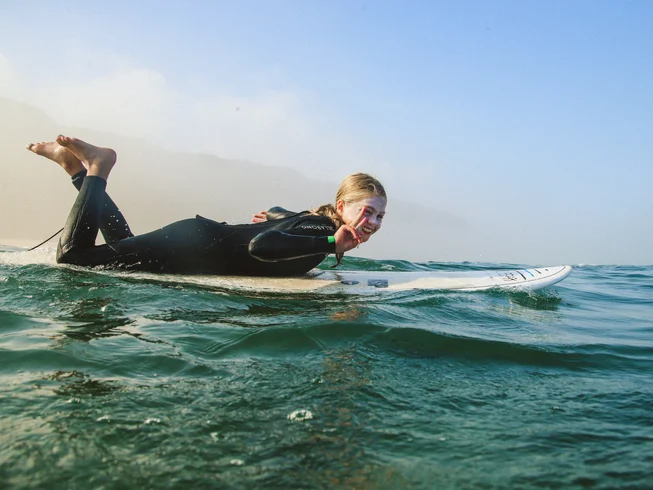
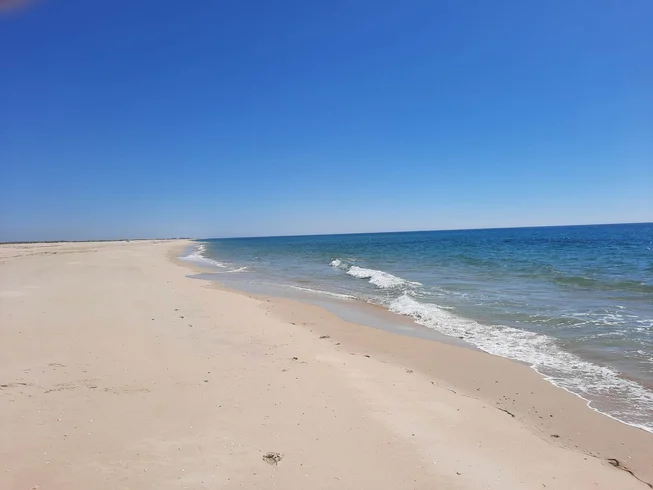
The southern strip where the Alentejo meets the Atlantic — technically shared with the western Algarve but culturally and in character more Alentejo than Algarve. Protected by the Vicentine Coast Natural Park, this coastline has Atlantic surf, dramatic cliffs, and almost no tourism development. Retreats here combine the Alentejo’s quiet with coastal access — a different combination from either the inland Alentejo or the established Algarve resort coast. Particularly strong for eco-focused and surf-and-yoga programmes.
A natural park in the far northeast, bordering Spain. Higher altitude, cooler in summer, forested and mountainous — quite different from the typical Alentejo image. A small number of retreats operate here for people who want Portuguese countryside without the heat of the plains. Less known and harder to reach, but genuinely distinctive.

The Alentejo is not the right choice for everyone, and being honest about this saves a disappointing week.
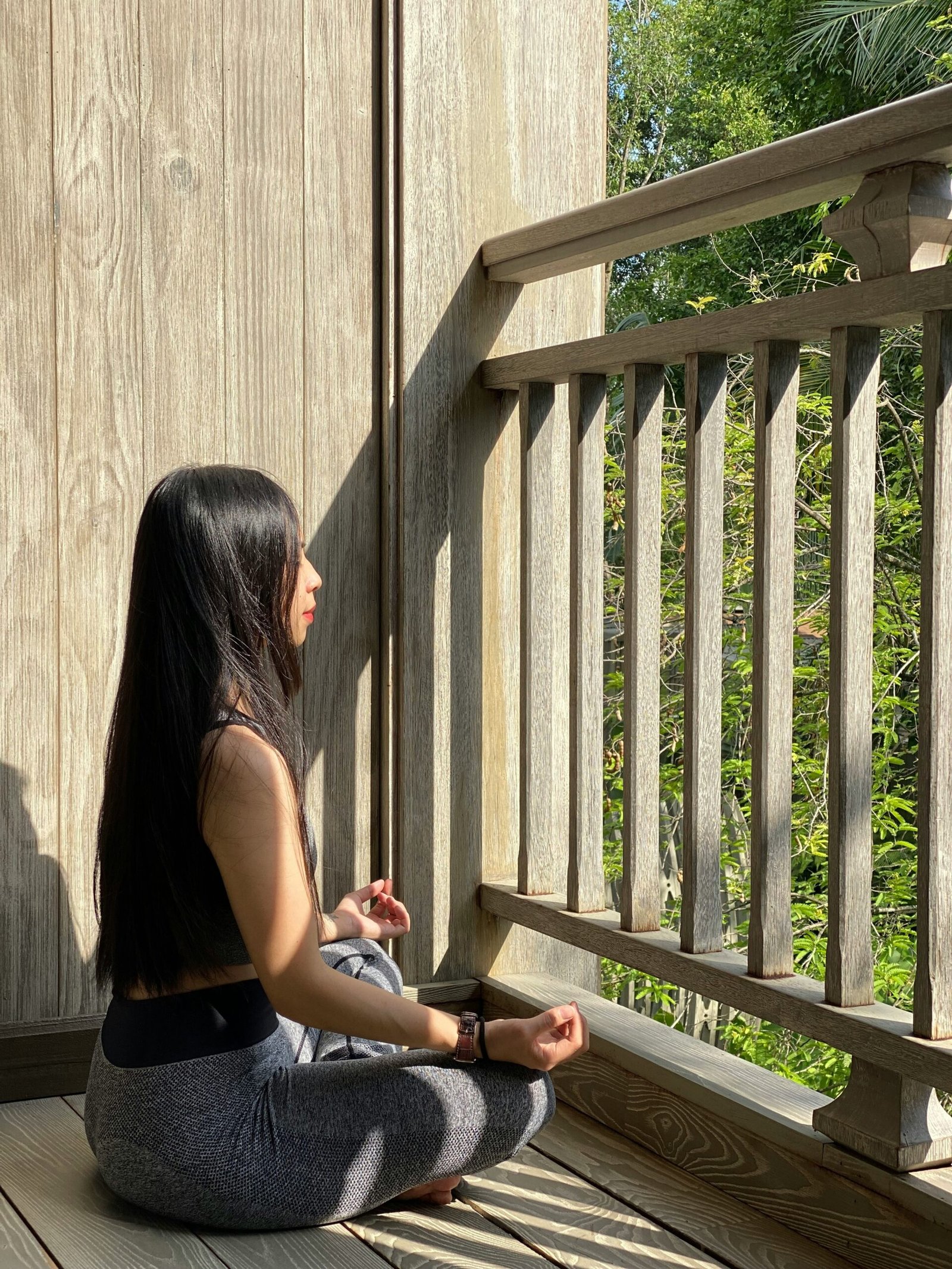
It works particularly well for: people recovering from burnout or chronic stress, where the absence of stimulation is itself therapeutic; solo travellers who want genuine quiet and don’t need a social programme to feel comfortable; anyone whose primary goal is meditation or deep restorative practice; people who want to eat well and locally without a luxury price tag; and writers, artists, or anyone who needs large uninterrupted blocks of time to think.
It is probably not the best choice for: people who need activity or novelty to feel comfortable — the Alentejo’s slowness can feel boring or even anxiety-inducing in the first day or two for people who are very accustomed to stimulation; anyone whose priority is coastal access and swimming; people looking for a socially active retreat with a large group and organised evening entertainment; and first-time retreat travellers who aren’t sure they can manage the quiet — the west coast Algarve or Sintra area tend to be gentler introductions.
The region’s most consistent quality is that it does not try to entertain you. The landscape is too slow and too wide for that. What it does instead is remove the conditions that keep most people distracted — noise, stimulation, the social expectation to be interesting — and leave a quieter kind of space. Most people find, after a day or two of adjustment, that this is precisely what they came for.
Browse Om Away’s curated yoga retreats in Portugal, including programmes in the Alentejo — reviewed for teaching quality, environment, and programme structure.
Your email address will not be published. Required fields are marked *