

Choosing how long to step away is more than a scheduling decision — it is a question of depth.
A yoga retreat can be a pause or a passage: a weekend to breathe, a five-day middle ground, or a full week that quietly reorganises how you move through your life. All three formats work. But they work differently, on different timescales, and on different layers of the person.
The length you choose shapes everything: what opens, what stays untouched, what the nervous system has time to do, and what you’re actually capable of bringing home.


Most people choose a retreat length based on what their schedule allows rather than what their situation needs. That’s understandable — time is genuinely limited. But it’s worth understanding what duration actually determines, because the difference between three days and seven is not simply a matter of more of the same.
The nervous system doesn’t shift states instantly. Arriving at a retreat still carrying the momentum of a working week — the cortisol, the alert readiness, the habitual scanning for tasks — takes time to metabolise. Research in psychophysiology suggests that the parasympathetic nervous system begins to genuinely dominate after roughly 24 to 48 hours of sustained lower stimulation. Which means a significant portion of a short retreat is spent simply arriving, in the physiological sense.
Longer retreats don’t just extend the experience — they change the kind of experience that’s possible. Once the initial decompression is complete, something quieter becomes available: a quality of attention that ordinary life rarely offers, and that shorter formats can gesture toward but rarely fully open.

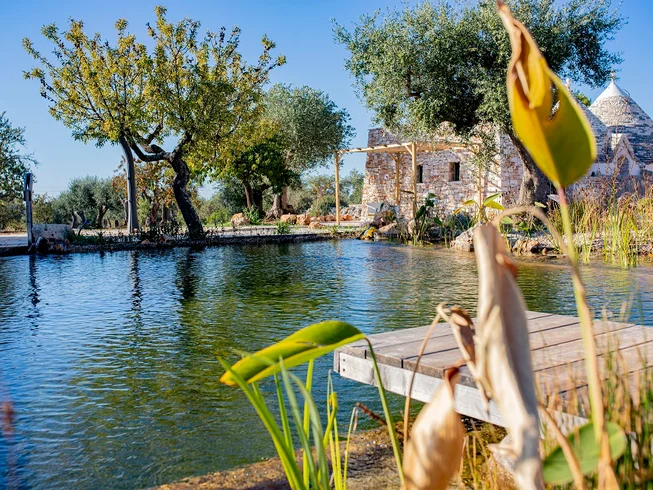
A weekend retreat is the most accessible format and the most misunderstood. Its limitation — brevity — is real. But so is its specific value, which is distinct from what longer formats offer rather than simply lesser.
The rhythm is typically compact: arrival on Friday evening, a full day of practice on Saturday, departure Sunday after lunch. What makes the format work is containment — clear boundaries, a focused schedule, and the removal of ordinary decision-making. Within 24 hours, most people experience a measurable shift from sympathetic activation (alert, scanning, ready) to parasympathetic rest. Heart rate slows. Digestion settles. Breath deepens. That shift is physical, not philosophical.
A weekend retreat is best understood as a reset rather than a transformation. It shows you what balance feels like — the quality of attention that becomes available when demands are removed — without yet teaching you how to sustain it. The main limitation is timing: just as the body begins trusting the stillness, the suitcase is packed again.
Weekend retreats typically cost €300–€700 for shared accommodation and full board. They work well for people who want to reconnect with practice without taking time away from work, for beginners uncertain whether a longer commitment would suit them, and for experienced practitioners who use short retreats as regular seasonal maintenance rather than as primary immersions.

Many of the most satisfying retreat experiences happen in the four- to five-day window, a format that has grown significantly across European programs over the past several years. Arrive Thursday evening, leave Monday morning — enough time to genuinely slow down without depleting the annual leave budget.
What changes compared to a weekend is the availability of a genuine middle. The first day is arrival and decompression. The last day is preparation for return. In between — days two, three, and four — there is a quality of settled attention that a weekend never quite reaches. The body has stopped waiting for the experience to end. The mind has run out of the usual surface-level thoughts. Something quieter has room to emerge.
Four- and five-day retreats work particularly well when scheduled seasonally — one in spring to reset energy after winter, one in autumn to recalibrate before the intensity of the final quarter. For people who attend retreats regularly, this format maintains continuity between longer annual immersions without requiring the full commitment of a week.
Pricing typically falls between €700 and €1,300 depending on location, accommodation standard, and program depth. The daily rate is slightly higher than a full week but the total cost is lower, which makes boutique-quality programs accessible at this length that might be out of reach for seven days.
A full week doesn’t multiply the benefits of a weekend — it changes the kind of experience that becomes possible. The difference is not quantitative but qualitative.
By day three, the circadian rhythm has aligned with natural light rather than artificial schedules. By day five, the habitual mental loops — the replaying of unresolved conversations, the planning ahead, the background anxiety — begin to unwind. By day six, something that can only be described as inhabiting the present becomes available, not as an achievement but as a natural consequence of sustained conditions.
Seven days allow repetition, and repetition is what begins to rewire behaviour. Practising twice daily, eating with attention, resting without guilt, moving slowly — these are habits the body can start to encode at this duration in ways that a weekend can only suggest. That’s why week-long retreats often mark turning points rather than interludes: people return not just rested but reorganised in some quieter way.
Neuroscience supports what participants describe. After approximately 72 hours of reduced stimulation, the brain’s default mode network — responsible for self-referential thought and rumination — begins to quiet. After a week, new synaptic associations related to focus, self-compassion, and present-moment awareness begin to form. What feels like peace is, at a neurological level, literally a form of repatterning.
Seven-day retreats typically cost between €1,100 and €2,000 in Europe, depending on location, group size, and the quality of teaching. The real investment, though, is psychological: surrendering a full week to nothing but being can feel genuinely radical in a culture built on urgency. That resistance — and the willingness to meet it — is part of the work.


Programs of ten days or longer occupy a different category entirely. At this duration, the retreat is no longer a container for restoration — it becomes a container for genuine transformation, in the sense that the word is usually used too loosely.
Ten-day silent meditation retreats, extended yoga intensives, or longer holistic programs create the conditions for patterns that are deeply habitual to surface and shift. The first week is often described by participants as a process of shedding — the accumulated momentum of ordinary life releasing layer by layer. The second week, for many people, is where the actual work begins: the attention is clear, the body is settled, and what remains is an unusual quality of honest self-encounter.
These programs are not for everyone and are not appropriate as a first retreat. They require a baseline of comfort with solitude, some prior experience with the practice, and a genuine readiness to spend extended time without ordinary distraction. They are best approached after some retreat experience at shorter durations, and with realistic expectations about the difficulty of the middle days — the period, typically around days five to eight, when the novelty has worn off and the end is not yet near enough to feel like relief.
Pricing varies widely by format and location: from €1,500 for community-style extended programs in Southeast Asia to €4,000 or more for premium European intensives. The daily rate is often the lowest of any format, but the total commitment — financial and personal — is the highest.
Rather than starting with “how long can I afford to be away,” it helps to start with an honest assessment of what your current state requires — and then work backwards to the duration that serves it.
A weekend or short retreat suits you if you are in a period of sustained depletion and need rest more urgently than revelation. If you are new to retreats and want to test the format before committing to a week. If your schedule genuinely cannot accommodate more and a shorter experience is better than none. If you are a regular practitioner using retreats as seasonal maintenance rather than as primary immersions.
A four- to five-day retreat suits you if you want genuine depth without the full commitment of a week. If you have some retreat experience and know that the opening days are transition rather than arrival. If you want to establish a sustainable rhythm of retreating more than once a year. If the boutique quality of a shorter program at this length suits your preference over a longer budget format.
A seven-day retreat suits you if you are seeking transformation rather than recovery. If you are ready to confront habits rather than simply escape them temporarily. If you want to learn from teachers in depth — philosophy, breathwork, meditation — rather than just practise alongside them. If you have the time and are willing to make the full psychological commitment.
A ten-day or longer program suits you if you have prior retreat experience, are comfortable with extended solitude, and are ready for the depth and difficulty that immersion at this duration involves. Approach it as a serious undertaking, not a longer version of a week.
For week-long retreat options, yoga retreats in Portugal and yoga retreats in Greece both have strong programmes across the 5-8 day range — the duration that this guide identifies as the most complete format for most practitioners.
The most sustainable approach to retreat is not a single annual event but a rhythm of interventions calibrated to different needs at different times.
A practical model that works well for many people: a weekend or short retreat each quarter to maintain a baseline of practice and presence, and a full-week immersion once a year for deeper recalibration. The short retreats keep the connection alive between longer immersions. The annual week provides the depth that shorter formats can point toward but not fully open.
This rhythm doesn’t require a large annual budget — two short retreats and one longer one, chosen carefully, typically costs less than a single premium week — and it integrates retreat as a practice rather than treating it as an emergency measure taken only when depletion has become unavoidable.
Whether you step away for three days or seven, what the duration ultimately determines is permission — the amount of time you give your nervous system to stop performing and begin recovering.
Short retreats show you what balance feels like. Longer ones teach you how to sustain it. Both, chosen with honesty about what you actually need, train the same essential capacity: the ability to return to yourself.
The real measure of a retreat isn’t its length. It’s the quality of attention you carry home when it’s over.
How long is a typical yoga retreat? Most yoga retreats run between three and seven days. Weekend formats of two to three days are the most accessible and the most common entry point. Five-day programs are increasingly popular across Europe as a balance between depth and practicality. Full-week retreats of seven days are the standard for serious immersion and habit formation. Programs of ten days or more exist but are a distinct category suited to experienced retreat-goers.
Is a weekend retreat long enough to make a difference? Yes, within the limits of what a short retreat can offer. A weekend creates a genuine physiological shift — the nervous system moves from sustained activation to genuine rest — and shows you what a different quality of attention feels like. What it cannot do is establish new habits or allow the deeper pattern work that requires more consecutive days. It is a reset, not a transformation, and valuable as exactly that.
What is the ideal length for a first yoga retreat? Five to seven days is the strongest recommendation for a first retreat. It’s long enough for the initial decompression to complete and for something quieter to become available, without being so long that the commitment feels daunting. If a full week feels like too much, a four- to five-day program is a sound compromise. A weekend is a reasonable introduction but may leave you feeling that you arrived just as things were getting interesting.
Do longer retreats cost more? In total, yes. Per day, no — longer retreats typically have a lower daily rate because fixed costs are spread across more days. A seven-day boutique retreat at €1,400 total costs less per day than a weekend retreat at €500. The question of value, though, is better measured by what you integrate afterward than by the daily rate during.
Can a longer retreat create lasting change? Yes, more reliably than shorter formats. Seven or more consecutive days allow the body and mind to encode new patterns — sleep rhythms, movement habits, the quality of attention in everyday moments — in ways that three days can suggest but not fully establish. The research on habit formation supports what retreat participants consistently report: the duration threshold for lasting behavioural change is somewhere around five to seven days of sustained new conditions.
How often should I do a retreat? There is no single answer, but a rhythm that works well for many people is a short reset every quarter and a full-week immersion once a year. This keeps practice alive between longer programs and treats retreat as an ongoing part of how you maintain wellbeing, rather than as an emergency measure taken only when depletion has become serious. Done rhythmically, retreats become progressively more effective — each one builds on the integration of the last.
Your email address will not be published. Required fields are marked *