
Most people breathe around 20,000 times a day without thinking about it once. That automaticity is useful — you don’t want to have to remember to breathe.
But it means that most people also spend their lives breathing in ways that quietly reinforce stress, shallow chest breathing, held breath, irregular rhythm, without ever realising it’s happening or knowing it can change.


Breathwork is a broad term for any intentional practice that uses conscious control of the breath to influence physical, mental, or emotional states. It spans a wide range, from ancient yogic pranayama traditions practiced for thousands of years to contemporary therapeutic modalities developed in the last few decades.
What distinguishes breathwork from simply breathing is intention and attention. You’re not just letting the breath happen; you’re directing it, shaping it, and using it as a tool to access states that are otherwise difficult to reach voluntarily.
This is possible because breathing occupies a unique position in the nervous system. It’s the only autonomic function, a process that runs automatically without conscious input, that can also be directly controlled by the conscious mind. Heart rate, blood pressure, digestion — you can’t decide to change these directly. But you can change your breathing pattern right now, and in doing so, influence all of them indirectly.
That leverage is what makes breathwork so practically useful.




The physiological effects of conscious breathing are well documented and not particularly mysterious, even if they can feel surprising when you first experience them.
Slow, controlled breathing, particularly with an extended exhale, activates the vagus nerve, the primary channel through which the body shifts from sympathetic activation (the stress response) to parasympathetic rest. A longer exhale signals the nervous system that no immediate threat is present. Heart rate slows. Blood pressure drops. Muscles release. The digestive system reactivates. Thinking becomes clearer.
This is why breathwork is increasingly used in clinical settings. Research published in journals including Frontiers in Human Neuroscience has demonstrated measurable reductions in cortisol, anxiety, and markers of inflammation following consistent breathwork practice. A 2023 study from Stanford compared different breathing techniques and found that cyclic sighing, a practice involving a double inhale through the nose followed by a long exhale through the mouth, produced the most significant improvements in mood and physiological markers of stress among all techniques tested.
The effects accumulate. A single session of breathwork produces a noticeable shift; a regular practice, over weeks and months, appears to raise the baseline of the nervous system’s capacity to regulate itself, making the stress response less easily triggered and recovery from it faster.
If you want to develop a consistent breathwork practice in a structured setting, many of our yoga retreats in Greece incorporate pranayama as a daily element alongside the asana practice.
These three practices cover different needs and different levels of intensity. None requires equipment, training, or more than a few minutes.
Box Breathing
Inhale for four counts, hold for four, exhale for four, hold again for four. Repeat five to ten rounds.
Box breathing works by interrupting the stress cycle through pattern and rhythm. The holds create a brief pause in the autonomic system’s momentum; the symmetry of the pattern gives the mind something to anchor to. It’s used by military personnel, surgeons, and athletes for acute stress management, but it’s equally effective at a desk before a difficult meeting.
Extended Exhale Breathing
Inhale through the nose for four counts, exhale through the mouth for six to eight counts. Repeat for five minutes.
The mechanism here is straightforward: the exhale phase is when the parasympathetic nervous system is most active. Extending it relative to the inhale tilts the autonomic balance toward rest. The mouth exhale allows for a fuller release of air and tends to feel more immediately calming than a nasal exhale. This is the technique most consistently supported by recent research, including the Stanford study mentioned above.
Nadi Shodhana (Alternate Nostril Breathing)
Close the right nostril with the right thumb, inhale through the left nostril. Close the left nostril with the ring finger, open the right, exhale through the right. Inhale through the right. Close the right, exhale through the left. That is one cycle. Continue for five to ten rounds.
This is a pranayama practice with roots in classical yoga, and it remains one of the most well-studied. Research suggests it reduces blood pressure, improves cardiovascular function, and has a balancing effect on the two hemispheres of the brain. It also requires enough attention to interrupt anxious thinking effectively, which is part of how it works.

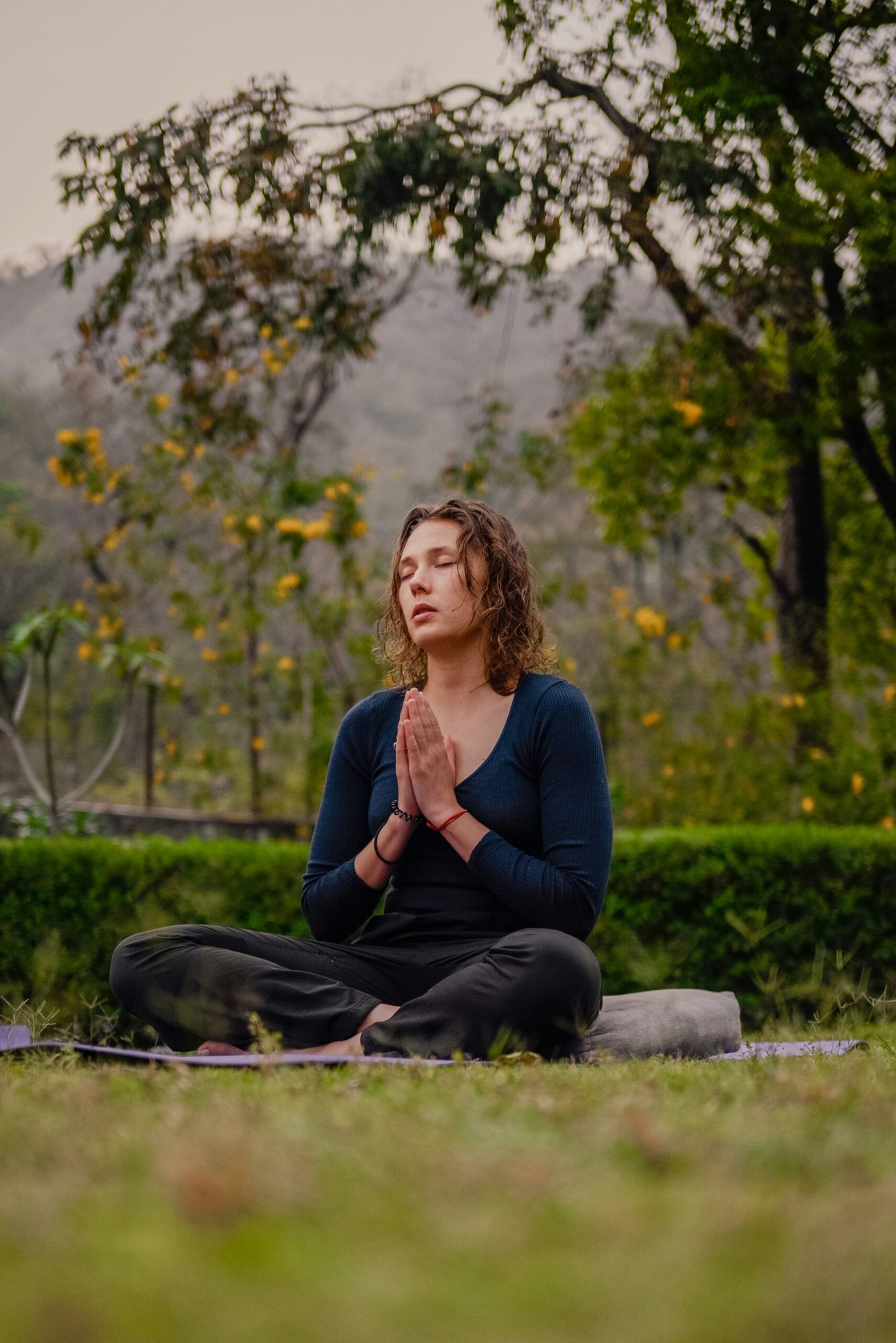
One of breathwork’s practical advantages over other stress regulation techniques is that it requires no setup, no equipment, and no particular environment. You can practice in a car, at a desk, in a bathroom before a presentation, or in bed at 3am when sleep won’t come.
The most useful moments to practice tend to be the ones just before stress escalates: before opening a difficult email, before a challenging phone call, when you notice your jaw clenching or your shoulders rising toward your ears. Using breathwork reactively, in the moment of stress, is effective; using it proactively, before stress arrives, is more so.
A consistent daily practice of even five minutes, first thing in the morning before the day gets hold of you, is enough to begin shifting the nervous system’s baseline. The breath is there whether or not you pay attention to it. The question is what happens when you do.
Learning breathwork in a retreat setting is meaningfully different from following a video at home, and not just because the surroundings are more pleasant.
A trained facilitator can observe what’s actually happening in your body as you breathe, offer real-time adjustments, and guide you safely through the more activating techniques that are better not attempted alone. More intensive practices like holotropic breathwork or conscious connected breathing can produce powerful emotional and somatic responses that benefit from experienced support.
Beyond safety, the retreat environment creates conditions that deepen the practice. When the nervous system is already in a state of greater rest from the surrounding quiet, good food, natural light, and absence of ordinary pressures, breathwork produces effects that are noticeably more accessible than in a high-stress daily context. People often describe their first properly guided breathwork session as unlike anything they’ve experienced through the techniques alone.
Your email address will not be published. Required fields are marked *