
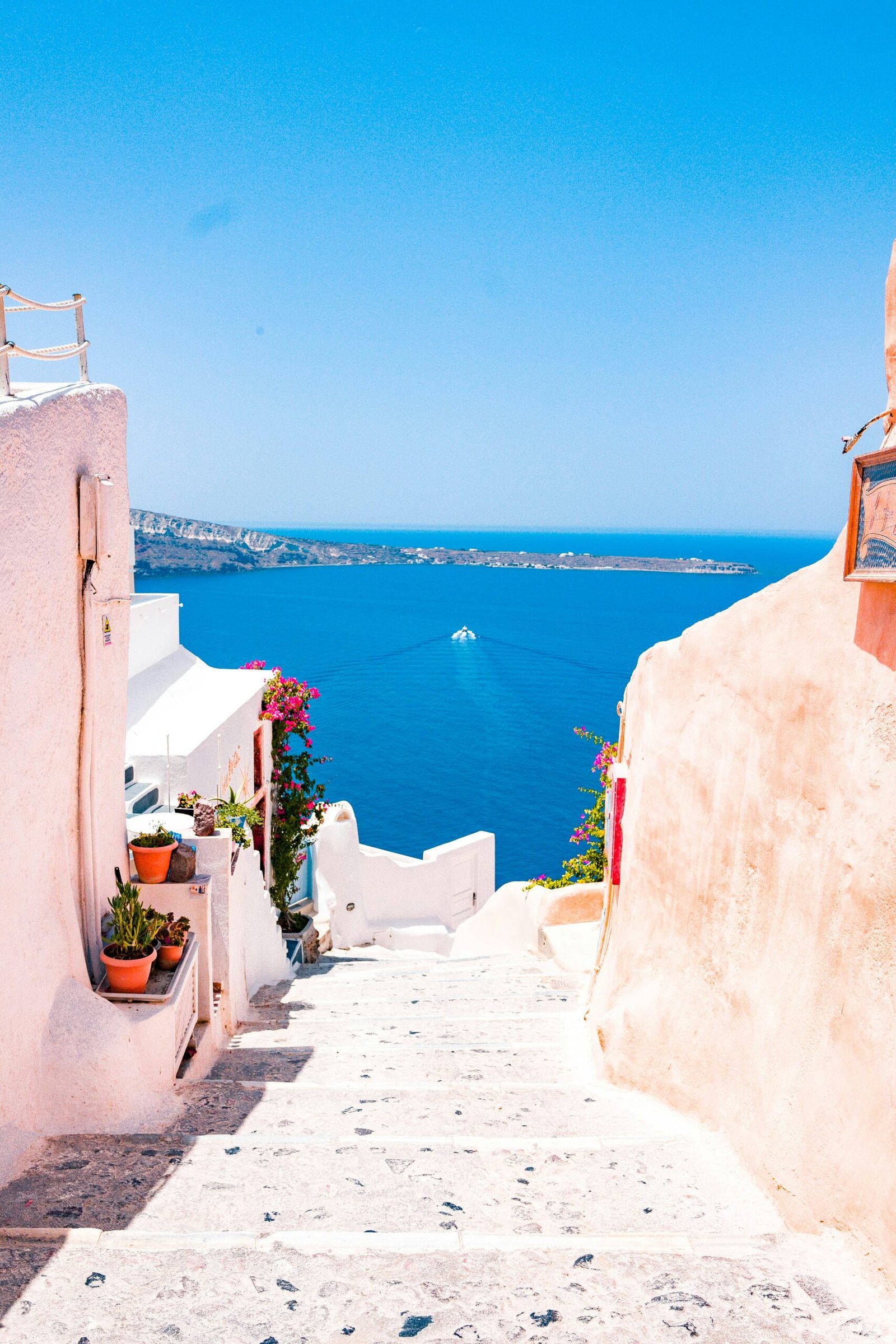
Santorin est de ces lieux qui nourrissent l'imagination bien avant même d'y arriver, et la réalité, contre toute attente, justifie souvent les espoirs placés en elle. L'architecture blanchie à la chaux qui dévale une caldeira formée par l'une des éruptions volcaniques les plus violentes de l'histoire, la mer Égée d'un bleu si intense qu'il semble retouché numériquement, la lumière dorée du crépuscule qui offre des spectacles que les photographes parcourent des milliers de kilomètres pour immortaliser – tout cela est bien réel et crée un cadre idéal pour la pratique du yoga, unique au monde.
Ici, une retraite n'est pas qu'une simple retraite. C'est une pratique vécue au cœur d'un paysage qui, depuis des siècles, captive l'attention et la contemplation. Cette capacité à ne plus tenir son environnement pour acquis s'avère être l'un des états les plus bénéfiques pour le pratiquant. Santorin ne laisse aucune place à la distraction. Elle remplace simplement toute distraction ordinaire par elle-même.


Santorin semble irréelle. Cette île en forme de croissant, vestige d'une éruption volcanique si cataclysmique qu'elle aurait pu inspirer la légende de l'Atlantide, surgit majestueusement de la mer Égée, parée de strates de rouille, de charbon et d'un blanc immaculé. Des villages s'accrochent de façon improbable aux flancs des falaises, leurs maisons cubiques se détachant comme des morceaux de sucre sur le ciel d'un bleu cobalt. La caldeira, le cratère volcanique inondé, s'étend en contrebas, offrant des dégradés de bleu qui varient du turquoise au bleu marine selon la profondeur, la lumière et l'heure.
C'est un paysage qui capte toute l'attention, qui rend presque impossible toute distraction ou perte de pensées. Et c'est précisément ce qui le rend extraordinaire pour la pratique du yoga. Lorsque vous déroulez votre tapis sur une terrasse suspendue à des centaines de mètres au-dessus de la mer, avec pour seul horizon l'air et la lumière, le spectacle extérieur apaise naturellement le tumulte intérieur. La vue ne perturbe pas la pratique ; elle en devient partie intégrante, un rappel de l'immensité, de l'impermanence et d'une beauté qui existe indépendamment de nos préoccupations futiles.
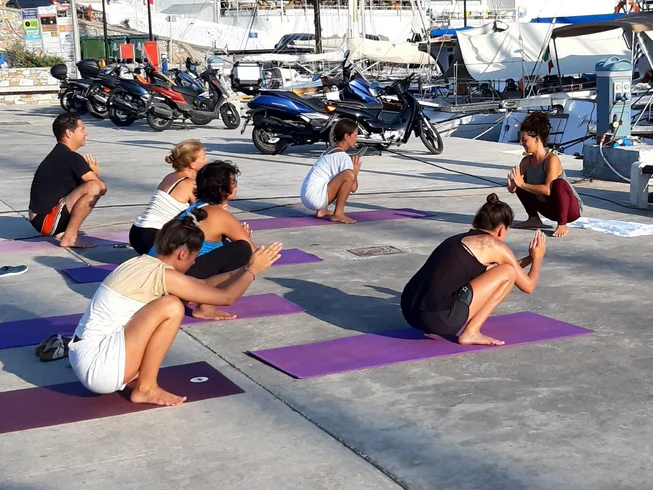
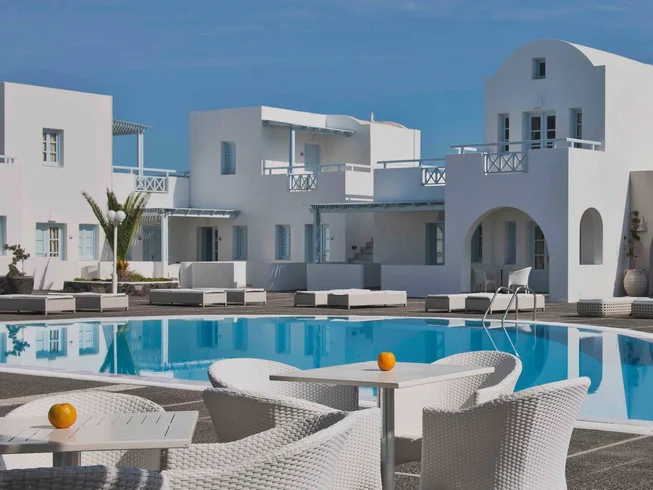
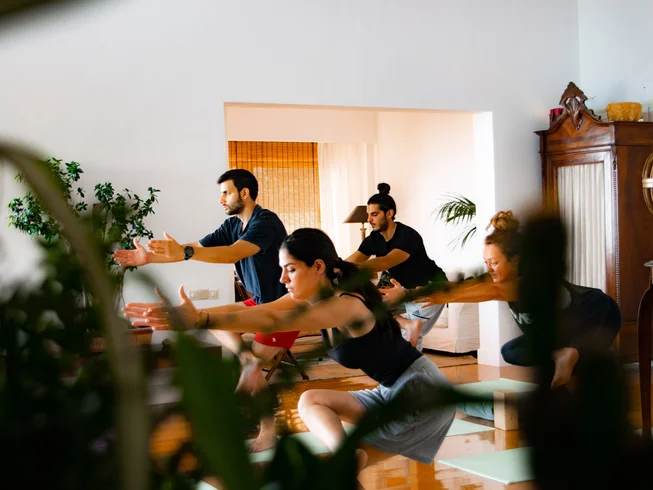
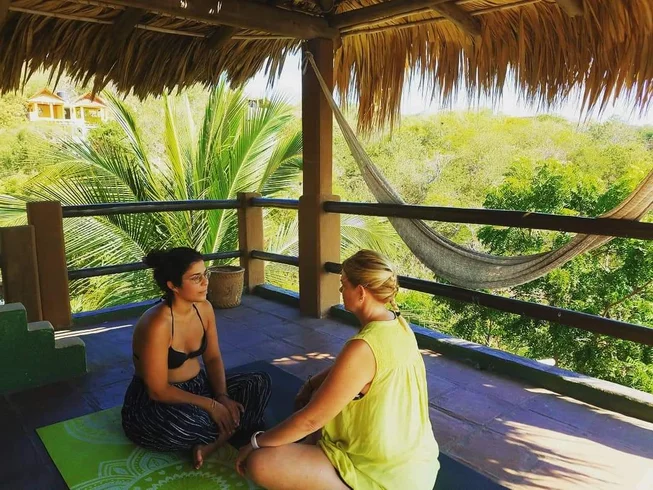
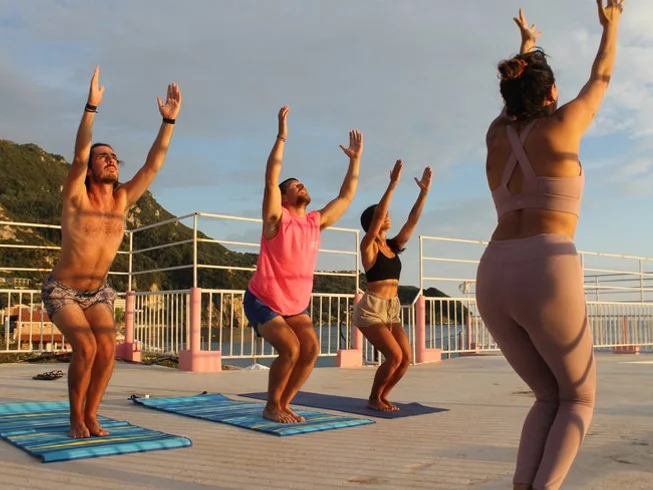
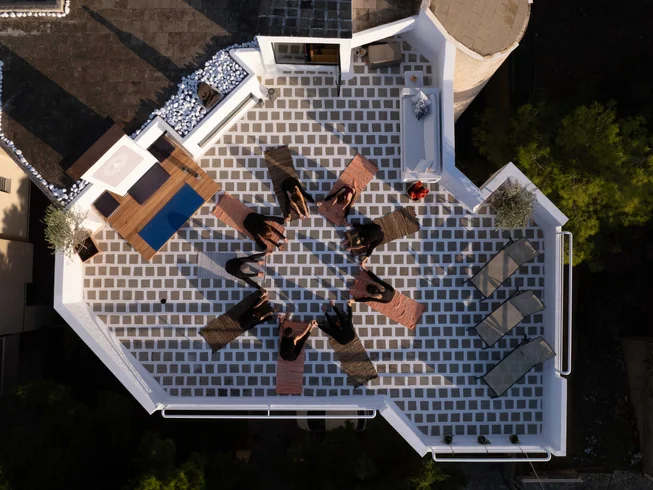
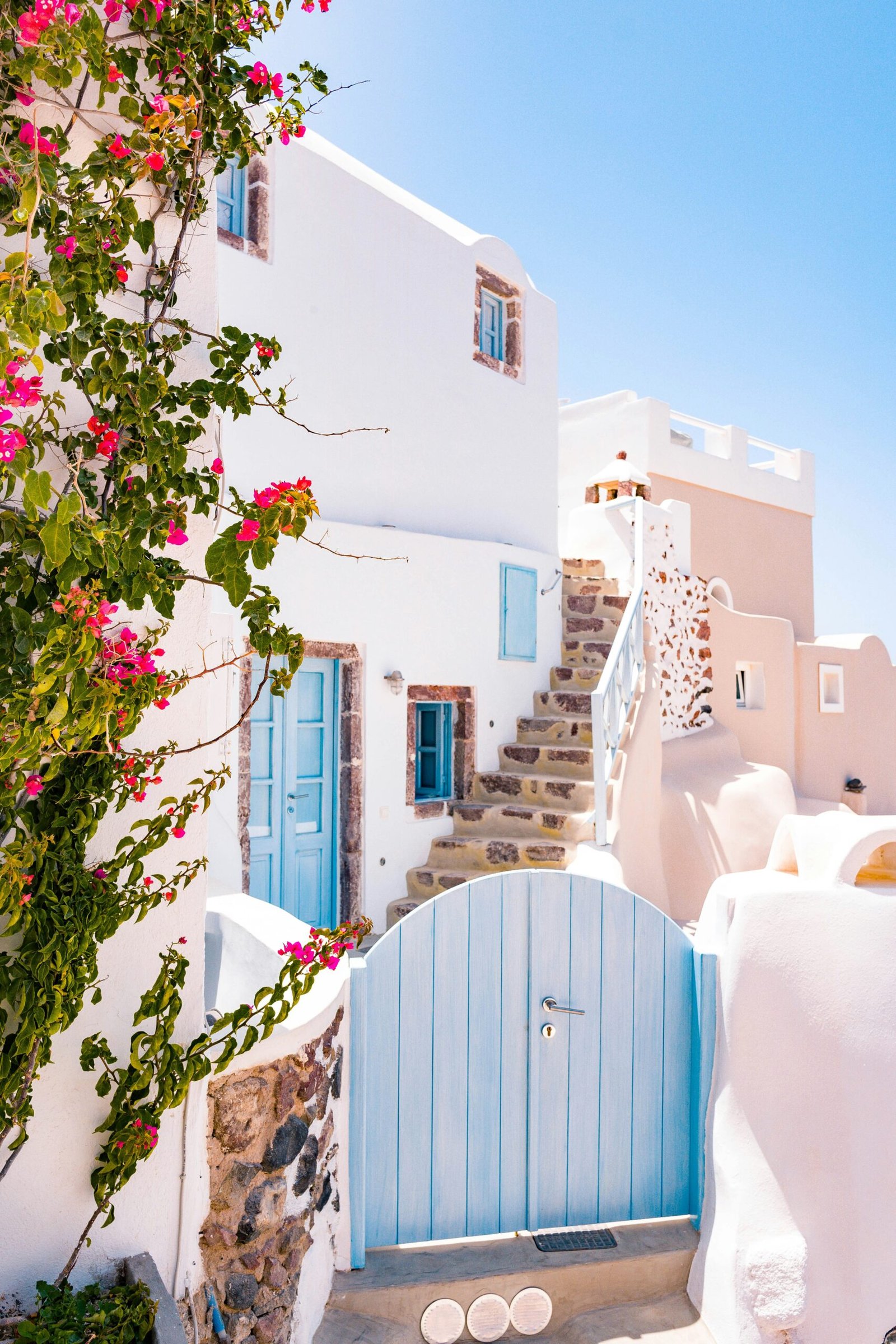
Les hébergements de Santorin sont uniques en Grèce. Les maisons troglodytes traditionnelles, creusées dans la roche volcanique pour se protéger de la chaleur estivale et des vents hivernaux, ont été transformées en gîtes de charme alliant architecture ancestrale et confort moderne. Imaginez des plafonds voûtés, des murs en plâtre lisse aux tons crème et terracotta, des lits et des banquettes intégrés, et une décoration minimaliste qui met en valeur l'architecture et les panoramas.
De nombreux centres de retraite de yoga occupent d'anciennes maisons de capitaines rénovées ou de petits hôtels dans les villages d'Oia (célèbre pour ses couchers de soleil et sa communauté artistique), d'Imerovigli (plus calme, offrant sans doute de plus belles vues sur la caldeira) et de Fira (la ville principale, avec un plus grand choix de commodités et de vie nocturne). Certains établissements proposent des piscines à débordement qui semblent se fondre dans la mer, des spas offrant des soins à base de boue volcanique et de pierre ponce locales, ainsi que des terrasses privées où l'on peut pratiquer le yoga au lever du soleil avant que le reste de l'île ne s'éveille.
Ici, le luxe est une expérience plutôt qu'une démonstration ostentatoire.
Vous ne trouverez ni grands hôtels ni complexes hôteliers tentaculaires : à Santorin, les propriétés perchées sur les falaises sont trop précieuses et rares. En revanche, les retraites offrent intimité, tranquillité et une attention particulière aux détails qui comptent : draps impeccables, fleurs fraîches chaque jour, café servi sur votre terrasse à l’aube, personnel aux petits soins qui se souvient de votre nom et de vos préférences. Les groupes sont généralement restreints (de 8 à 15 personnes en moyenne), ce qui permet un enseignement personnalisé et favorise la création de liens authentiques.
Pour ceux qui envisagent une escapade en voilier entre les îles, notre retraites de yoga et de voile en Grèce Ce guide couvre les formats multi-îles.
Styles de yoga et rythme quotidien
La plupart des retraites à Santorin privilégient des pratiques douces à modérées, en harmonie avec l'atmosphère contemplative. Le Hatha flow, le Vinyasa avec des éléments réparateurs, le Yin yoga avec des postures tenues longtemps et les programmes axés sur la méditation sont courants. La chaleur estivale (de juin à septembre, lorsque les températures dépassent régulièrement 28 à 30 °C) favorise naturellement des mouvements plus lents et conscients plutôt qu'une pratique sportive intense.
À Santorin, le timing est primordial. L'île connaît certaines des variations saisonnières les plus marquées de Grèce, tant au niveau météorologique que de l'affluence touristique.
Avril et mai : Ces mois offrent des conditions idéales pour une escapade : des températures douces (18-24 °C), des fleurs sauvages en pleine floraison sur toute l'île et une fréquentation touristique minimale. La mer est encore fraîche pour la baignade (16-19 °C), ce qui est apprécié de beaucoup. Les prix des hébergements sont modérés et l'île semble se réveiller après l'hiver. C'est le meilleur moment pour la randonnée (le sentier de Fira à Oia est spectaculaire) et pour explorer l'île sans la chaleur étouffante de l'été.
Juin et septembre : Ces mois intermédiaires offrent le meilleur des deux mondes : un temps chaud, une mer agréable pour la baignade (22-25 °C), des journées plus longues et un nombre de touristes légèrement inférieur à celui du plein été. La disponibilité des séjours est optimale durant cette période, et l’atmosphère y est à la fois dynamique et sereine. Il est conseillé de réserver au moins trois à quatre mois à l’avance, car ces dates se remplissent rapidement.
Juillet et août : L'été à Santorin est intense à tous points de vue. Les températures dépassent souvent les 30 °C, le soleil tape fort et l'île est envahie par les visiteurs – jusqu'à 10 000 croisiéristes peuvent débarquer en une seule journée. Pour les retraites de yoga, cela représente un défi : la chaleur de midi rend la pratique difficile, les points de vue et les restaurants prisés sont bondés et l'atmosphère contemplative qui attire les voyageurs en quête de bien-être laisse place à une ambiance festive dans certains endroits. Cela dit, si vous choisissez un lieu de retraite bien ombragé, climatisé et un peu à l'écart des zones touristiques principales, et si vous appréciez la vie estivale animée (festivals en plein air, fêtes des vendanges, longues soirées), l'expérience peut être magique. Préparez-vous simplement à payer un prix élevé et à partager les célèbres couchers de soleil avec des centaines d'autres personnes.
Octobre: Beaucoup considèrent ce mois comme le meilleur, en secret. La mer conserve une température estivale (21-23 °C), la plupart des touristes ont quitté les lieux, la lumière se pare de ces teintes dorées prisées des photographes, et les prix baissent sensiblement. On a l'impression que l'île retrouve son âme, que les habitants se réapproprient leurs espaces. Début octobre est particulièrement agréable ; vers la fin du mois, la météo est plus capricieuse et certains commerces commencent à fermer pour l'hiver.
De novembre à mars : La plupart des centres de retraite ferment leurs portes durant l'hiver, mais quelques-uns restent ouverts pour ceux qui recherchent la solitude absolue et la beauté sauvage de Santorin pendant la saison des tempêtes. Ce n'est pas pour tout le monde, mais pour ceux qui sont attirés par les caprices de la météo, les villages déserts et le sentiment d'avoir découvert un secret, Santorin en hiver offre des expériences uniques.
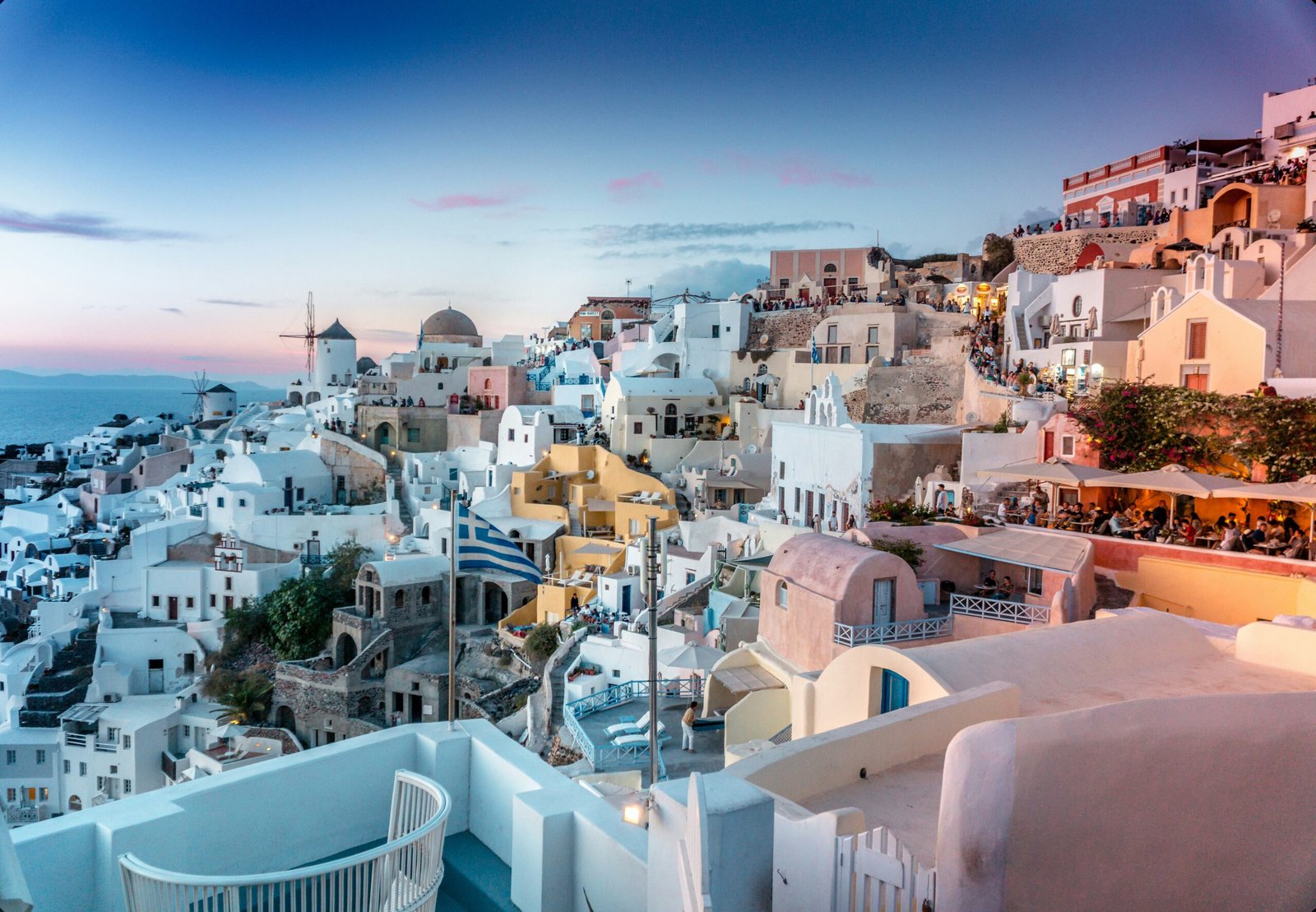
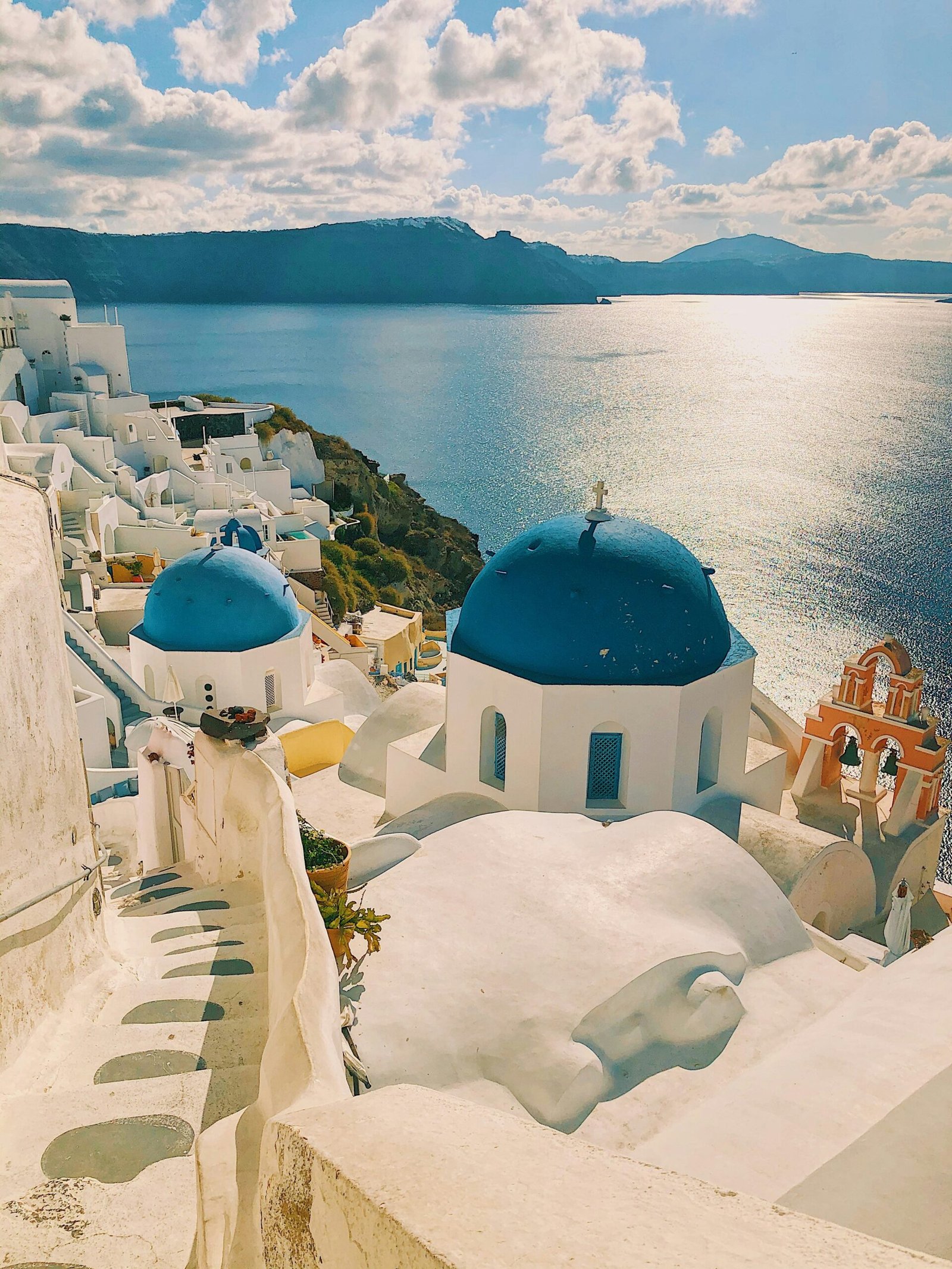
Il y a dans le drame géologique de Santorin quelque chose qui imprègne la pratique d'une manière difficilement prévisible et impossible à ignorer une fois vécue. L'île repose sur le rebord d'une caldeira volcanique submergée – résultat d'une éruption cataclysmique vers 1600 avant notre ère qui a remodelé toute la région – et cette histoire est présente dans le paysage d'une manière qui se ressent plus qu'elle ne se perçoit. La verticalité abrupte des falaises, le calme particulier qui règne sur la caldeira à l'aube, et la conscience de se tenir au bord de quelque chose d'immense et d'ancien produisent sur le tapis une qualité de présence que les environnements de retraite urbains, aussi magnifiquement conçus soient-ils, produisent rarement. Le volcan ne vous laisse pas oublier votre petitesse, et cette petitesse – véritablement ressentie plutôt que simplement reconnue philosophiquement – est l'une des choses les plus précieuses avec lesquelles une pratique puisse travailler.
La pratique matinale à Santorin, idéalement située face à la caldeira tandis que le soleil se lève à l'est de l'île, est une expérience qui redéfinit ce que peut être le début d'une journée de pratique. La lumière arrive de façon spectaculaire et immédiate – pas d'éclaircissement urbain progressif, aucun bâtiment pour interrompre la transition de l'obscurité au jour – et la réaction du corps à cette aube si particulière, combinée à la chaleur de l'air égéen et au silence que l'île préserve aux premières lueurs du jour, crée une disposition à la pratique qu'aucun réveil ni café ne saurait procurer dans la vie quotidienne. Les enseignants qui ont animé des retraites à Santorin constatent régulièrement que les participants s'immergent dans leur pratique plus rapidement et plus profondément qu'ailleurs – non pas grâce à l'enseignement lui-même, mais parce que l'île avait déjà accompli l'essentiel de la préparation avant même le début de la séance.
La gastronomie de Santorin est façonnée par son sol volcanique, qui produit des ingrédients d'une intensité particulière ; les faibles volumes de production de l'île font que la plupart des aliments que l'on consomme ici restent sur place plutôt que d'être exportés.
Fava La fava est le plat emblématique de Santorin. Des pois cassés jaunes, cultivés dans le sol volcanique de l'île depuis plus de 3 500 ans, mijotent longuement jusqu'à obtenir une purée onctueuse, puis sont assaisonnés d'huile d'olive, de câpres et d'oignon cru. La fava de Santorin bénéficie d'une Appellation d'Origine Protégée (AOP) et se distingue nettement des versions classiques à base de pois cassés servies ailleurs en Grèce. Dans tout restaurant de l'île qui prend sa gastronomie au sérieux, la fava figure à la carte et mérite d'être goûtée.
Tomatokeftedes Les beignets de tomates, préparés avec les petites tomates cerises intensément sucrées cultivées spécifiquement à Santorin, sont le mezze emblématique de l'île. La tomate de Santorin bénéficie d'une AOP (Appellation d'Origine Protégée), cultivée dans un sol de cendres volcaniques sans irrigation (les plants absorbent l'humidité de l'air nocturne), ce qui concentre sa saveur à un degré que les tomates de serre classiques ne peuvent égaler. Croustillants à l'extérieur et fondants à l'intérieur, ces beignets sont servis en entrée dans presque toutes les tavernes de l'île.
aubergine blanche La variété de Santorin, plus pâle que la variété violette classique et moins amère, est présente sur toutes les cartes de l'île, témoignant de sa grande polyvalence : grillée à l'huile d'olive et à l'ail, farcie de feta et d'herbes, ou mijotée dans une sauce tomate. C'est dans les tavernes de Pyrgos et de Megalochori, villages de l'intérieur moins fréquentés par les touristes, qu'elle est la plus savoureuse.
vin Assyrtiko Issu du terroir volcanique de l'île, ce vin blanc sec compte parmi les plus grands de Grèce : minéral, salin, avec une acidité citronnée qui reflète le sol volcanique et l'air marin. Cultivé dans la traditionnelle “ kouloura ”, un panier qui le protège du vent, il produit un vin d'une grande spécificité, qu'il est essentiel de découvrir lors d'une escapade sur l'île. Les vins de Boutari Santorini et de la coopérative Santo Wines sont disponibles partout sur l'île ; les petits domaines de Gaia et Sigalas méritent qu'on s'y attarde.
Chlorotyri Ce fromage frais local, légèrement acidulé et fabriqué à partir de lait de chèvre et de brebis, s'invite sur les tables du petit-déjeuner et se déguste aussi bien avec des mezzés. Accompagné de miel de thym sauvage de l'île, il forme un de ces accords simples qui exigent que les deux ingrédients soient typiquement locaux pour en révéler toute la saveur.
À Santorin, le timing est primordial. L'île connaît certaines des variations saisonnières les plus marquées de Grèce, tant au niveau météorologique que de l'affluence touristique.
Avril et mai : Ces mois offrent des conditions idéales pour une escapade : des températures douces (18-24 °C), des fleurs sauvages en pleine floraison sur toute l'île et une fréquentation touristique minimale. La mer est encore fraîche pour la baignade (16-19 °C), ce qui est apprécié de beaucoup. Les prix des hébergements sont modérés et l'île semble se réveiller après l'hiver. C'est le meilleur moment pour la randonnée (le sentier de Fira à Oia est spectaculaire) et pour explorer l'île sans la chaleur étouffante de l'été.
Juin et septembre : Ces mois intermédiaires offrent le meilleur des deux mondes : un temps chaud, une mer agréable pour la baignade (22-25 °C), des journées plus longues et un nombre de touristes légèrement inférieur à celui du plein été. La disponibilité des séjours est optimale durant cette période, et l’atmosphère y est à la fois dynamique et sereine. Il est conseillé de réserver au moins trois à quatre mois à l’avance, car ces dates se remplissent rapidement.
Juillet et août : L'été à Santorin est intense à tous points de vue. Les températures dépassent souvent les 30 °C, le soleil tape fort et l'île est envahie par les visiteurs – jusqu'à 10 000 croisiéristes peuvent débarquer en une seule journée. Pour les retraites de yoga, cela représente un défi : la chaleur de midi rend la pratique difficile, les points de vue et les restaurants prisés sont bondés et l'atmosphère contemplative qui attire les voyageurs en quête de bien-être laisse place à une ambiance festive dans certains endroits. Cela dit, si vous choisissez un lieu de retraite bien ombragé, climatisé et un peu à l'écart des zones touristiques principales, et si vous appréciez la vie estivale animée (festivals en plein air, fêtes des vendanges, longues soirées), l'expérience peut être magique. Préparez-vous simplement à payer un prix élevé et à partager les célèbres couchers de soleil avec des centaines d'autres personnes.
Octobre: Beaucoup considèrent ce mois comme le meilleur, en secret. La mer conserve une température estivale (21-23 °C), la plupart des touristes ont quitté les lieux, la lumière se pare de ces teintes dorées prisées des photographes, et les prix baissent sensiblement. On a l'impression que l'île retrouve son âme, que les habitants se réapproprient leurs espaces. Début octobre est particulièrement agréable ; vers la fin du mois, la météo est plus capricieuse et certains commerces commencent à fermer pour l'hiver.
Pour un aperçu complet des meilleures périodes pour visiter la Grèce en vue d'une retraite de yoga, consultez notre retraites de yoga en Grèce en octobre Ce guide couvre toute la saison d'automne.
De novembre à mars : La plupart des centres de retraite ferment leurs portes durant l'hiver, mais quelques-uns restent ouverts pour ceux qui recherchent la solitude absolue et la beauté sauvage de Santorin pendant la saison des tempêtes. Ce n'est pas pour tout le monde, mais pour ceux qui sont attirés par les caprices de la météo, les villages déserts et le sentiment d'avoir découvert un secret, Santorin en hiver offre des expériences uniques.
Par avion : L'aéroport international de Santorin (JTR) est desservi par des vols directs en provenance d'Athènes (45 minutes, plusieurs vols quotidiens), des principales villes européennes en été (Londres, Amsterdam, Paris, Francfort, Milan) et de certaines villes toute l'année via Athènes. En haute saison (de juin à septembre), des vols directs européens arrivent quotidiennement. Hors saison, une correspondance à Athènes est généralement nécessaire.
En ferry : Les ferries rapides au départ d'Athènes (port du Pirée) rejoignent Santorin en 4 h 30 à 5 h. Les ferries classiques mettent 8 à 9 heures, mais sont nettement moins chers et offrent des paysages plus magnifiques. La compagnie Blue Star Ferries assure un service toute l'année. Depuis les autres îles des Cyclades, le ferry est le moyen de transport privilégié : la traversée de Mykonos à Santorin dure 2 à 3 heures en ferry rapide. Le port d'Athinios se situe à 10 kilomètres de Fira ; des taxis et des bus assurent la liaison.
Sur l'île : Santorin dispose d'un service de bus reliant les principaux villages, mais le taxi reste la solution la plus pratique pour les transferts depuis les lieux de retraite. De nombreux centres de retraite organisent les transferts depuis l'aéroport et le port. L'île est suffisamment petite pour être parcourue en quad ou en scooter si vous êtes à l'aise avec les routes sinueuses à flanc de falaise ; il est possible d'en louer à Fira.
Quelle est la meilleure période de l'année pour une retraite de yoga à Santorin ? Avril, mai et octobre sont les meilleurs mois. Avril et mai offrent des températures douces (18-24 °C), des fleurs sauvages, une faible affluence touristique et permettent de profiter pleinement d'une retraite paisible avant l'arrivée des foules estivales. En octobre, la mer est à sa température la plus élevée de l'année (21-23 °C), la lumière est dorée et l'île a retrouvé son calme après l'été. Juin et septembre constituent d'excellentes alternatives en intersaison. Juillet et août sont possibles, mais il est indispensable de choisir un hébergement situé à l'écart des principales zones touristiques.
Santorin est-elle très fréquentée pendant une retraite ? Cela dépend entièrement de la période de votre voyage. Avril et mai : calme absolu. Juin et septembre : affluence mais gérable. Juillet et août : jusqu’à 10 000 croisiéristes débarquent les jours de pointe ; il peut être difficile de circuler dans les villages perchés d’Oia et de Fira entre 10 h et 16 h. Les meilleurs hébergements pour juillet et août se situent dans les villages plus tranquilles d’Imerovigli, de Pyrgos ou d’Akrotiri, où la pression touristique est nettement moindre.
Santorin est-elle une destination adaptée pour une première retraite de yoga ? Oui, sous réserve que l'intensité visuelle de l'île puisse nuire à la concentration intérieure profonde chez certains pratiquants. Ceux qui trouvent la beauté extérieure stimulante plutôt qu'apaisante pourraient constater que la vue sur la caldeira depuis leur terrasse perturbe leur pratique au lieu de la soutenir. Pour les pratiquants expérimentés capables de travailler avec un environnement riche, Santorin compte parmi les lieux de retraite les plus extraordinaires d'Europe.
Comment Santorin se compare-t-elle à la Crète ou à Mykonos pour une retraite de yoga ? Santorin est la plus spectaculaire visuellement des trois, mais aussi la plus chère et la plus touristique. La Crète offre une expérience plus authentique, avec des paysages plus variés, une gastronomie plus riche et un plus large choix de retraites. Mykonos a développé une infrastructure bien-être plus performante ces dernières années, mais elle est encore plus chère et plus festive que Santorin. Pour une première retraite de yoga en Grèce, la Crète ou le Péloponnèse offrent généralement un meilleur rapport qualité-prix. Enfin, pour ceux qui sont particulièrement attirés par le cadre d'une caldeira volcanique, Santorin est incontournable. Guide complet des retraites de yoga en Grèce couvre toutes les options.
Quels styles de yoga sont proposés à Santorin ? La chaleur estivale et la beauté contemplative des paysages font que la plupart des retraites à Santorin privilégient des styles plus lents et méditatifs : Hatha, Yin, yoga restauratif et programmes intégrant la méditation. Des programmes de yoga Ashtanga ou Power, plus dynamiques, existent, mais sont moins courants. La pratique matinale commence généralement tôt pour profiter de la fraîcheur ; les séances de l’après-midi sont souvent consacrées au Yin ou au yoga restauratif.
Votre adresse e-mail ne sera pas publiée. Les champs obligatoires sont indiqués par un *