Apprendre à écouter la mer – vraiment l’écouter, et non pas simplement la percevoir comme un agréable bruit de fond – fait partie des prestations proposées lors des retraites de yoga en Grèce, même si cela est rarement mentionné explicitement. Cette pratique se fait progressivement. Les premiers jours, on observe la mer consciemment, on la commente, on la photographie, on l’apprécie pour son esthétique. Puis, à mesure que la routine s’installe, elle s’estompe peu à peu. Mais vers le quatrième ou cinquième jour, si l’on est pleinement présent et non seulement physiquement présent, la voix de la mer se transforme complètement : elle n’est plus un fond sonore, mais la base même ; non plus un bruit, mais un signal ; non plus quelque chose que l’on écoute, mais une écoute à travers laquelle on perçoit le son.
Le rythme des vagues – doux clapotis par temps calme, déferlement rythmé lorsque le vent se lève, fracas spectaculaire lors des tempêtes – reflète le rythme de la respiration que la pratique du yoga rend consciente. Inspirez lorsqu'une vague se forme et déferle vers le rivage, expirez lorsqu'elle se brise et se relâche, la pause entre les vagues étant semblable à la pause entre les respirations. Vous pouvez synchroniser votre respiration avec le rythme de la mer, laissant celui-ci guider votre pranayama, ou simplement observer le parallèle : comment la respiration et les vagues sont l'expression d'un même schéma fondamental, accumulation et relâchement, tension et détente, le pouls essentiel de l'existence se manifestant dans l'eau, l'air et la respiration corporelle.
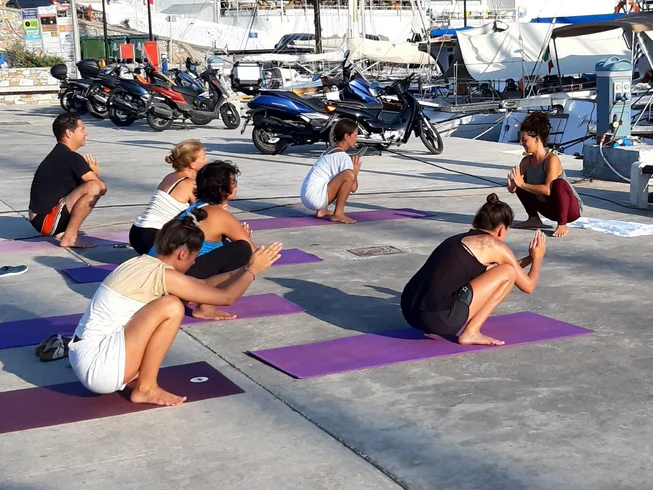

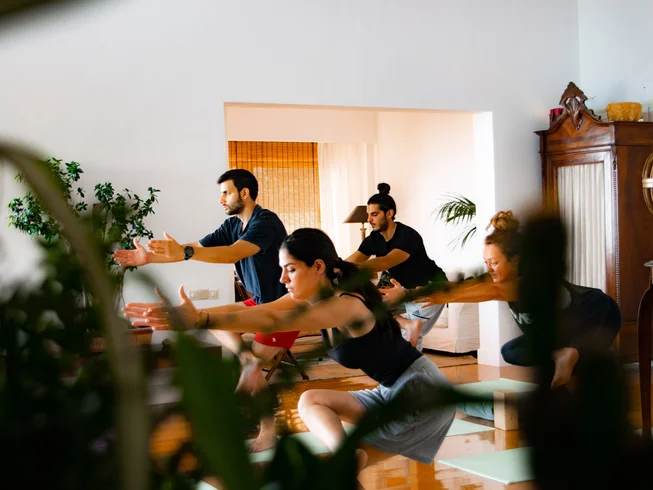
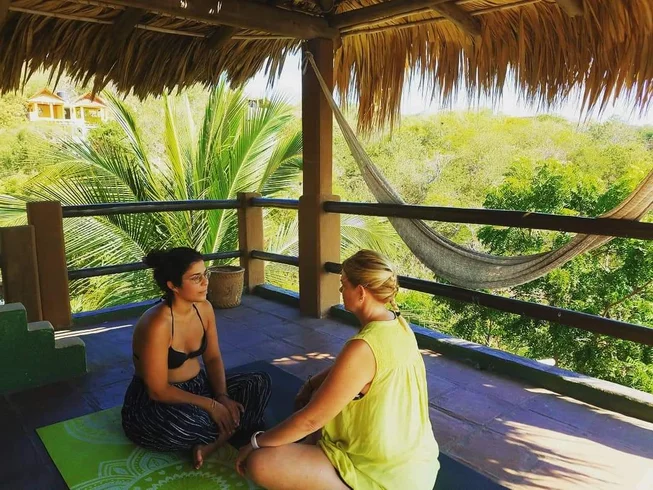
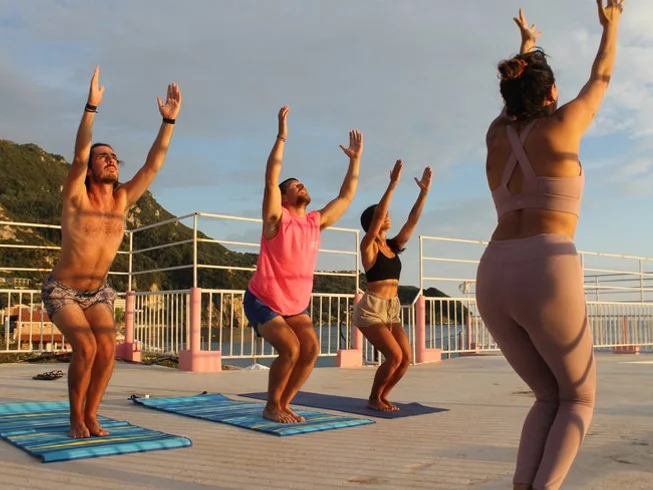

Les mers Égée et Ionienne ne sont pas des eaux calmes et immuables comme sur une carte postale. Leurs humeurs, dictées par le vent et les conditions météorologiques, varient d'une immobilité parfaite, telle un miroir où le ciel se reflète si bien qu'on distingue à peine l'eau de l'air, à des tempêtes dévastatrices où les vagues s'écrasent violemment contre les falaises, rendant la baignade impossible.
Au fil du temps passé au bord de la mer, on apprend à connaître ces changements. Le calme matinal, lorsque l'eau est presque immobile, invite à la baignade et à la contemplation. L'après-midi, la mer se soulève, passant d'une quiétude absolue à une mer agitée, des crêtes d'écume apparaissent, les vagues gagnent en force et en régularité. Et puis, il y a les tempêtes occasionnelles, lorsque l'eau devient sombre et déchaînée, et que l'on comprend pourquoi les Grecs anciens imaginaient la colère de Poséidon face à une mer tumultueuse.
Ces changements surviennent indépendamment de vos préférences ou de vos projets. Vous avez peut-être envie de nager, mais la mer est trop agitée. Vous espérez peut-être des vagues impressionnantes, mais l'eau est plate. La mer est indifférente à vos désirs : elle réagit à des forces bien plus puissantes que les aspirations humaines individuelles. Le vent, la pression atmosphérique, les courants sous-marins, l'attraction gravitationnelle de la lune : ce sont ces éléments, et non vos souhaits, qui déterminent l'état de la mer.
Cela permet de s'exercer à accepter ce qui est plutôt que d'exiger ce qui devrait être. On ne peut pas forcer la mer à se calmer ni la mettre en mouvement par la seule force de la volonté. On ne peut qu'observer, s'adapter et composer avec les conditions présentes. Envie de nager mais la mer est trop agitée ? On y va plus tard ou on ne se baigne pas aujourd'hui. On espérait des vagues impressionnantes mais la mer est calme ? On apprécie ce calme pour ce qu'il offre plutôt que de déplorer l'absence de ce qui n'est pas là.
Le parallèle avec les fluctuations émotionnelles est évident. Nous avons des états intérieurs que nous ne maîtrisons pas entièrement : des jours où l’anxiété déferle comme une tempête, quelles que soient les circonstances, des périodes de tristesse inexplicable, des vagues de colère ou de joie surgissant de profondeurs que nous ne comprenons pas pleinement. Lutter contre ces états, exiger qu’ils soient différents, s’obstiner à vouloir contrôler ces fluctuations par l’effort ou une technique, est aussi vain que de crier à la mer pour qu’elle se calme. Mieux vaut observer, accepter, composer avec les conditions présentes, sachant que, comme la météo, les états émotionnels fluctuent et changent sans que nous ayons à intervenir.
La natation comme méditation : immersion et abandon
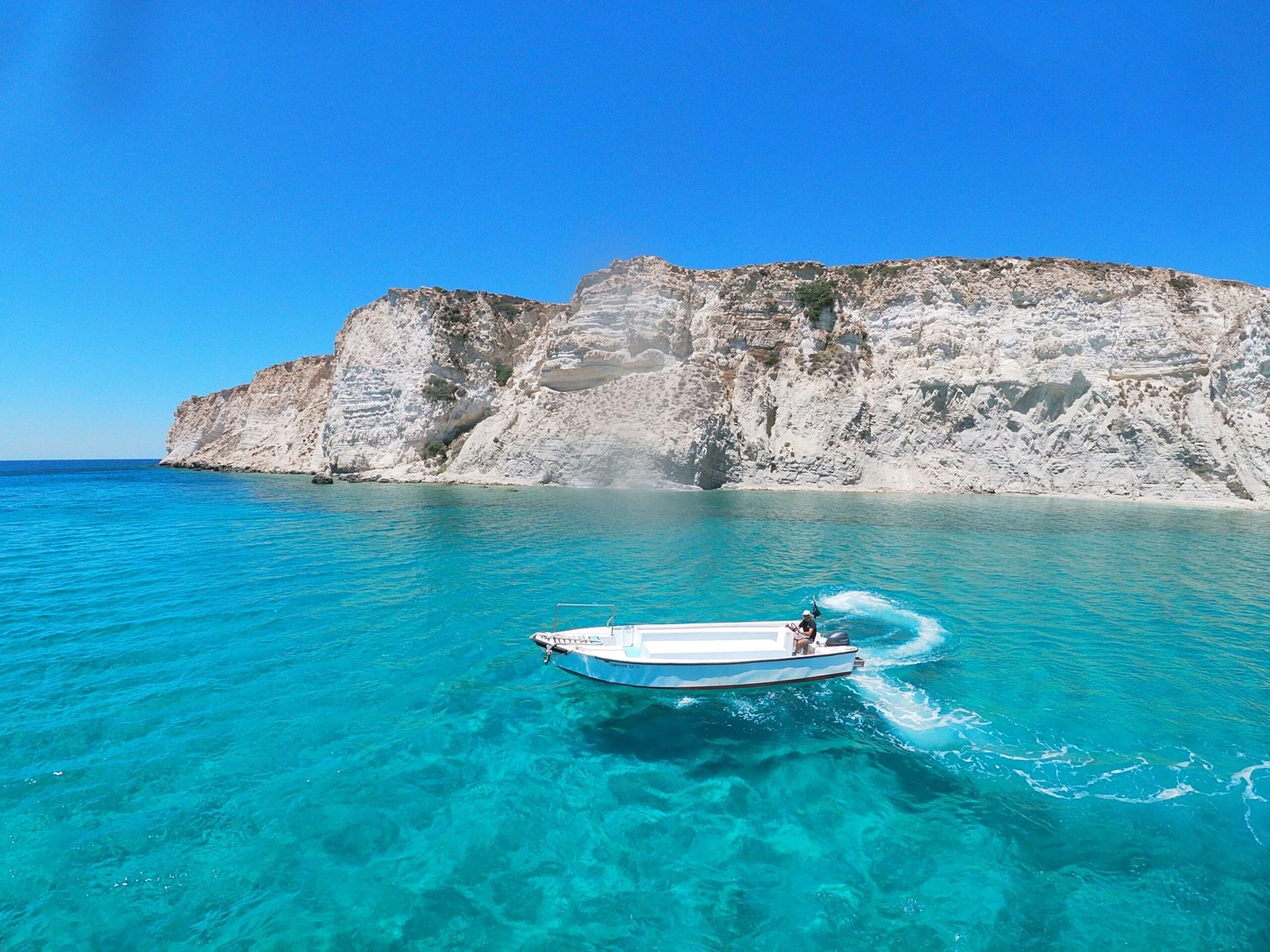
Nager dans les mers grecques, qu'il s'agisse de la mer Égée ou de la mer Ionienne, offre une forme particulière de méditation corporelle qui se produit presque naturellement si on s'y laisse aller. L'eau est si claire qu'on peut voir le fond à plusieurs mètres de profondeur, créant la sensation de voler ou de flotter dans un espace tridimensionnel plutôt que de se déplacer sur une surface bidimensionnelle. La salinité favorise la flottabilité, ce qui demande moins d'efforts pour rester à flot et encourage la relaxation, contrairement à la vigilance constante qu'exige la nage en eau douce.
La température compte aussi. Pas une eau tiède, qui serait épuisante, mais une fraîcheur vivifiante qui réveille le corps, aiguise les sensations, invite à la pleine conscience. Au premier abord, on ressent un léger choc : l'eau est froide, la peau se contracte, il faut respirer profondément pour surmonter cette sensation désagréable. Puis, si l'on reste, le corps s'acclimate. La température, d'abord froide, devient confortable, voire agréable. On se détend, et la nage elle-même se transforme en méditation.
Le mouvement rythmé – brasse, respiration, brasse, respiration – crée un point d'ancrage naturel pour l'attention, comparable à la concentration sur la respiration lors d'une méditation assise. Mais contrairement à la position assise immobile, où le corps peut s'agiter ou devenir inconfortable, la natation offre au corps une activité, le sollicitant pleinement tout en laissant l'esprit se calmer. Des pensées peuvent encore surgir, mais elles ont moins d'emprise lorsqu'on se meut dans l'eau, en synchronisant son rythme avec sa respiration, en ressentant la force et les capacités de son corps, immergé dans les sensations et le mouvement.
Les longues nages en eaux calmes induisent des états d'absorption particuliers. Le temps devient élastique : une heure de nage peut sembler n'en durer que vingt minutes, ou dix minutes une heure. L'espace se brouille : quelle distance avez-vous parcourue ? Quelle distance vous sépare du rivage ? Il est difficile d'évaluer les distances dans l'eau. Tous nos repères habituels s'estompent, ne laissant place qu'à l'expérience immédiate : l'eau, le mouvement, la respiration, le jeu de lumière sur et à travers l'eau, la sensation d'être porté, le confort surprenant de l'immersion totale.
Il y a aussi cette notion d'abandon que requiert la natation. On ne contrôle pas l'eau ; on se déplace avec elle, parfois contre elle, mais jamais on ne la domine. L'eau est infiniment plus forte que nous, capable de nous noyer sans effort si l'on lutte ou si l'on panique. La sécurité provient de la relaxation, de la confiance en la flottabilité de son corps, d'une collaboration avec l'élément plutôt que d'une tentative de le maîtriser. C'est l'ishvara pranidhana – l'abandon à quelque chose de plus grand que soi – pratiqué de la manière la plus littérale et physique qui soit.
L'environnement acoustique des zones côtières grecques diffère considérablement de celui des espaces intérieurs ou urbains. La mer y constitue un fond sonore constant : non pas un bruit blanc uniforme, mais une variété infinie de sons en fonction des conditions météorologiques, de l'heure et de la position par rapport au rivage.
Tôt le matin, avant que le vent ne se lève, la mer est presque silencieuse : un léger clapotis, quelques petites vagues qui se brisent de temps à autre, une quiétude liquide qui n’est pas tout à fait le silence, mais quelque chose de plus doux que l’immobilité. C’est le son du potentiel, de l’énergie qui s’accumule avant de se manifester.
En milieu de journée et l'après-midi, lorsque le Meltemi s'installe, le paysage sonore s'intensifie : les vagues se brisent avec plus de force et de régularité, l'eau s'écoule sur les galets ou le sable, le bruit plus agressif de l'eau rencontrant le rivage résistant s'amplifie. C'est le son de l'activité, de l'engagement, du monde qui manifeste pleinement sa vitalité.
Air et souffle : l'élément entre
L'air près de la mer Égée recèle des qualités qu'on ne trouve pas à l'intérieur des terres : sel, minéraux, ozone, une densité particulière due à l'humidité en suspension, une fraîcheur qui semble purifier les poumons à chaque inspiration. Respirer cet air, notamment lors de la pratique du pranayama près de la mer, c'est absorber bien plus que de l'oxygène : c'est ingérer l'essence même de la mer sous forme d'aérosol, la laissant pénétrer au plus profond de son être.
Les Grecs de l'Antiquité comprenaient que pneumaLe souffle, l'esprit, la force vitale, ne se résumaient pas à un simple échange d'air métabolique, mais à quelque chose de plus essentiel : le principe animant qui distingue la matière vivante de la matière inerte. En pratiquant le pranayama au bord de la mer, on le comprend par l'expérience. Le souffle transporte non seulement de l'oxygène, mais aussi une qualité, un caractère, une essence. Respirer l'air marin est différent de respirer l'air de la montagne, de la ville ou de l'intérieur, non seulement par sa composition chimique mesurable, mais aussi par la sensation qu'il procure, ce qu'il véhicule, son impact sur la conscience.

En définitive, ce que la mer nous enseigne avec le plus de constance, c'est l'équilibre – non pas comme un équilibre statique, mais comme un processus dynamique, un ajustement constant en réponse à des forces changeantes. La mer n'est jamais parfaitement immobile (même un calme apparent recèle des mouvements subtils) et jamais chaotique et aléatoire (même les tempêtes suivent des schémas, réagissent aux forces en présence, et révèlent un ordre au sein d'un désordre apparent).
Cet équilibre dynamique entre excès et insuffisance, entre rigidité et chaos, entre contrôle et lâcher-prise – voilà ce que les pratiques du yoga visent à cultiver. Le juste milieu aristotélicien, la voie médiane bouddhiste, le concept yogique de sthira sukham asanam (stabilité et aisance) – tous convergent vers cette qualité d’engagement équilibré que la mer manifeste heure après heure, jour après jour, année après année.
On ne peut ni forcer la mer, ni l'ignorer. Il faut composer avec elle : respecter sa puissance tout en ayant confiance en ses propres capacités, s'adapter aux conditions tout en maintenant son cap, être suffisamment flexible pour réagir mais suffisamment stable pour ne pas se laisser submerger. C'est la pratique que la natation, la voile, ou même simplement le fait de s'asseoir au bord de la mer et de contempler les vagues, enseignent naturellement.
Lors d'une retraite de yoga au bord de la mer Égée, cet enseignement ne se transmet pas par des instructions, mais par imprégnation, par la présence constante d'un élément qui incarne les qualités mêmes que la pratique vise à développer. Nul besoin d'apprendre de la mer : il suffit d'être présent à elle, de la laisser agir, de laisser son système nerveux se synchroniser, sa conscience absorber ce qui se révèle.
Le retour au rivage
Chaque baignade s'achève par un retour sur le rivage, chaque journée en mer par un retour vers l'intérieur des terres, chaque retraite mène finalement au départ. La question est toujours de savoir ce que l'on emporte avec soi, ce qui change lorsque la présence immédiate de la mer n'est plus un rappel et un soutien constants.
On ne peut évidemment pas emporter la mer avec soi. Mais on peut emporter avec soi ce qu'elle nous a appris : le rythme des vagues qui se reflète dans la respiration, l'acceptation de l'impermanence perceptible à chaque instant, la pratique de l'équilibre dynamique que l'on observe dans la façon dont l'eau réagit au vent et au rivage. Ce ne sont pas des leçons abstraites, mais un savoir incarné, des choses que notre système nerveux a apprises par l'immersion et l'observation.
De retour à la vie terrestre, loin de l'océan, fermez les yeux et laissez-vous bercer par le bruit des vagues. Synchronisez votre respiration avec ce rythme familier. Revivez la sensation de l'eau salée qui vous enveloppe, cette impression de vous laisser porter par la flottabilité plutôt que de lutter pour rester à flot. Souvenez-vous d'avoir observé les vagues se former et se retirer, chacune unique et pourtant si semblable, et reconnaissez ce même schéma dans les pensées, les émotions et les circonstances qui jalonnent votre quotidien.
Votre adresse e-mail ne sera pas publiée. Les champs obligatoires sont indiqués par un *