
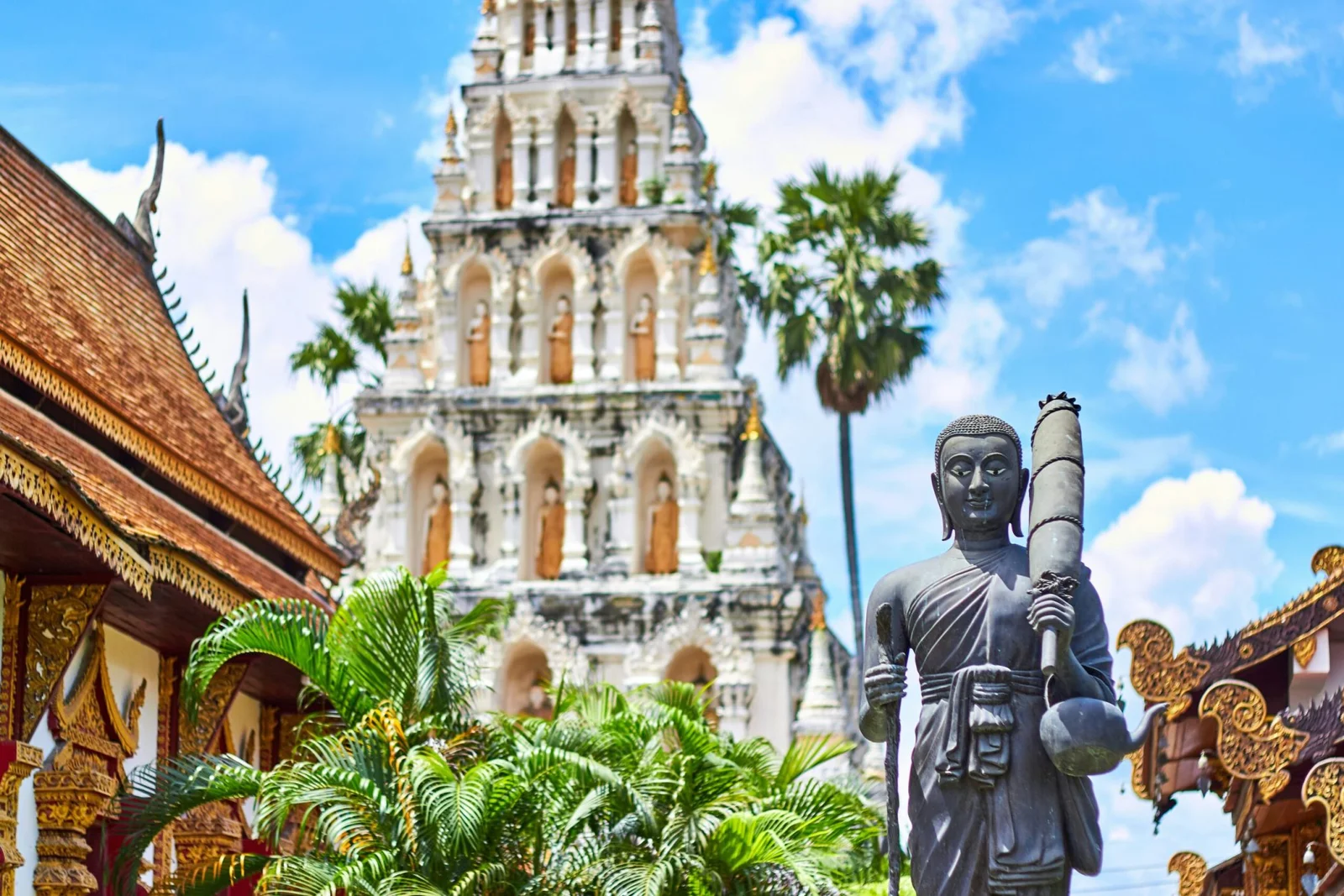
September is the quietest month of the Thai retreat calendar and one of the most rewarding for those who choose it deliberately. The Gulf coast is transitioning — Koh Samui approaching its own wet season, the eastern Gulf islands still manageable. The north is in full rainy season but the cultural calendar is active with the approach of the Buddhist Lent’s end. And the prices across the country are at their annual low. A yoga retreat in Thailand in September is specifically for those who know what they are coming for.


September is when Thailand’s retreat calendar empties. The European summer visitors who filled the Gulf islands in July and August have gone home. The October dry season on the Andaman coast has not yet begun. And the country is in the last weeks of the Buddhist Lent, the monks still in residence and the teaching programmes at their most consistent. Those who choose September choose it for the quiet, the prices, and the specific cultural moment.
Browse our full yoga retreats in Thailand guide for the complete picture of what the country offers year-round. For the global context of September retreat travel, our yoga retreats in September guide covers every destination worth considering this month.
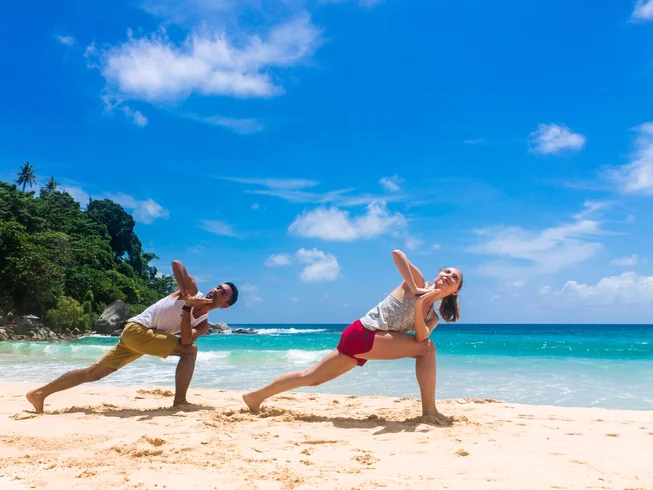
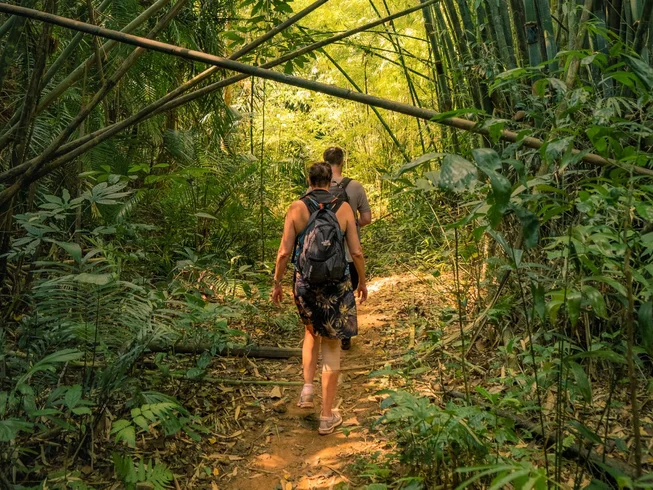
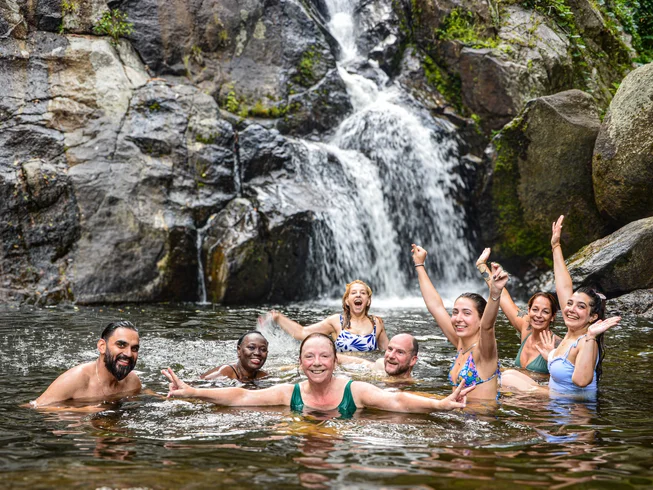
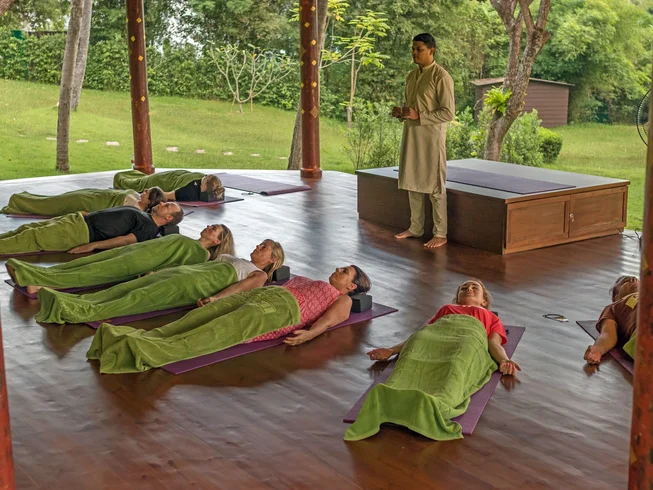
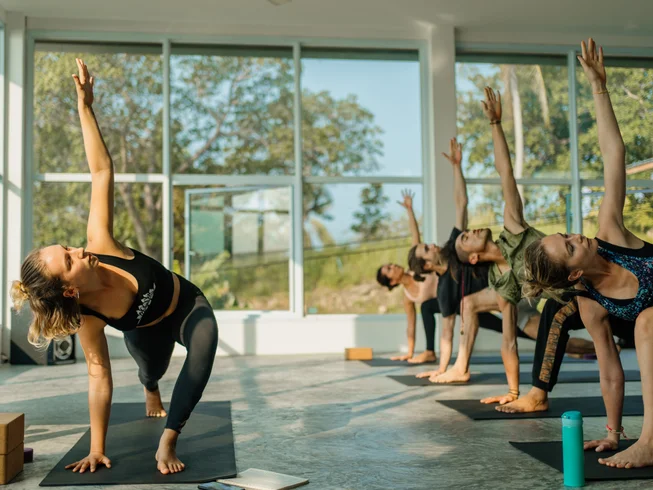
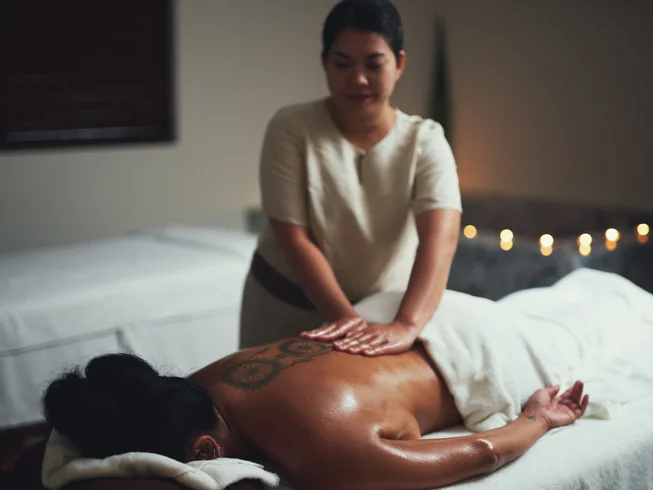
Koh Phangan in September is in the final weeks of its Gulf dry season before the October-December wet season arrives. The sea is still warm (29-30°C), the mornings are generally clear, and the retreat centres are running at their lowest prices and smallest groups of the entire year — the combination of the end of the European summer and the approach of the island’s own wet season producing a retreat demographic of unusually committed practitioners. The Srithanu community in September has the quality of the people who stayed past the summer peak: the long-term teachers, the year-round residents, and the visitors who chose September for the silence rather than the social energy.
The September Full Moon Party on Had Rin has a different character from the July and August versions — smaller, more locally-rooted, and less dominated by the international summer crowd. For retreat guests on the northwest side of the island, it remains geographically irrelevant but the September island energy as a whole is noticeably more its own than at any point since April.
Chiang Rai — the northernmost province of Thailand, where the borders of Thailand, Laos, and Myanmar converge at the Golden Triangle — is in September at its most green and most culturally specific. The Mekong and Ruak rivers at the Golden Triangle confluence are in September at near-full flood, the brown water visible from the hilltop viewpoint above Sop Ruak where the three countries meet. The Golden Triangle area that the opium trade defined for a century is in September doing what it does between tourist seasons: the riverside communities fishing and farming, the hillside tea plantations of the Doi Mae Salong area being harvested for the autumn tea cycle.
The Doi Mae Salong highland — the mountain ridge settled by the Yunnan Chinese KMT soldiers who retreated here from China in 1949 and their descendants — is in September at its most specific: the oolong and green tea of the mountain gardens in their autumn harvest, the Chinese tea houses serving the Mae Salong tea with the precision of a tradition transplanted from Yunnan three generations ago, and the hillside landscape alternating between the tea rows, the peach orchards, and the pine forest that the altitude produces. A retreat based at Mae Salong in September — morning yoga at 1,200 metres, afternoon tea ceremony at one of the Yunnan-style tea houses, evening meditation — is using the specifically September character of this place.
The hilltribe villages accessible from Chiang Rai — the Akha, Karen, Lahu, and Lisu communities in the hills between Chiang Rai and the Myanmar border — are in September surrounded by the wet season landscape at its most green, the terraced fields planted with the season’s crops and the village life operating without the dry season tourist traffic.
Phetchaburi — the province two hours south of Bangkok on the western Gulf coast — is in September a destination that almost no retreat guest considers and that specifically rewards the departure from the obvious. The Kaeng Krachan National Park, the largest national park in Thailand at 2,915 km², is in September at its wet season peak — the waterfalls in the park including the Pala-U falls (17 tiers) at full volume, and the bird diversity of the park at its annual maximum with over 400 species recorded. The park is the principal wintering ground for many species that breed in China and Siberia, and September sees the first autumn migrants arriving.
The Phetchaburi cave temples — Khao Luang cave with its royal Buddha images set in the natural limestone cavern, Khao Bandai It cave temple accessible through the market town — are in September accessible without the weekend tourist traffic that the proximity to Bangkok produces in the dry season. The Phetchaburi food culture — the city is known for its desserts, specifically the khanom mor kaeng (egg custard with a caramelised top) and the khanom phing (coconut-sesame rice cakes) that the royal court tradition of the province produces in its most authentic form — is in September available at the old city market without competition.
Ubon Ratchathani in Isaan is in September in the weeks approaching the end of the Buddhist Lent — Ork Phansa — which typically falls in October but whose preparation is visible throughout September. The Wat Thung Si Muang and Wat Supattanaram temples in the city, and the forest monasteries in the surrounding Mekong valley, are in September at the culmination of their most intensive teaching and practice period of the year. The monks who have been in residence since Khao Phansa in July-August are completing their lent retreat, and the concentration of practice energy in the Ubon temple community is at its September maximum.
The Mekong at Ubon Ratchathani in September is at near-full flood — the river level high enough in some years to affect the lowest riverside paths — and the Pha Taem cliff paintings east of Ubon, overlooking the Mekong with the prehistoric rock art visible on the cliff face, are in September accessible from the boat landing with the river at its most dramatically full.

The end of the Buddhist Lent — Ork Phansa — typically falls in October but its approach is the defining cultural energy of September in Thailand. The temples are preparing the robe-offering ceremonies, the monks completing their lent retreat are visible in the temple grounds more than at any other time of year, and the lay Buddhist community is intensifying its merit-making in the final weeks. For retreat guests in Chiang Mai, Ubon Ratchathani, or any Thai town with an active temple community, September has the specific contemplative weight of a culture in the final days of a collective retreat period.
The Phuket Vegetarian Festival — the nine-day Taoist festival of Chinese-Thai origin that involves extreme rituals of self-mortification (firewalking, body piercing with metal implements) and strict vegetarian eating — begins in October, but the preparation is visible in September: the yellow vegetarian flags beginning to appear at Chinese-Thai shophouses, the vegetarian food stalls setting up, and the Chinese temple communities in Phuket and the other Chinese-Thai communities of the south beginning their pre-festival purification. For retreat guests arriving in Phuket in late September, the pre-festival atmosphere is specifically worth knowing about.
Royal Boat Racing festivals take place on rivers and reservoirs across Thailand in September and October — the tradition of racing the long decorated boats at the end of the Buddhist Lent (when the monks come out of retreat and are free to travel by boat again). The Nan Boat Racing Festival in Nan province, the Phichit Boat Racing at the central Thai river town, and several regional festivals produce specifically Thai river-culture events that the retreat calendar rarely acknowledges.
The longan season that peaked in August is in September in its final weeks — the Lamphun and Chiang Rai orchards completing their harvest, the prices falling as the season closes. Simultaneously, the first pomelo (som o) of the season is appearing at the central Thai markets — the large grapefruit-like citrus with its thick pith and sweet-sour flesh, available from September through December, at its freshest and most specific in the September debut before the market supply standardises.
The Isaan beef salad tradition — nam tok nuea (literally “beef waterfall salad” from the juices that flow from the grilled meat) — is in September at its most culturally appropriate. The Isaan food culture of the northeast produces this dish from the local cattle that the agricultural communities of the Mekong watershed raise, grilled over charcoal and sliced thin, dressed with fish sauce, lime, toasted rice powder, dried chilli, and fresh herbs. At a Ubon Ratchathani or Khon Kaen market stall in September, the nam tok nuea eaten with sticky rice and raw vegetables is the Isaan food culture in its most direct form.
The Phetchaburi dessert tradition — the most elaborate in Thailand, a legacy of the royal court presence in the province — is in September accessible at the old city market in its most authentic form. The khanom mor kaeng (a baked egg and coconut milk custard with a caramelised top, using duck egg yolks for richness), the khanom tan (palm sugar and rice flour cake fermented with natural yeast), and the foi thong (gold egg yolk threads in syrup, a Portuguese-origin court confection) are the September Phetchaburi market at its most specific.
The autumn tea harvest at Doi Mae Salong in Chiang Rai in September produces the second flush of the year — the leaves picked after the summer rains have nourished the tea bushes to their most productive state. The Mae Salong oolong (partially oxidised) and the Mae Salong green tea of the September harvest are available at the mountain tea houses at the prices that proximity to the source produces: significantly below the Bangkok or international export versions of the same tea.
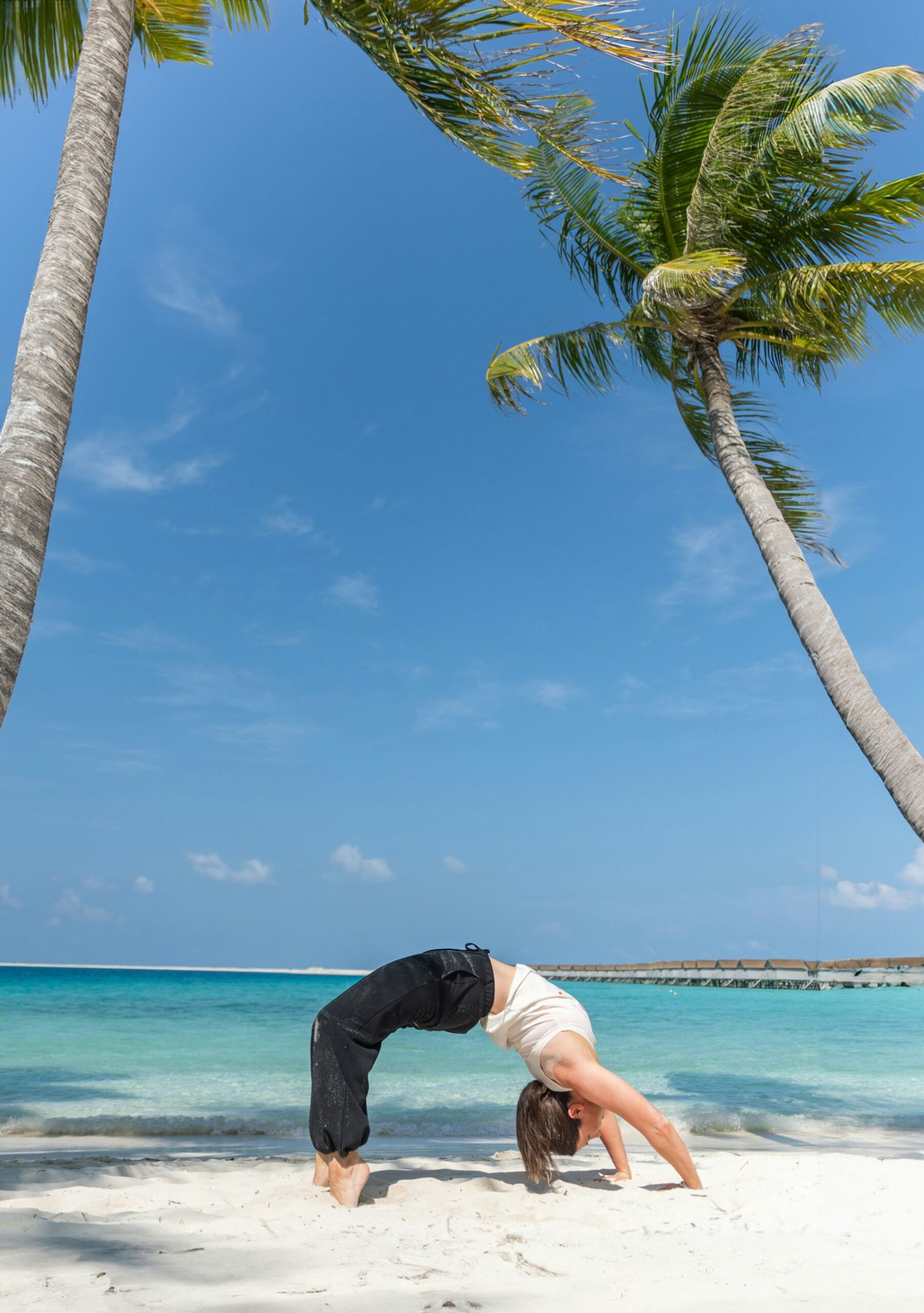

The Pala-U waterfall in Kaeng Krachan National Park near Phetchaburi — 17 tiers of cascades accessible by a 4-kilometre forest trail — is in September at its most powerful. The trail through the park to reach the falls passes through the oldest primary forest in the region, and the September bird diversity in the forest is at its annual maximum as the first autumn migrants begin arriving from the north. The falls at full wet season volume, with the spray reaching 20-30 metres from the base of the main tier, are a specifically September experience.
The traditional Chinese tea ceremony at the Yunnan-style tea houses of Doi Mae Salong — using the September harvest oolong from the surrounding gardens — is a specifically September retreat activity that has no equivalent elsewhere in Thailand. The practice of gongfu cha (the precise pouring and tasting sequence of the Chinese tea tradition) in the context of the mountain landscape that the Yunnan KMT settlers brought the tradition to three generations ago is the September Mae Salong experience at its most culturally layered.
The slow boat from Chiang Khong (in Chiang Rai province) to Luang Prabang in Laos — two days on the Mekong through the mountain landscape of the upper river — is in September at its most dramatic: the river at full flood, the channel widened by the monsoon rains, and the villages on the Lao bank visible from the water at the high water level that September produces. For retreat guests who want to extend a Chiang Rai retreat into a Laos river journey, September is the month when the Mekong is most itself.
Your email address will not be published. Required fields are marked *