

There is a particular kind of freedom that sailing in the Aegean produces and that no land-based retreat can replicate, the sensation of moving through a landscape that is continuously, unhurriedly changing, of waking each morning to a different bay, a different quality of light, a different angle on the same endless blue. Combined with a daily yoga practice, this freedom becomes something more structured and more purposeful than a sailing holiday, and something more alive and more responsive than a fixed-location retreat.
A yoga and sailing retreat in Greece is, at its best, a moving meditation, a week or more of practice conducted inside one of the world’s most extraordinary natural environments, where the rhythm of the sea, the demands of life aboard, and the daily discipline of the mat combine into an experience that is genuinely greater than the sum of its parts. The Aegean has been a place of human movement, discovery, and encounter for thousands of years. A sailing retreat is simply the most honest way to practise within it.


There is something profoundly liberating about waking up in a different bay each morning, about having no address except coordinates, about falling asleep to the gentle rock of water and waking to light reflecting off waves onto your cabin ceiling. Combining yoga with sailing in the Greek islands creates a retreat experience unlike any land-based programme, simultaneously more adventurous and more meditative, more social and more introspective, more structured and more flexible than conventional formats.
Greece’s island geography makes it perhaps the world’s ideal destination for sailing-based yoga retreats. The Aegean and Ionian seas contain over 6,000 islands and islets, most uninhabited, creating endless possibilities for exploration. Distances between islands are manageable, typically 10-30 nautical miles, allowing you to reach new destinations daily without exhausting passages. The Meltemi winds that blow through summer months provide reliable sailing conditions without being dangerously strong. And the water itself, impossibly clear, ranging from pale turquoise in sandy shallows to deep sapphire in channels, invites swimming at every anchorage. Our yoga retreats in Greece guide covers the full range of Greek formats for those comparing options.
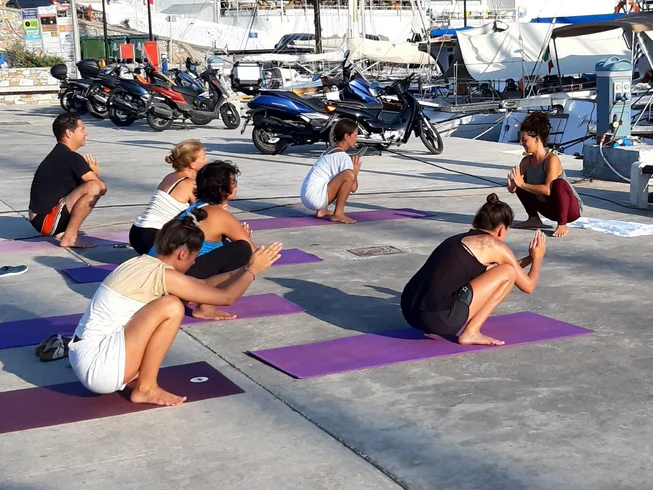
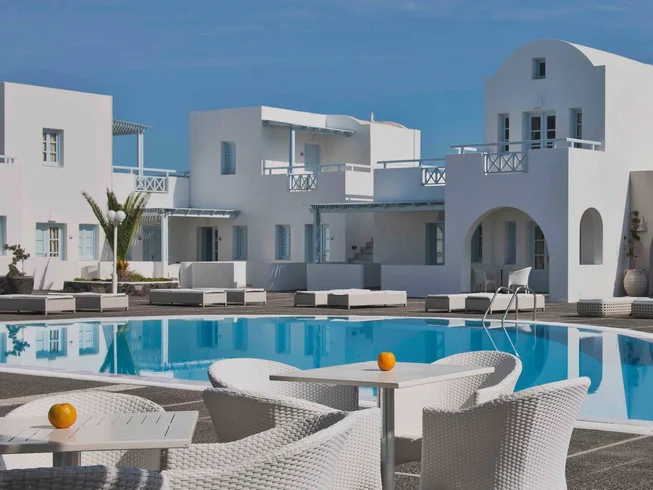
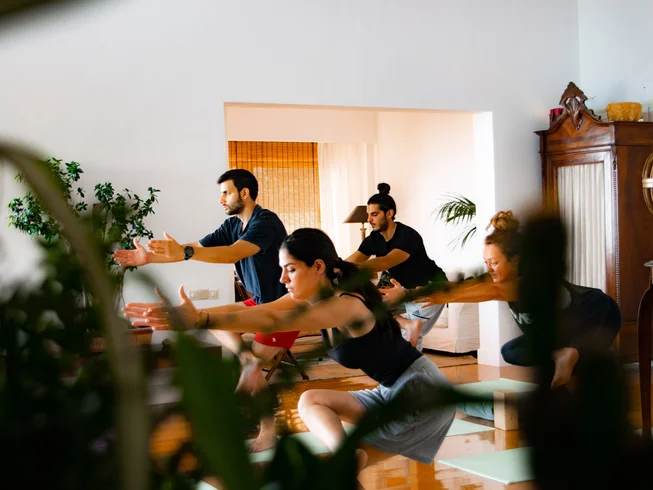
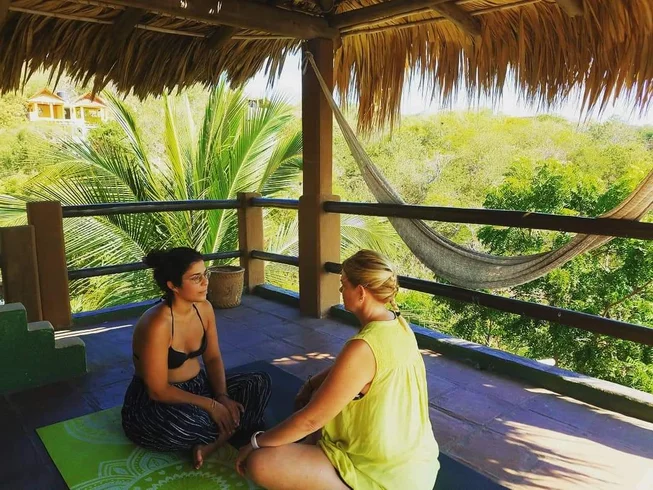
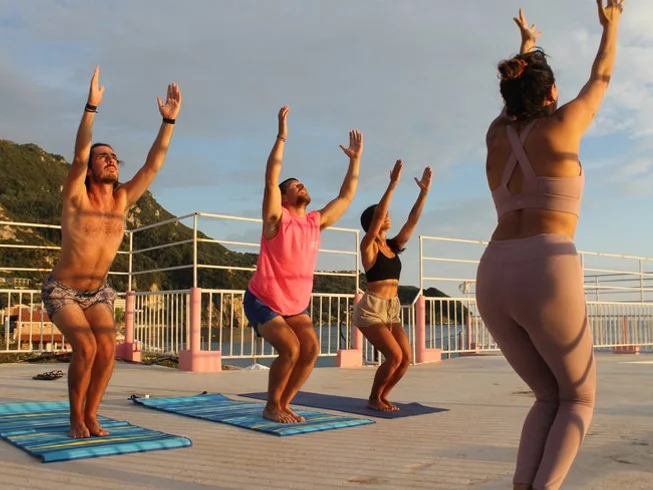
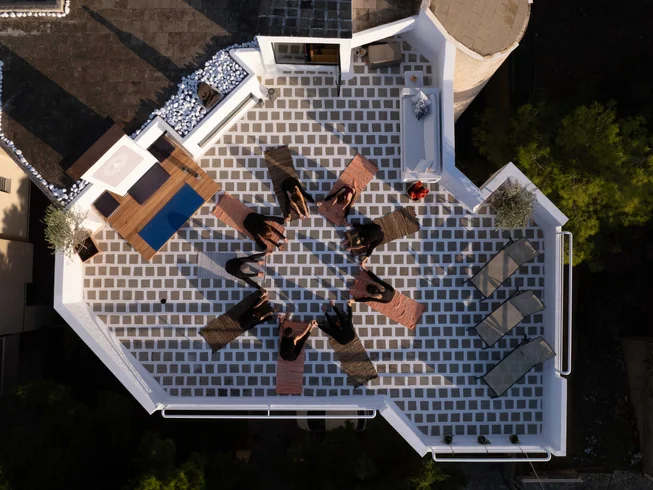
The Cyclades offer the iconic Greek sailing experience, whitewashed villages clinging to hillsides, windmills silhouetted against blue sky, dramatic rocky coastlines. Popular routes include Mykonos-Paros-Naxos-Ios-Santorini loops, or explorations of lesser-known islands like Sifnos, Serifos, and Kythnos. The Cyclades experience strong Meltemi winds in summer, creating excellent sailing conditions but challenging deck yoga during afternoon hours. Anchorages range from organised marinas to completely isolated bays accessible only by boat. For those wanting to combine a sailing retreat with time on a specific island, our yoga retreats in Paros and Naxos guide covers the Cyclades’ most rewarding yoga destinations.
The Saronic Gulf islands near Athens, Aegina, Poros, Hydra, Spetses, offer easier sailing with lighter winds and shorter distances, making them ideal for beginners or those who prefer gentle sailing with more time for yoga and exploration. The advantage is reliability: weather is more predictable, harbours are well-equipped, and proximity to Athens allows shorter trip durations of 3-4 days.
The Dodecanese southeastern island chain near Turkey includes Rhodes, Kos, Symi, and many smaller islands. The sailing here offers cultural richness, strong Turkish influence in architecture and cuisine, alongside dramatic landscapes and excellent swimming. Winds are generally lighter than the Cyclades, making for comfortable sailing and easier deck yoga.
The Ionian Islands, the western coast islands of Corfu, Paxos, Lefkada, Kefalonia, Zakynthos, offer dramatically different sailing than the Aegean. These islands are greener, with more vegetation and freshwater. The sailing is generally gentler with lighter, more variable winds. The Ionian attracts those who prefer lush landscapes over stark Cycladic aesthetics, who want reliable calm sailing, and who appreciate the slight Italian cultural influence from centuries of Venetian rule.

Practising yoga on a moving boat requires adaptations that ultimately deepen certain aspects of practice while limiting others. Balance poses become genuinely challenging when your platform is rocking, even gentle anchored swell creates instability that forces you to engage muscles and attention differently than on solid ground. Tree pose, warrior three, half-moon, and any one-legged balance becomes advanced practice, teaching you to find your centre dynamically rather than statically.
Core engagement happens naturally: maintaining stability requires constant subtle core activation that traditional mat practice often fails to develop. Your body learns to anticipate and respond to movement without conscious thought, developing a kind of fluid intelligence that translates off the boat into better balance and coordination generally.
Inversions and complex arm balances are generally impractical on a rocking boat. Most sailing yoga emphasises standing poses, seated forward bends, gentle twists, and restorative postures. Pranayama practice becomes especially powerful surrounded by clean sea air, the rhythm of waves naturally guiding breath. Meditation on deck with only water and sky visible creates conditions for profound spaciousness and presence.
The degree of actual sailing participation varies by retreat format and guest experience. Some programmes operate more like crewed charters where the skipper handles all sailing while guests focus on yoga and relaxation. Others actively encourage everyone to participate in sailing tasks, helping raise and trim sails, taking turns at the helm, learning navigation basics, understanding how wind and weather determine routing decisions.
Full participation transforms the experience from transportation to practice. Learning to read wind on water, to feel how sail trim affects boat speed and balance, to navigate by landmarks and charts rather than GPS: these are embodied skills that demand present-moment awareness, much like yoga practice itself. The concentration required for helmsmanship, the subtle adjustments needed to keep the boat on course, the teamwork involved in tacking or anchoring, all become meditations on attention, cooperation, and responsiveness.


The boat changes everything, and the changes are instructive in ways that practitioners do not always anticipate before their first sailing retreat. Space is limited in a way that land-based life rarely is, the practice area on the deck of a sailing yacht is typically no more than a few square metres, shared with ropes, cleats, and the general equipment of a working vessel, and subject to the movement of the sea beneath it. This limitation, which might initially seem like a compromise, turns out to be one of the sailing retreat’s most valuable features. Practising on a moving, imperfect surface with restricted space and the sound of water and wind as constant companions strips the practice back to its essentials in a way that a well-equipped studio never quite demands.
Balance becomes genuinely functional rather than aesthetically achieved. Breath becomes a practical tool for managing the body’s response to movement rather than a performance of correct technique. Presence becomes non-optional, because the alternative, a distracted mind on a moving deck above open water, has consequences that studio practice never produces.
Beyond the physical practice, the sailing context reshapes the entire texture of retreat life in ways that go deeper than the novelty of the setting. The rhythms that govern life aboard, the watch system, the tide and wind schedules that determine when the boat moves and when it rests, the shared responsibility for the vessel that means every participant has a role beyond simply attending their own experience, create a quality of community and mutual dependency that land-based retreats rarely achieve. People who sail together for a week know each other in a different way from people who simply practise and eat together. They have navigated something, in the most literal sense, and that shared navigation produces a quality of trust and intimacy that is one of the sailing retreat’s least advertised and most durable gifts.
Meals on sailing retreats require more planning and flexibility than land-based programmes. Storage is limited, refrigeration space is precious, fresh water must be conserved, cooking happens in compact galleys often while the boat is moving. Yet somehow, meals on good sailing retreats are memorable, perhaps because shared cooking becomes communal activity, because fresh fish just bought from fishermen tastes extraordinary, or because simple food eaten in spectacular anchorages satisfies in ways restaurant meals rarely match.
Most retreats provision before departure, loading boats with food for the entire journey plus wine, water, coffee, and staples. Fresh produce, bread, fish, and cheese are often purchased at island markets during the trip, turning provisioning stops into cultural experiences. Meals emphasise Greek staples that travel well and require minimal refrigeration: olive oil, tomatoes, cucumbers, peppers, onions, canned legumes, pasta, rice, dried herbs, feta, cured meats, nuts, and dried fruit.
One of sailing retreat’s greatest gifts is access to swimming spots unreachable from land, remote bays, tiny islets, locations where you are the only humans for miles. The water in these spots is often startlingly clear, coloured in shades that seem impossible until you see them: pale turquoise over sand, emerald green where seagrass grows, deep blue in channels, and near-violet in volcanic areas.
Swimming becomes a daily practice, often multiple times daily. Morning swims off the boat to wake up, afternoon snorkelling over underwater sites, sunset swims in golden light, occasional night swims in water glowing with bioluminescence. The salt water, rich in minerals, feels therapeutic. Many participants report feeling physically different after a week of daily sea swimming, as if the water itself has healing properties.
May and June are the best months for sailing retreats in Greece. The Meltemi wind that defines Aegean sailing in summer is not yet at its July-August intensity, which means more comfortable deck yoga and more predictable daily sailing distances. Temperatures of 22-26°C are warm enough for swimming at every anchorage, the sea reaches 20-22°C, and the islands are not yet at peak visitor density. Booking 3-4 months in advance is standard for May and June departures.
September and early October are the other strong window. The Meltemi has eased, the sea is at its warmest (24-26°C), the tourist pressure on the popular islands has reduced noticeably, and the golden September light on the Aegean is something photographers and painters specifically come for. September sailing retreats in the Cyclades or Dodecanese are among the best-timed experiences available in Greece. For the full picture of what September offers across the Greek islands, see our yoga retreats in Greece in September guide.
July and August bring the full Meltemi, which can reach 30-40 knots in the Cyclades, making some passages rough and deck practice challenging in the afternoon. Experienced sailors and those who specifically want strong wind conditions choose these months. For calmer sailing in peak summer, the Ionian and Saronic routes are better options than the open Aegean.
October through April: the sailing season largely closes in November and reopens in April. Some operators run early April and late October departures for those who specifically want the shoulder season experience, with lighter winds, empty anchorages, and lower prices.
Your email address will not be published. Required fields are marked *