yoga retreats in italy in may

Yoga Retreats in Italy - May 2027

The Italian calendar turns a corner in May that no other month quite manages. Spring, which has been building since February, reaches its full expression and then begins the slow handover to summer — the light getting stronger, the days getting longer, the sea temperature finally crossing the threshold at which swimming becomes a genuine pleasure rather than a test of resolve.


Yoga retreats in Italy in May operate in this exact window: warm enough for outdoor practice at any hour, cool enough that the afternoons are still comfortable, and positioned in the last stretch of the year before the high-season pricing and visitor numbers change the character of most destinations.

AUTHOR

Om Away

DATE PUBLISHED

January 18, 2026

CATEGORY

Share This Article

Why May works

May is the month the Italian landscape has been working toward since the first wildflowers appeared in February. The poppies that started in the Tuscan lowlands in late March have by now spread across the entire centre of the country; the Dolomite meadows are carpeted in gentians and wood anemones at altitude while the valleys below are already in full summer green; the lavender fields in the Chianti and the Val d’Orcia are putting out their first colour, not yet the saturated purple of July but a pale, preliminary version that catches the late afternoon light in a different and arguably more delicate way. The landscape in May is at maximum biological activity, and that quality translates into something practitioners notice on the mat: a generosity in the surroundings that mirrors what the body is doing.

Temperatures have settled into a range that makes every part of a retreat day viable outdoors. Morning practice begins in air that is cool and clear; by midday the warmth has built to something that feels like a proper summer day in northern European terms; the evenings are long and soft, with sunset not arriving until after eight by mid-month and pushing past eight-thirty by the end. In the south and on the islands, the temperature range shifts upward by four or five degrees, and afternoon sessions move into the shade rather than the full sun, but the day’s rhythm remains generous. May is the first month in Italy where you can credibly plan an entire retreat day outdoors and not need a contingency.


The advance booking dynamic in May is worth understanding. This is the first month of the Italian retreat calendar that sells like a peak-season month — programs fill faster than in March or April, and the best properties receive returning guests who book the following May before they leave. Four to six weeks’ advance notice, which works fine for April, is often insufficient for May at the most sought-after centres. Eight to twelve weeks is a more reliable lead time for properties with established reputations. The prices reflect this demand: May rates are 10 to 20 percent above April’s across most of the market, though still meaningfully below the July and August peak.

under the tuscan sun_3

The Sanctuary for the Soul – the VIP Experience – Italy, Tuscany

the sweet earth retreat_4

The Sweet Earth Retreat – Italy, Tuscany

under the tuscan sun_1

Explore Tuscany: Retorno a Calma

7 Day Yoga, Relaxation, Wine Tasting and Olive Oil Tasting in the Heart of Tuscany, Italy

Bicycle

5 Day Private Couples Retreat The Art of Connection in Sardinia, Italy

7 Day Italian Cooking, Tour and Yoga Holiday in Puglia, Italy

Where to go in May

Sicily in May is the clearest answer for anyone who wants the sea as part of their retreat experience. The water temperature around the southern and eastern coasts — Syracuse, Ragusa, the Gulf of Palermo — reaches 19 to 21 degrees by mid-month, which is the practical threshold at which swimming transitions from something you endure to something you actively seek. The island’s archaeological sites, which in July become genuinely punishing to visit in the heat, are in May accessible at any hour: the Valley of the Temples at Agrigento in the early morning, the Greek theatre at Taormina in the afternoon, the mosaics at Piazza Armerina without the queue. A retreat based in the rural Ibleo interior or on the southeastern coast captures both the cultural richness of one of Europe’s most historically layered islands and the physical ease of a May climate that has none of summer’s excess. The full range of what’s available on the island is visible in the dedicated listing of yoga retreats in Sicily, many of which run their best programs specifically in May and September.


The Amalfi Coast in May is the version of that coastline that its residents actually prefer. The summer crowds that compress the coast road into a slow-moving queue from June onward have not yet arrived; the ferry connections between Positano, Amalfi, and Ravello run on schedule without competition for seats; and the lemon groves that define the terraced landscape above the coast are in the middle of the sfusato amalfitano harvest, the elongated lemons that have been cultivated on these cliffs since the tenth century. Several retreat centres on the coast and in the hills above it time their most considered programs to May for exactly these reasons, and a week that combines morning practice on a clifftop terrace with an afternoon walk through the lemon groves and an evening ferry to Ravello is difficult to improve upon. The specific options along this stretch of coastline are gathered at yoga retreats on the Amalfi Coast, where May availability tends to go first.


Sardinia in May occupies a category of its own. The island’s interior is at its greenest — the Barbagia highlands and the Supramonte limestone plateau have not yet dried to the silvery-brown that characterises them in August — while the coast is beginning to warm toward its summer form without yet attracting the boat traffic and beach crowds that July brings. The Costa Verde on the western coast, with its dune systems and dark sand beaches facing open Atlantic-scale water, is in May one of the most dramatically empty stretches of Mediterranean coastline accessible from a major airport. Retreat programs based in this corner of the island use the combination of wild coastal landscape, highland walking terrain, and the particular Sardinian food culture — roast suckling pig aside, the island has an extraordinary tradition of vegetarian-compatible cuisine built around fresh pecorino, pane carasau flatbread, wild herbs, and honey — in ways that are specific to the season and the place.

Umbria in May completes its spring transformation. The oak forests around Assisi and in the Valnerina are in full leaf, the Nera and Topino rivers are running clear and cold from the mountains, and the towns of Spello, Bevagna, and Montefalco are in the final stages of preparing for the floral festivals that define their late-spring and early-summer calendars. Spello’s Infiorata — the carpet of flower petals laid across the streets for Corpus Christi — is created in late May or early June depending on the liturgical calendar, and the weeks of preparation, when townspeople are cutting and sorting flowers in the evenings and the streets smell of jasmine and rose, give the town an atmosphere that is entirely different from any other moment in the year. A retreat based in the Umbrian hills in the last week of May catches this energy in its most concentrated form.


The Italian Lakes — Como, Maggiore, Orta — reach their annual peak in May. The gardens of the great lakeside villas, Villa Carlotta and Villa del Balbianello on Como, Villa Taranto on Maggiore, are at maximum flowering, with azaleas, rhododendrons, and wisteria creating a display that the villa owners have been curating for centuries and that May concentrates into a few weeks of extraordinary colour. Retreat centres in the hills above the lakes use this combination of garden culture, lake light, and mountain backdrop in programs that feel nothing like the Tuscan retreat experience but occupy an equally well-developed tradition of Italian wellness hospitality, drawing on the longer history of thermal culture and lakeside convalescence that made this region the destination of northern European aristocracy from the eighteenth century onward.
 
yoga retreats in italy in may

Retreat Life in May

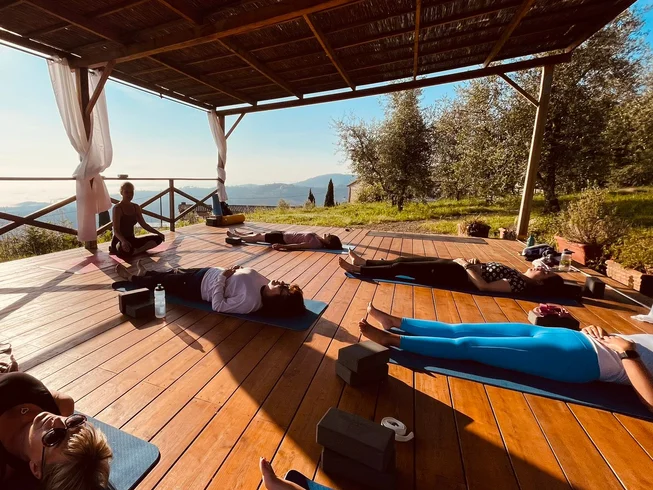
Everything happens outdoors in May. Yoga decks in the garden, meditation under pergolas, breakfast on sun-drenched terraces. Afternoon hiking or cycling becomes a genuine pleasure rather than a sweaty endurance test.

The rhythm of a May retreat flows naturally. Early morning practice in the cool air, substantial breakfast, midday rest during the warmest hours (which still aren’t that hot), afternoon activities, evening practice as things cool down, dinner outside under string lights or stars.

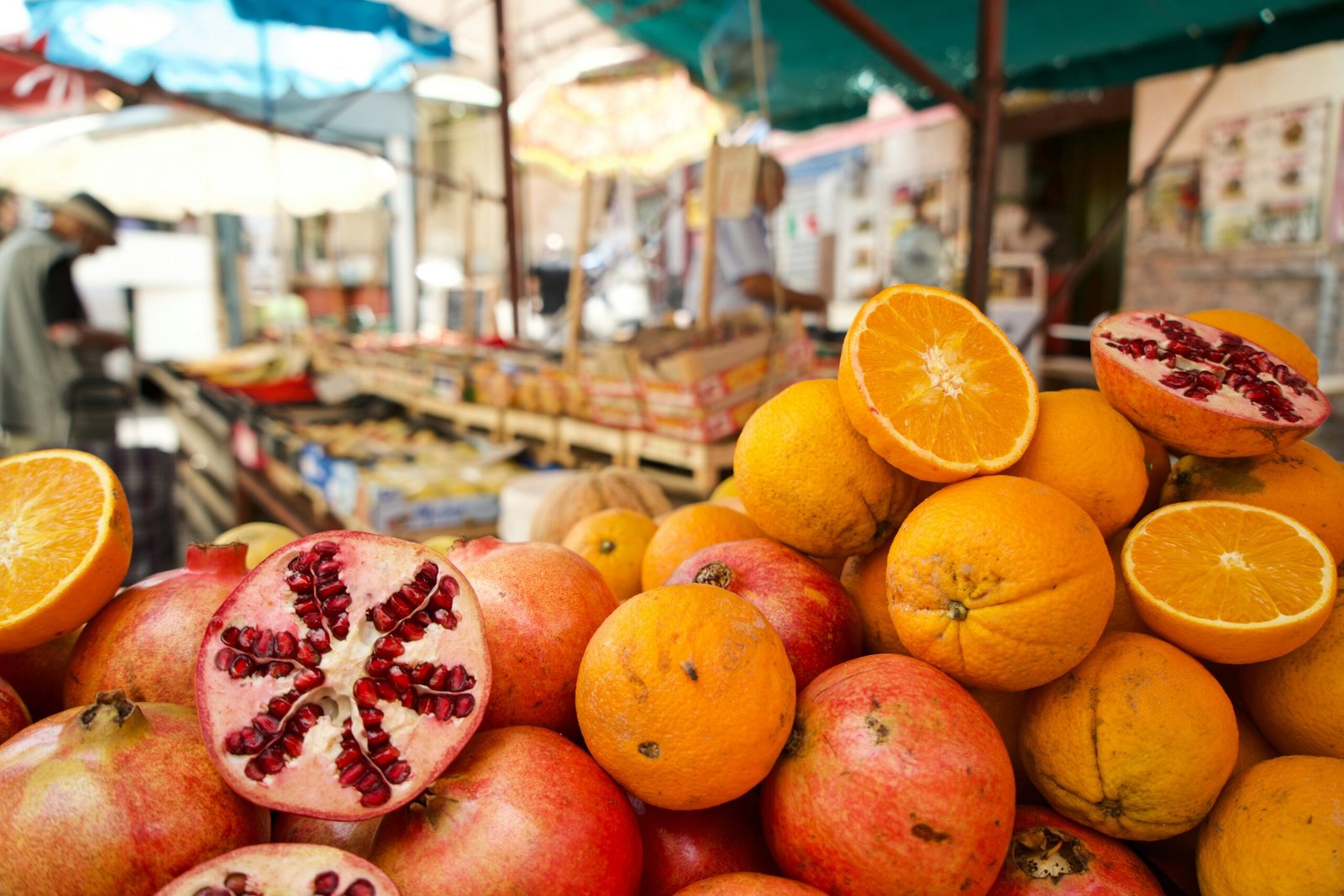
Many retreats incorporate local experiences in May. Foraging for wild herbs, visiting cheese producers in the mountains, touring wineries as the growing season begins, learning to cook with seasonal vegetables from local markets bursting with asparagus, artichokes, and tender greens.

The Giro d'Italia and the seasonal rhythm

The Giro d’Italia runs through May every year, and its route through the Italian landscape creates a cultural backdrop for retreat life that has no equivalent in other months. The race visits different regions each year, but its character is consistent: a moving spectacle that travels through small towns, mountain passes, and coastal roads, preceded by days of local anticipation and followed by a return to normal life that is itself a kind of collective exhale.


Retreat participants whose programs coincide with a nearby stage finish often encounter this rhythm without having planned it — the sudden animation of a village that has been quiet all week, the barriers going up on the road below, the peloton passing in a blur of colour and wind and then the silence returning within minutes.


The Giro’s mountain stages, which fall in the second and third weeks of the race, frequently pass through the Dolomites, the Apennines, and the Alpine foothills of Piedmont and Valle d’Aosta — all regions with retreat centres. These stages are the race’s most dramatic, and the mountain communities that host them have a relationship with the event that goes back generations. Watching a high-altitude stage finish from a terrace that is also your practice space for the week is an experience that sits outside the normal retreat frame but fits naturally into it: both the race and the practice are about sustained effort, about the body’s relationship with terrain, and about the quality of attention that difficult conditions produce in those willing to give them their full focus.

yoga in italy in may
choosing a yoga retreat in italy

What the season does to practice

The body in May has completed the transition that March began and April consolidated. The winter holding patterns are entirely gone — the braced shoulders, the shallow breath, the reluctance that cold imposes on deep hip work. What takes their place is a quality of physical readiness that experienced teachers describe as the most rewarding to work with in the year: the body is warm enough to move with fluency from the first minutes of practice, responsive enough to take on deeper work than winter allowed, and not yet subject to the particular challenges that summer heat creates, when the heat itself does so much of the opening that the practitioner’s own effort becomes less clearly the cause.


Pranayama in May can move outdoors definitively. The sitali and sitkari cooling breaths that become essential in July are not yet necessary — the temperature is warm but not oppressive — but the sheetali quality of May morning air, cool and slightly moist from overnight dew, makes breath work done outside before the day heats up qualitatively different from anything a studio can replicate. Teachers who practise outdoors regularly describe the May morning breath as the cleanest of the year: the pollen count is high, which is relevant for those with allergies, but the air itself has a freshness and a biological richness that the drier months ahead will gradually reduce.


The food culture of Italian retreat centres in May shifts decisively toward summer without quite arriving there. Strawberries from Campania and the Pontine plains south of Rome appear in late April and are at their peak through May — small, intensely sweet, nothing like the imported varieties available year-round in supermarkets. Cherries follow from mid-month, the first ciliegie di Vignola from Emilia arriving in the markets with the ceremony that the Italians reserve for seasonal firsts. Fresh ricotta is everywhere, made from the spring milk that is richer and more aromatic than at any other time of year. In the south, the first San Marzano tomatoes begin in late May, still a little green at the shoulders, eaten sliced with sea salt and the local olive oil in a combination so simple that it only works when the tomato has been given the conditions to become what it is capable of being. The table in May is at the intersection of spring and summer — the last asparagus, the first cherries, fresh cheese alongside the season’s first olive oil pressed the previous autumn — and a retreat kitchen that sources with any care is serving food that could not be assembled at any other moment in the year.

May vs. the rest of the year

May sits at a particular point in the Italian retreat calendar that the months on either side of it define by contrast. April, which precedes it, has the same directional energy and better pricing, but the sea is still too cold for swimming in most regions, the evenings require a proper layer, and the landscape — vivid as it is — has not yet reached the full saturation that May delivers. Those planning ahead who want April’s intimacy and lower rates will find the full case made in the April yoga retreats in Italy guide; those who want May’s warmth and sea access are making a different and equally defensible choice.


June, which follows, is when summer begins in earnest. The first beach holiday visitors arrive, the coastal towns shift their economic orientation toward the season, and the retreat landscape changes accordingly: more programs, higher prices, and a quality of heat in the afternoons that begins to constrain outdoor practice in the south and on the islands. June yoga retreats in Italy offer the longest days of the year and a settled warmth that suits certain practitioners and styles, but the balance of conditions that makes May exceptional — the warmth without the heat, the sea access without the crowds, the landscape at biological maximum — is specific to this month and not available in the one that follows. For the widest possible view of the Italian retreat calendar across all twelve months and all regions, the overview at yoga retreats in Italy puts May in the context of the full year.

Practical information

May logistics require more forward planning than the winter and early spring months. Flights to major Italian airports — Rome Fiumicino, Milan Malpensa, Naples, Catania, Palermo, Cagliari — are well-served but prices rise through the month as demand builds. Booking flights six to eight weeks in advance captures a reasonable rate; leaving it until four weeks before departure will cost significantly more for the more popular routes. Car hire, essential for rural retreat centres in Tuscany, Umbria, and inland Sicily, should be booked at the same time as the retreat itself — the May inventory at Italian rental agencies depletes faster than most travellers expect, and last-minute bookings at major airports can be limited.


The Italian public holiday calendar includes two significant dates in May: the Festa del Lavoro on May 1st and the Festa della Repubblica on June 2nd (which affects any retreat straddling the month boundary). The May 1st long weekend is one of the busiest domestic travel periods of the Italian year — roads, trains, and accommodation in popular destinations are crowded and priced accordingly. Retreats that begin on May 2nd or later avoid this entirely, but any arrival on May 1st in a destination city should be planned with the public holiday in mind.


Packing for May is more straightforward than earlier spring months but still requires a light layer for mornings and evenings. A merino or cotton long-sleeve top covers the cool hours; everything else can be lighter than April required. A swimsuit is no longer optional — the sea is swimmable in the south and on the islands, and most retreat centres with outdoor pools have them at a comfortable temperature from the first week of the month. Trail shoes remain worth including if the program incorporates hillside walks. Sunscreen from SPF 30 upward is necessary throughout the day; the May sun at Italian latitudes, particularly in the south and at altitude, has real UV strength that surprises travellers from northern climates. A hat for midday activities and a light scarf for evenings complete what is, by now, a genuinely simple packing list.

FAQs: yoga retreats in italy - may

1. Is the sea warm enough to swim in Italy in May?

In Sicily and the southern Puglia coast, yes — sea temperatures reach 19 to 21 degrees by mid-May, which is comfortable for swimming. The Tyrrhenian coast around Naples and the Amalfi Coast is a few degrees cooler, typically 17 to 19 degrees, which suits regular swimmers well. The Adriatic and the Ligurian coast are cooler still, around 16 to 18 degrees in May — viable but bracing rather than comfortable for more than a short swim. Lake swimming varies significantly: the shallower southern basin of Lake Garda can reach 18 degrees by late May, while the deep northern lakes remain cool through the month.

2. How far in advance should I book a May retreat in Italy?

Eight to twelve weeks is the reliable window for most established retreat centres. The most popular properties — particularly in Tuscany and on the Amalfi Coast — receive returning guests who book their following May before they leave, meaning that by January or February the best weeks are already substantially filled. If you have a specific centre in mind, contact them in January at the latest to understand availability. For less well-known centres, or for programs in Umbria, Sardinia, or Sicily where demand is slightly lower, six to eight weeks may still find availability in good programs.

3. What style of yoga is most suited to May conditions in Italy?

May’s temperatures support the full range of styles more comfortably than any other month. Ashtanga and dynamic vinyasa work well in the mornings before the day heats up; the temperature is warm enough to build internal heat quickly but cool enough that the effort is sustainable. Yin and restorative practices in the afternoon take advantage of the warmth — connective tissue releases more readily in heat — without the challenge that July’s temperatures create. Ayurvedic programs designed around the pitta season, which begins formally in late spring, are particularly prevalent in May and tend to be among the most carefully designed programs in the Italian calendar in terms of matching practice to climate.

4. Which regions offer the best value in May compared to summer?

The regions where the May-versus-summer price gap is largest are the ones most dominated by beach tourism in July and August: Sicily, Puglia, the Amalfi Coast, and Sardinia. Retreat centres in these areas price May at 15 to 25 percent below their July and August rates, and the conditions — sea temperature, landscape, tourist density — are often better in May than in the height of summer. Tuscany and Umbria show a smaller gap, since their appeal is less concentrated in the beach season, but May is still meaningfully cheaper than June, July, and August across the board.

5. Can I incorporate a visit to the Giro d’Italia into a May retreat?

Yes, with planning. The Giro’s route is announced in October of the preceding year, so by the time you are booking a May retreat you know exactly which towns and mountain passes the race will visit. If a stage finish or a mountain crossing falls within reach of your retreat centre, attending requires only a short journey and no advance ticket — the Giro is free to watch from roadside, and the mountain stage finishes in particular are accessible by public transport for the race day. The experience of watching a Grand Tour peloton pass through the Italian landscape — the brief, concentrated intensity of it — is one of those accidental encounters that retreats in May can provide and that no other month offers.

6. Is May suitable for a retreat combining yoga with water activities?

It is the first month in the Italian calendar where this combination works fully. Paddleboarding and kayaking are viable across the south and islands from the first week of May; the sea is calm, the light is good, and the early morning water surface before the wind picks up has a quality of stillness that suits the transition from indoor pranayama to outdoor movement. Lake Garda in May supports paddleboarding, sailing, and windsurfing on a full commercial basis from early in the month. Several retreat centres on Sardinia’s southern coast and in the Syracuse area of Sicily have developed programs specifically combining morning yoga with afternoon water sports, using the May conditions as the operational window that summer’s crowding gradually reduces.

Share Your Thoughts

Your email address will not be published. Required fields are marked *

Leave a Reply

Your email address will not be published. Required fields are marked *