

Greece has been feeding people well for longer than almost any other culinary tradition in the Western world, and the relationship between that food culture and the practice of yoga is less unlikely than it might initially appear. Both traditions are rooted in the same foundational understanding: that the body is not a machine to be fuelled but a living system to be nourished, and that the quality of attention brought to what enters it matters as much as the content itself.
A yoga and culinary retreat in Greece brings these two traditions into direct and deliberate conversation, not as a wellness marketing concept, but as a genuine exploration of what it means to eat with the same quality of presence, care, and sensory awareness that the mat demands of movement and breath. The ingredients that Greece produces, its olive oil, its wild herbs, its vegetables grown in volcanic and mineral-rich soils, its fish from some of the cleanest waters in the Mediterranean, are not incidental to this conversation. They are among its most eloquent participants, and a retreat that takes them seriously produces an experience of nourishment that extends well beyond the dining table.


Food in Greece is never just fuel. It is culture, connection, celebration, and at its best, a form of meditation. The Greek relationship with eating embodies principles that yoga philosophy teaches: presence, gratitude, moderation, pleasure without excess, and the understanding that nourishment operates on multiple levels, physical, social, emotional, spiritual. Yoga and food retreats in Greece explore this intersection, treating meals not as separate from practice but as extensions of it, opportunities to cultivate the same mindfulness, breath awareness, and presence that we bring to the mat. Our yoga retreats in Greece guide covers the full range of Greek retreat formats for those still deciding.
The Mediterranean diet, recognised by UNESCO as Intangible Cultural Heritage and studied extensively for its health-promoting properties, provides the perfect foundation for exploring mindful eating. This is not a diet in the restrictive modern sense but a way of life developed over millennia in the specific conditions of the Mediterranean basin. Olive oil in abundance, vegetables and legumes as primary foods, whole grains, fresh fish and seafood, modest amounts of cheese and yogurt, wine in moderation, minimal meat, and meals always shared and savoured rather than rushed. These are not arbitrary rules but responses to what grows well in Mediterranean soil and climate, what nourishes bodies doing physical work in hot conditions, and what creates the conditions for longevity and wellbeing.
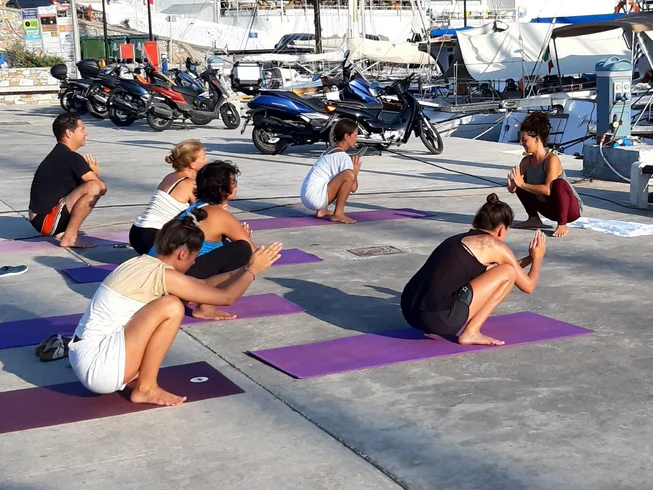

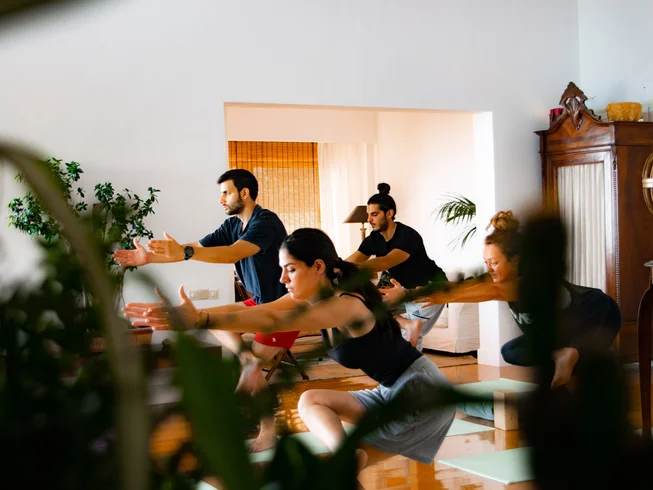
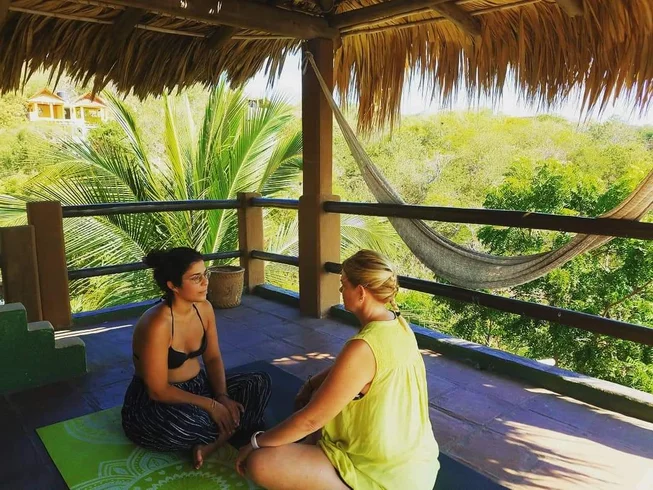


Many yoga retreats incorporate the entire food cycle into their programmes, helping you understand and participate in the journey from seed to compost.
Growing and Harvesting: Morning might include garden work, weeding, watering, harvesting vegetables for lunch, collecting herbs. This is not performative farm cosplay but actual participation in food production. You learn which greens grow wild and are foraged rather than cultivated. Greeks are passionate foragers, gathering horta, wild greens, from hillsides and fields. You discover that tomatoes warm from the vine taste fundamentally different from refrigerated supermarket versions. You understand the labour involved in producing food and develop a different relationship with waste when you have seen the work required to grow what you are throwing away.
Some retreats time visits to coincide with harvests. The olive harvest in October and November is one of the most grounding seasonal experiences available in Greece: picking olives by hand from ancient trees, pressing them at the local mill, and tasting the green, peppery oil days later creates visceral understanding of where olive oil comes from that no amount of reading can provide. The grape harvest in September is equally specific, the vineyards active and fragrant, the smell of fermenting must in the evening air of wine-producing villages. Participating in these traditional seasonal activities connects you to rhythms that modern food systems have obscured.
Market Visits: Weekly or twice-weekly markets remain central to Greek food culture. Retreat excursions to local markets teach you to select produce by season, quality, and ripeness rather than by aesthetics or year-round availability. You learn to recognise varieties you have never encountered: the small, intensely flavoured Greek tomatoes, the enormous white eggplants, the fresh almonds in spring, the dozens of olive varieties. Market visits also reveal food economics. Supporting small producers creates economic relationships that maintain agricultural landscapes and traditional knowledge.
Cooking as Practice: The heart of food retreats is time spent in the kitchen, learning not just recipes but approaches: how to cook by taste and intuition rather than precise measurement, how to improvise with what is available, how to use simple techniques that maximise flavour while preserving nutrients, and how to cook for others as an act of care and creativity.
Greek cooking is remarkably forgiving and accessible. Many traditional dishes involve variations on a theme: vegetables stewed in tomato and olive oil (ladera), vegetables or seafood baked with herbs and lemon, various forms of pie made with phyllo dough or hand-stretched pastry. The techniques are straightforward; the magic comes from ingredient quality and patient, attentive preparation.
Cooking sessions at retreats are communal and social. Someone chops vegetables, another stirs sauce, a third shapes pies, someone else sets the table. You talk while working, about the recipe’s origins, variations family members make, memories associated with the dish. The process becomes meditation not through silence but through shared focus and creativity. And the meal that follows tastes better for having been made together, for carrying everyone’s effort and attention.

Market Visits: Weekly or twice-weekly markets remain central to Greek food culture. Retreat excursions to local markets teach you to select produce by season, quality, and ripeness rather than by aesthetics or year-round availability. You learn to haggle (expected and enjoyed in Greek markets), to communicate with vendors who speak minimal English, and to recognize varieties you’ve never encountered—the small, intensely flavored Greek tomatoes, the enormous white eggplants, the fresh almonds in spring, the dozens of olive varieties.
Market visits also reveal food economics. Organic local produce costs more than conventional but less than organic imports. Supporting small producers creates economic relationships that maintain agricultural landscapes and traditional knowledge. The woman selling her family’s olive oil, the farmer offering vegetables from his terraced plots, the cheese-maker whose goats graze nearby hills—these aren’t anonymous transactions but exchanges embedded in community and place.
Cooking as Practice: The heart of food retreats is time spent in the kitchen, learning not just recipes but approaches—how to cook by taste and intuition rather than precise measurement, how to improvise with what’s available, how to use simple techniques that maximize flavor while preserving nutrients, and how to cook for others as an act of care and creativity.
Greek cooking is remarkably forgiving and accessible. Many traditional dishes involve variations on a theme: vegetables stewed in tomato and olive oil (ladera), vegetables or seafood baked with herbs and lemon, various forms of pie made with phyllo dough or hand-stretched pastry. The techniques are straightforward; the magic comes from ingredient quality and patient, attentive preparation.
Cooking sessions at retreats are communal and social. Someone chops vegetables, another stirs sauce, a third shapes pies, someone else sets the table. You talk while working—about the recipe’s origins, variations family members make, memories associated with the dish. The process becomes meditation not through silence but through shared focus and creativity. And the meal that follows tastes better for having been made together, for carrying everyone’s effort and attention.
Olive Oil: Understanding Greek cooking requires first understanding olive oil—not as generic cooking fat but as ingredient with enormous variation in flavor, quality, and appropriate use.
Horiatiki (Greek Salad): The humble Greek salad becomes revelation when made properly—ripe tomatoes cut in chunks (never sliced), cucumber, green pepper, red onion, Kalamata olives, good feta cheese crumbled on top, dried oregano, and a generous pour of olive oil with a splash of vinegar.
Ladera (Vegetables in Olive Oil and Tomato): This category includes dishes like fasolakia (green beans), bamies (okra), and arakas (peas) all cooked slowly in tomato sauce with onions, herbs, and abundant olive oil.
Dolmades (Stuffed Grape Leaves): The meditative work of rolling dozens of tiny stuffed packages—rice, herbs, sometimes ground meat, wrapped in grape leaves—represents cooking as practice beautifully. The repetitive motion becomes almost hypnotic.
Spanakopita and Other Pites: Greek pies made with phyllo dough or handmade pastry and filled with spinach, cheese, leeks, or other vegetables are staples.
Tzatziki and Other Dips: Greek meals always include mezze—small dishes shared before or alongside main courses. Tzatziki (yogurt with cucumber, garlic, and dill), melitzanosalata (eggplant dip), htipiti (feta and red pepper spread), and taramosalata (fish roe spread) are standards.
Fresh Fish: Greek cooking treats fish with respect and simplicity—grilled whole with lemon and oregano, baked with tomatoes and herbs, or occasionally in fish soup.
Wine, Spirits, and Mindful Drinking
Greek food culture includes alcohol, but in specific contexts and ways. Wine accompanies meals—never drunk for its own sake but integrated with food, conversation, and company. The quantities are typically moderate (a glass or two over the course of a long meal), and the quality is improving dramatically as Greek wine-making modernizes while preserving indigenous grape varieties.
Food and yoga retreats address alcohol thoughtfully rather than ignoring it or treating it as incompatible with wellness. You might visit wineries, learning about terroir, varietals, and traditional production methods. Wine tastings teach you to drink slowly and attentively, noticing flavors, pairing with foods, appreciating quality over quantity. The approach is neither abstinence nor indulgence but mindfulness—being fully present with what you’re drinking, noticing how it affects you, choosing consciously rather than automatically.
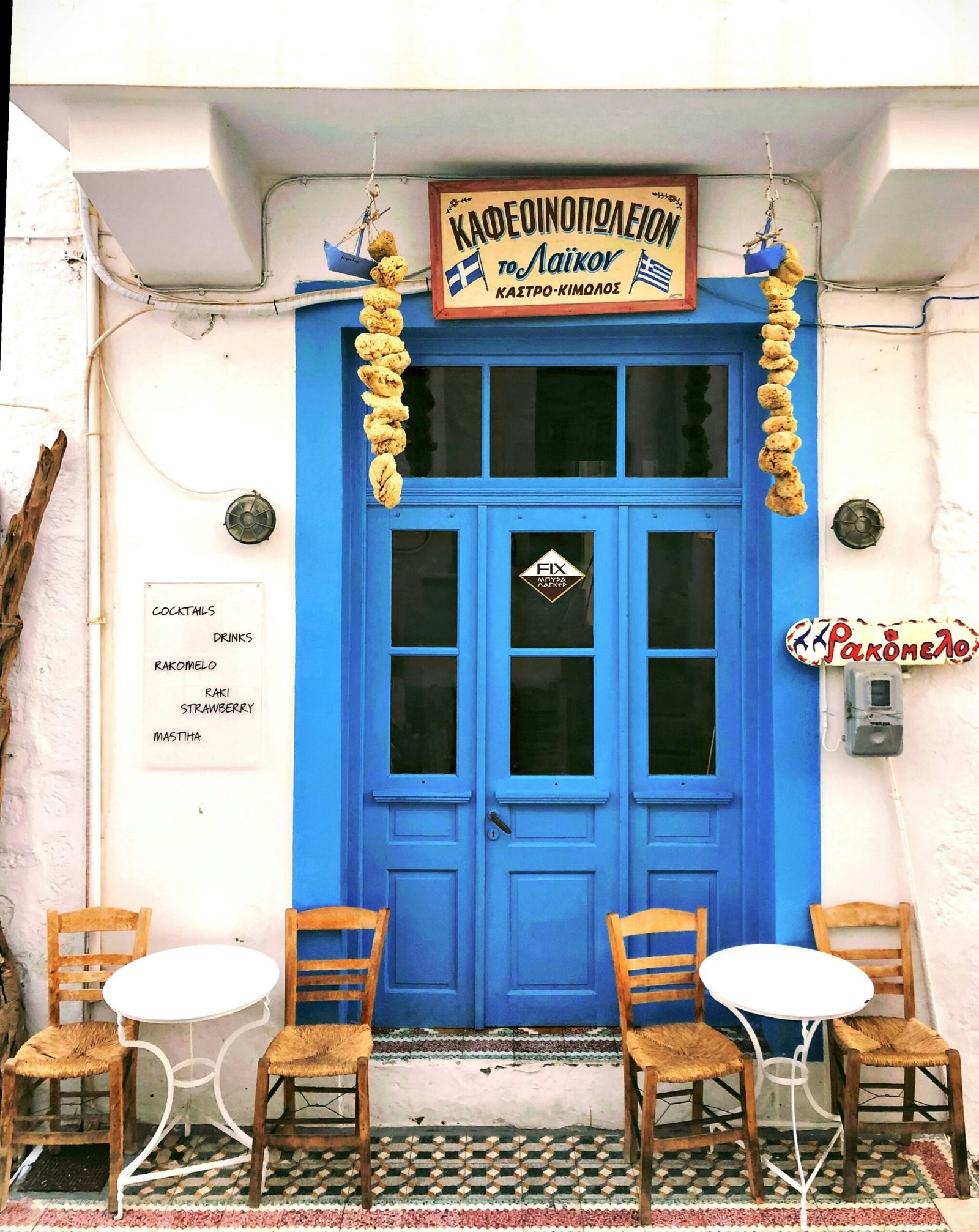
Greek spirits—ouzo, raki, tsipouro—also appear, usually as digestifs or accompaniments to mezze. The ritual of ouzo with small plates of seafood, sipped slowly over hours, represents the Greek understanding that eating and drinking are frameworks for connection and presence rather than tasks to complete.

Food retreats in Greece increasingly address ethical and environmental dimensions of eating. You learn about overfishing in the Mediterranean, sustainable seafood choices, the environmental impacts of industrial meat production vs. small-scale local farming, plastic pollution in food packaging, food miles and carbon footprints, and how food choices affect soil health, biodiversity, and climate.
These conversations acknowledge tensions between personal health optimization and broader ethical concerns. The most sustainable diet might not be identical to the most personally optimal one. Perfect consistency is impossible in modern food systems. But awareness and intention matter—making better choices more often, supporting systems aligned with your values when possible, accepting imperfection while still striving for improvement.
Bringing It Home: Integration Challenges
Good retreats address this honestly, helping you identify what aspects are most important and most feasible to maintain. Maybe it’s not the specific dishes but the principles—eating more vegetables, cooking at home more often, taking time to actually taste food, sharing meals without screens or multitasking. Maybe it’s one Greek dinner weekly where you cook properly and eat slowly rather than trying to transform all eating overnight. Maybe it’s sourcing one or two key ingredients—really good olive oil, good bread from a local bakery—that elevate simple meals.
Who Thrives at Food-Focused Retreats
Yoga and food retreats appeal to those who love eating and cooking and want to deepen those pleasures rather than restrict them, who’re interested in food origins and preparation not just consumption, who enjoy hands-on learning and don’t mind getting messy in kitchens and gardens, and who appreciate that the social aspects of eating matter as much as nutrition.
These retreats work beautifully for people recovering from disordered eating or diet culture damage, as they emphasize pleasure, sufficiency, and intuitive eating rather than rules and restriction. They suit travelers who want to understand Greek culture through its most accessible and universal medium—food. And they attract anyone who senses that modern eating has become complicated and anxious and yearns for simpler, more joyful relationship with food.
They’re less ideal for those wanting intensive athletic yoga practice (food-focused retreats emphasize moderate practice since you’re eating well and spending time cooking), anyone with severe dietary restrictions that Greek cuisine can’t easily accommodate, people uncomfortable with alcohol in any context, or those preferring their yoga practice separate from other activities.
But for those called to them, yoga and food retreats in Greece offer something precious—the recovery of eating as celebration rather than problem, as source of connection rather than anxiety, as daily practice of gratitude and presence. You learn that nourishment isn’t just about nutrients but about beauty, care, community, and the profound pleasure of sharing good food with others in places where food culture still remembers what truly sustains human beings.
September and October are the best months for a food-focused retreat in Greece. September brings the grape harvest across the wine regions, the fig and almond season at peak, and the first of the wild mushrooms in the mountain forests. October is the beginning of the olive harvest: picking olives by hand, watching them pressed at the local mill, and tasting new-season oil within days of pressing is the food experience most specific to Greece and most difficult to replicate outside this window. Our Greece in October guide covers what the harvest season looks like across the country.
May and June are the other strong window for food retreats. The spring vegetable season, the first strawberries and cherries, the wild asparagus and horta at their most varied, and the markets at their most colourful make the cooking workshops specifically rewarding. The sea is warm enough for swimming, the temperatures are comfortable, and the islands and mainland are operating without the August density.
Year-round food retreats operate in Crete and on the Peloponnese, where the agricultural calendar and the mild winters make the food culture accessible in every month. For Crete specifically, our yoga retreats in Crete guide covers the island’s retreat landscape in full.
Your email address will not be published. Required fields are marked *