
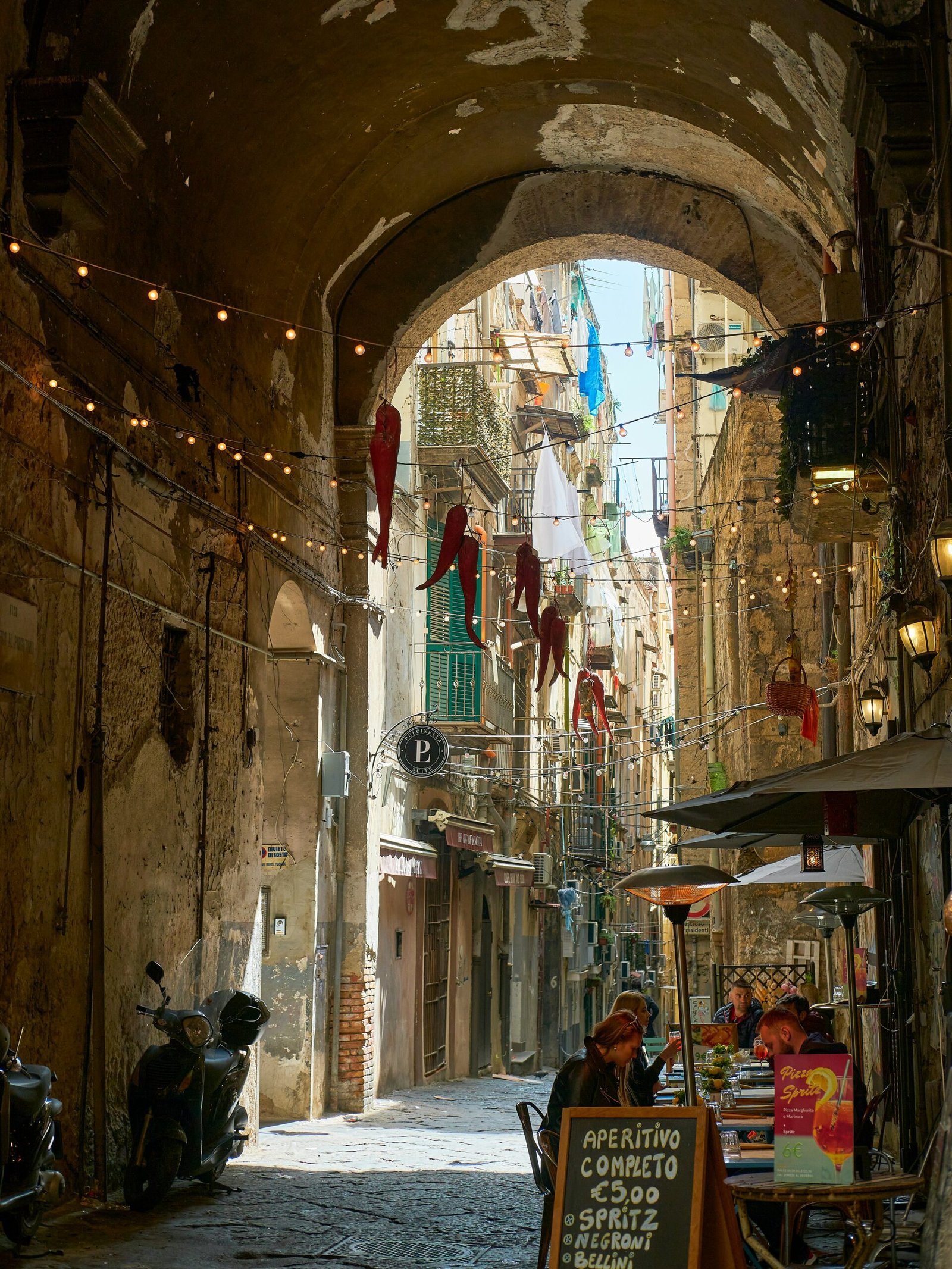
February is the month Italy stops holding its breath. The deepest cold has passed, the days are lengthening at a pace you can actually measure, and across the south the landscape is already doing something unexpected: blooming.
For anyone considering yoga retreats in Italy in February, the month offers a specific combination that no other time of year replicates — the last of winter’s quiet fused with the first, tentative gestures of spring. It is transitional in the most energising sense of the word.


What distinguishes February from January is not just temperature but momentum. January asks for complete withdrawal, a stillness that suits the darkest, most dormant phase of the year. February has already turned a corner. The daylight is returning at its fastest rate since the solstice — roughly two and a half minutes added each day — and the body registers this before the mind catches up. Practitioners who are sensitive to seasonal shifts often notice more available energy in February morning sessions, a greater openness in the chest, a subtle readiness that January simply did not offer.
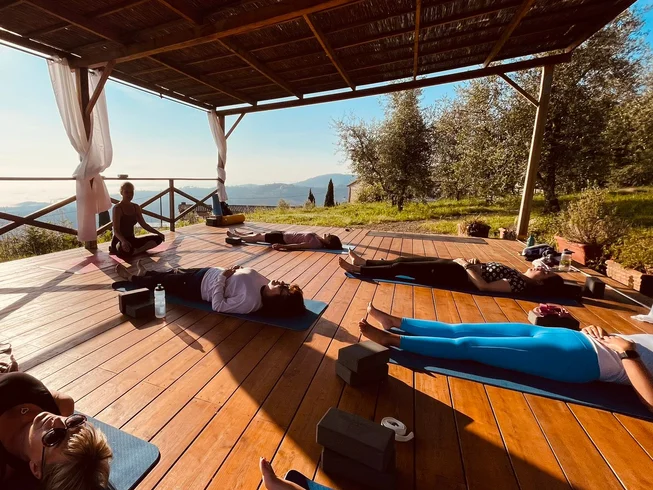
The off-season advantages remain. February keeps prices low and group sizes small across most of Italy, and retreat programs are running fully, unlike January when some rural centers operate on skeleton schedules. The combination of genuine quiet with properly staffed, fully operational infrastructure is one of the month’s underappreciated qualities: the intimacy of deep winter without its occasional austerity.
Climate varies significantly by region, and in February the gap between north and south is at its widest. Sicily averages 15 degrees and receives more winter sun than most of northern Europe manages in June. The Salento coast in Puglia sits around 13 degrees, with afternoon warmth on clear days that makes outdoor walking entirely viable. Tuscany and Umbria are cool and occasionally frosty, the landscape stripped back to its bones. The Dolomites are in full alpine winter, snow-covered and sharp-aired. Each of these climates suits a different kind of retreat, and the month is wide enough to contain all of them.
Sicily is the clearest argument for a warm February retreat experience. By early February, the almond trees on the hillsides around Agrigento are already in flower — white and pale pink blossom against the grey-green of the Valle dei Templi, with Greek temples rising behind them in a combination that manages to feel both ancient and immediate. The Mandorlo in Fiore festival typically falls in the first or second week of the month and brings folk music, food markets, and processions to a town that is otherwise entirely unhurried. A retreat based anywhere in the Agrigento province during this window benefits from proximity to one of the genuinely distinctive events in the Italian winter calendar, and the temples themselves — navigable without crowds, lit at a low winter angle in the late afternoon — reward time that summer simply does not allow.
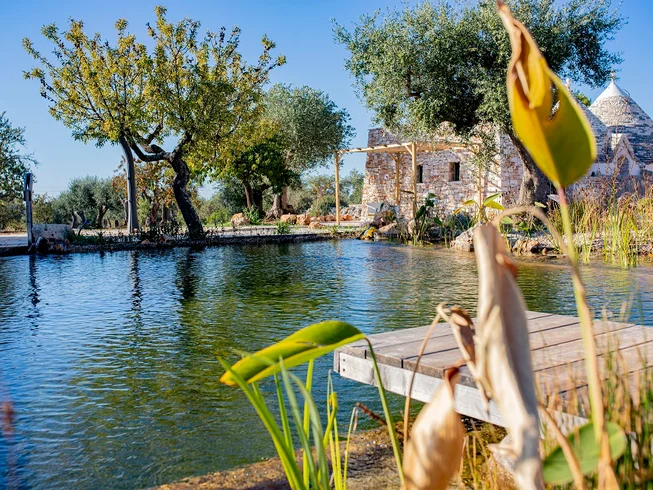
Puglia in February operates in a register quite different from its summer self. The Valle d’Itria and the Murge plateau are cold in the mornings but clear, and the olive groves that define the regional landscape are in the middle of their annual pruning. February is when this agricultural work happens across the entire south, before the sap rises and before new growth begins, and the visual effect of freshly worked trees against pale winter sky, with smoke from burning offcuts rising in the distance, belongs to this month alone. Masserie that operate year-round often incorporate morning walks through the working groves into their February programs. The experience of watching skilled pruners at work — three-thousand-year-old agricultural knowledge, carried without ceremony — sits alongside morning asana in a way that makes both feel more grounded.
For those who want a retreat within reach of something more urban and spectacular, the Veneto countryside around the Euganean Hills, an hour from Venice by train, supports several centers that use their proximity to the Venetian Carnevale as an asset rather than an obstacle. A retreat based in the hills while making a single long day into Venice during the Carnevale peak offers the best of both registers: the spectacle of the masked processions and the candlelit campo gatherings, then the return to silence and practice.
The Dolomites in South Tyrol offer a completely different February proposition. Several retreat centers here have developed ski and yoga programs that are explicitly seasonal — morning asana and pranayama followed by a day on some of the finest slopes in the Alps, then restorative yin sessions in the late afternoon to work through tired muscles. The mountain air in February is extraordinarily pure, and the contrast between physical exertion on snow and the stillness of the shala afterward creates a daily rhythm that suits practitioners who find a purely sedentary retreat insufficient.
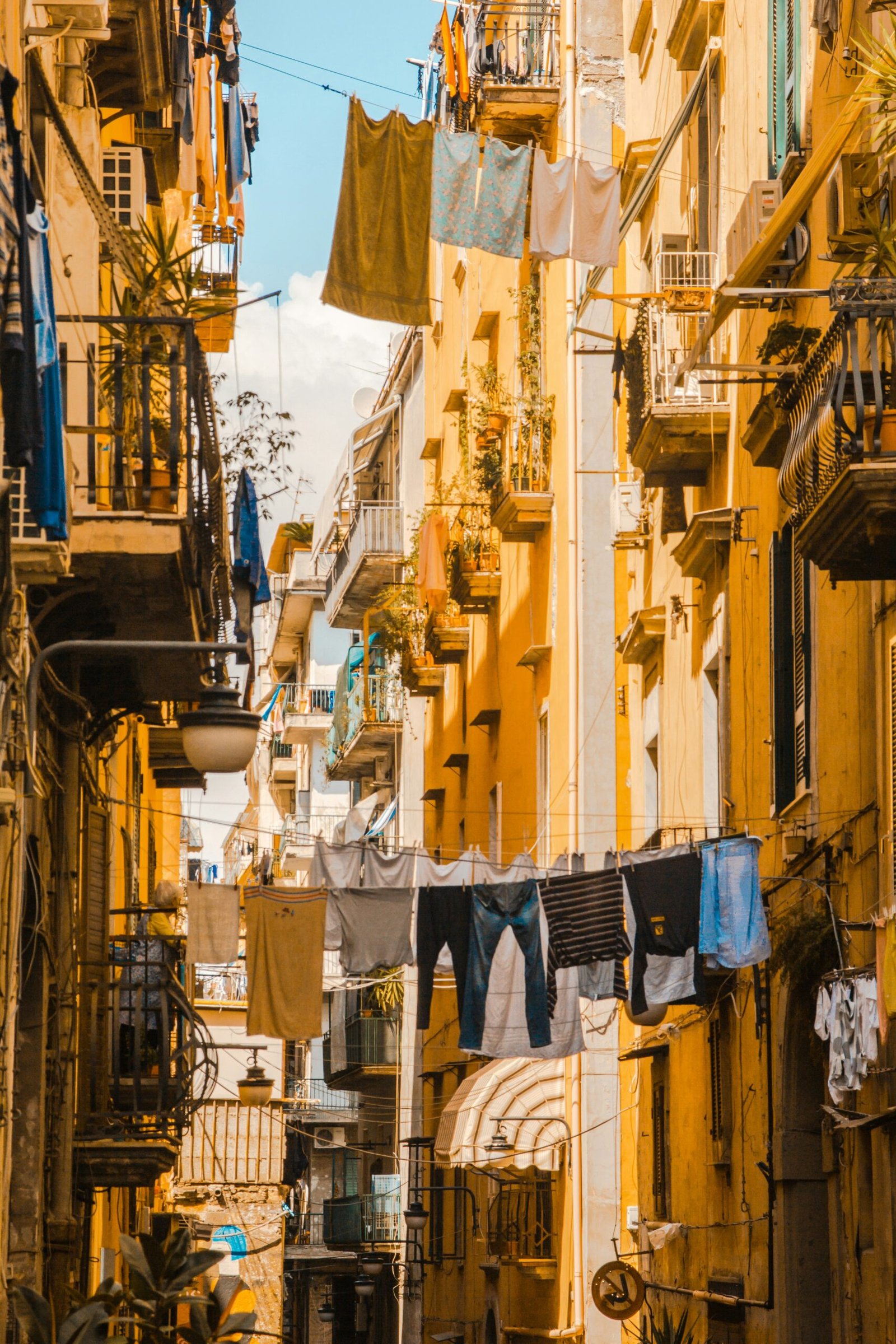
Carnevale is Italy’s most theatrically compelling winter event, and February is its month. Venice is the most famous version, with elaborate masks, costumed processions, and the Piazza San Marco filling with figures who seem to have stepped out of a Tiepolo ceiling. But the Venetian Carnevale is only one expression of a tradition that runs through the entire country in markedly different forms.
Viareggio in Tuscany stages the most politically charged version: enormous satirical floats, some reaching fifteen metres, built over months and paraded on weekend afternoons through February. The targets are politicians and public figures, the humor is pointed, and the crowds are local rather than international. Ivrea in Piedmont holds its orange battle — three days of structured combat between teams on foot and teams on carts, reenacting a medieval revolt, with the entire population participating in some capacity. Mamoiada in Sardinia is the most archaic: the Mamuthones, figures in sheepskin and carved wooden masks, process through the village to the sound of cowbells in a ritual that predates Christianity and has no obvious equivalent elsewhere in Europe.
These are not curated tourist experiences. They are communities performing their own culture, and a retreat that incorporates a day at any of them offers a quality of encounter that other seasons cannot replicate. The contrast between the masked crowd and the quiet mat, between the collective energy of carnival and the individual attention of pranayama, is itself a kind of teaching. February is the only month in Italy where this particular juxtaposition is available.
For a broader sense of what the Italian retreat calendar looks like across all twelve months — the seasons that favour outdoor coastal practice, the ones that suit alpine silence — this overview of yoga retreats in Italy puts February in useful perspective.
February’s transitional quality expresses itself most clearly on the mat. The body has been held in winter tension for months, and the returning light — gradual as it is — creates a specific readiness: connective tissue begins to release, mornings feel slightly less rigid, and the breathing, which winter tends to make shallow and contracted, opens with less resistance than it did in January.
Teachers working in Italy in February often find their students more willing to experiment than at any other point in the winter months. Not the expansive willingness of summer, when heat does the work for you, but a more careful readiness — the kind that comes from having been still for a long time and sensing that movement is now appropriate. Practices that work with transitions, with the movement between states rather than the states themselves, suit February particularly well. Long holds followed by deep release, pranayama that moves from retention into expansion, sequences that begin in total stillness and open progressively as the body warms.
The food at Italian retreat centers in February reflects this transitional energy. Winter’s grounding dishes — bean soups, slow-cooked grains, root vegetables braised in local wine — are still on the table, but the first signs of the coming season appear alongside them. In Sicily, blood oranges and early citrus are at their peak sweetness. In Puglia, the first wild greens — cicoria, lampascioni — appear at markets from mid-month. In Tuscany, the black truffle season from San Miniato is winding down, and the new olive oil pressed in October is six months from its harvest and still vivid. The kitchen at a well-run February retreat mirrors exactly what the season is: something substantial from the past, something new just arriving.

February sits between two months with quite distinct characters, and understanding those differences helps in deciding whether this is the right moment for your retreat. The month that precedes it is fully in the grip of winter’s deepest phase. Those who read the January yoga retreats in Italy piece will recognise the contrast immediately: January is about going all the way in — complete withdrawal, thermal bathing as the central activity, the Epiphany marking the official end of the festive period and the beginning of the year’s long interior season. February has already begun to surface. The intention is different.
March, which follows, is when spring announces itself without ambiguity — wildflowers on the Sardinian hillsides, warmth returning to the Ligurian coast, the countryside erupting in the green that the summer heat will eventually bleach to gold. Those who want that energy but are planning ahead will find that March yoga retreats in Italy offer a useful comparison: the same geographic options at a higher temperature and with the first of the spring visitors beginning to arrive. February catches the moment just before that shift, when the infrastructure is still quiet and the landscape is still lean, but the direction of travel is already unmistakable.
February is logistically straightforward for travel to Italy. Flights are inexpensive, accommodation is at its lowest rates of the year outside January, and trains run on normal winter schedules without summer congestion. The main variable to manage is Carnevale in Venice, which creates a localised spike in hotel prices and visitor numbers across roughly ten days before Ash Wednesday. If your retreat is not in Venice, this is irrelevant. If you plan any time in the city, check the exact Carnevale dates for your year and book accommodation well in advance; the city fills quickly and prices spike sharply during the peak costume days.
For Puglia and the south, Brindisi and Bari airports are well served by low-cost carriers from most European hubs throughout February. Sicily is accessible via Palermo and Catania, both of which receive direct connections from across the continent. The Dolomites are best reached through Innsbruck, Verona, or Venice, with onward road or rail connections into South Tyrol.
Packing for February requires attention to the gap between indoor and outdoor temperatures, which is wider in Italian stone buildings than in modern hotels. Pack merino base layers that work in both contexts, a mid-layer fleece or wool sweater for evenings and practice rooms that may have cooled overnight, and a proper outer coat for movement between buildings or morning walks. For practice: long-sleeve thermal tops, heavier-weight leggings, and warm socks for floor work — grip socks are worth including for cold tile or stone floors. For the south and Puglia a lighter version applies — a warm jacket rather than a heavy coat — but the layering principle holds regardless of region. Rain gear is worth including; February brings short, sharp rain systems through the centre and south that pass within hours but arrive without warning.
1. Which Italian regions are warmest in February for outdoor practice? The Sicilian coast around Agrigento and Ragusa, and the Salento peninsula in Puglia, are the warmest options on the Italian mainland and island system in February, with daytime temperatures regularly reaching 14 to 16 degrees on clear days. Outdoor morning practice remains cold, but afternoon sessions on a sheltered terrace are entirely viable. The Aeolian Islands off Sicily’s north coast are similar in temperature and considerably more isolated, which suits practitioners seeking solitude.
2. Are retreat centers actually open in February, or do many close for winter? Most established retreat centers in Puglia, Sicily, Tuscany, and Umbria run February programs, though scheduling is less dense than in spring and autumn. Alpine centers in South Tyrol focused on ski and wellness operate fully. The category most likely to be closed in February includes small-scale coastal retreats in Liguria and northern Sardinia, where proprietors often close from November through to March. Always confirm directly with the center before booking travel.
3. How does February practice differ from what a summer retreat would offer? The differences are substantive. February programs tend toward slower, more introspective styles — yin, restorative, pranayama-heavy vinyasa — and group sizes in the off-season are notably smaller, with eight to fifteen participants common where summer might bring thirty or more. Teaching is more individualised. The food follows winter produce: hearty soups, legumes, aged cheeses, and in olive-producing regions the new-harvest extra virgin oil that is at its most vivid six months after pressing.
4. Is it possible to combine a retreat with the Carnevale in Venice? Yes, with planning. Retreat centers in the Euganean Hills or the Treviso countryside, both within an hour of Venice by train, allow a day trip into the city during Carnevale while maintaining the quiet of the retreat base. It is not advisable to base the retreat in Venice itself during the peak costume days if silence is any part of what you are seeking — the city fills rapidly and prices reflect it.
5. What is the light like for outdoor meditation in February? In central Italy, sunrise in early February falls around seven-thirty and moves to around six-fifty by the end of the month. The quality of winter light in Tuscany, Umbria, and Puglia in February is notably different from summer — lower-angled, cooler in tone, and extraordinarily clear on the days following rain. Many practitioners find it better for early morning outdoor sitting than summer’s high, flat light. It requires a warm layer to sit still, but a brief outdoor meditation at dawn in the Italian countryside in February is entirely viable and often stays with people longer than the practice itself.
6. Is February a good month for a solo retreat? It is arguably the best month in the Italian retreat calendar for solo travelers. Small group sizes create genuine community without social pressure. Off-season proprietors have more time and interest in individual guests. The energy of the month — inward but orienting, still but not static — suits the particular quality of attention that solo travel at a retreat makes possible: full presence, no negotiation, and the rare luxury of organising each day entirely around practice and rest.
Your email address will not be published. Required fields are marked *