

May is the transitional month in Mexico — the dry season ending in the central highlands and the Pacific coast, the Yucatán and Caribbean coast still in their dry window, and the whale shark aggregation at Isla Mujeres building toward its summer peak. The heat in the interior is at its pre-rain maximum before the June rains bring relief. A yoga retreat in Mexico in May rewards those who understand the regional weather patterns and choose accordingly.


May is the hottest month in much of Mexico before the rains arrive in June. The central highlands, the Pacific coast, and the northern regions are building toward the first rains that the summer brings. The Yucatán and the Caribbean coast have a longer dry season window extending through May. And the whale shark aggregation that began in February is in May approaching its June-August peak. Those who choose May well choose destinations that either extend the dry season advantage or specifically use the transitional character of the month.
Browse our full yoga retreats in Mexico guide for the complete picture of what the country offers year-round. For the global context of May retreat travel, our yoga retreats in May guide covers every destination worth considering this month.

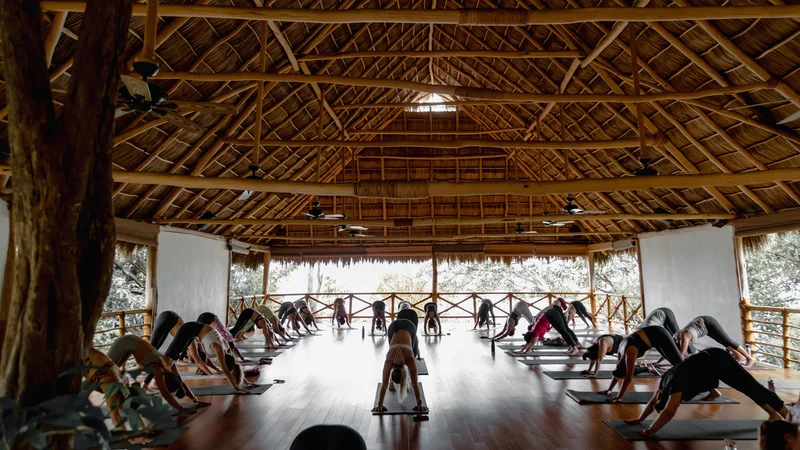
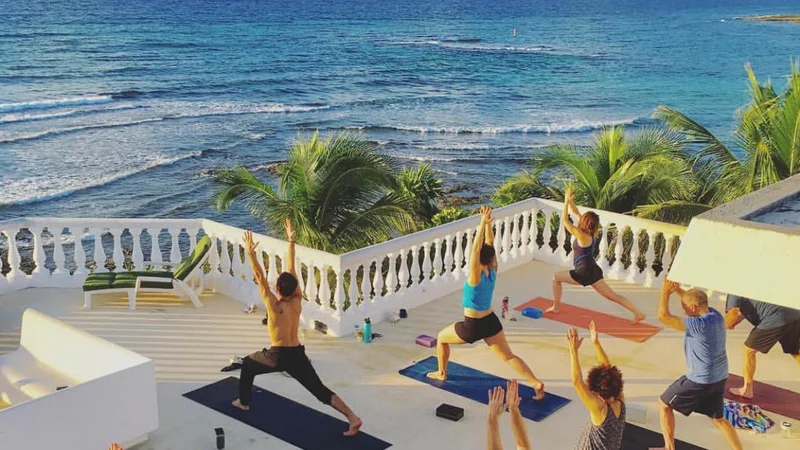
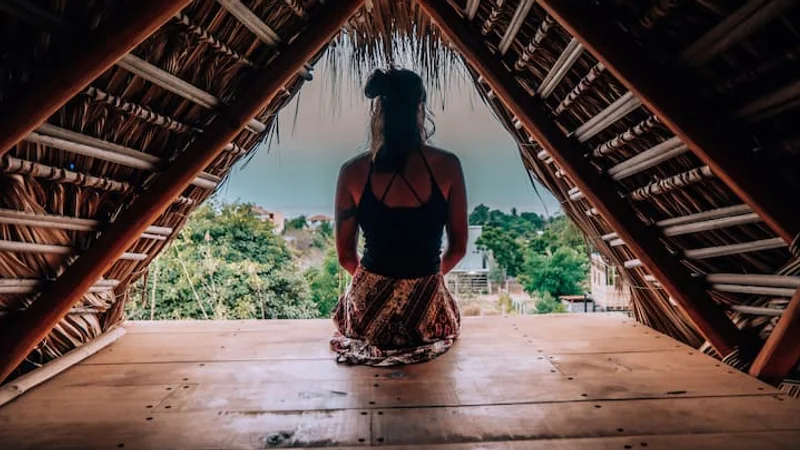
Isla Mujeres and the open water north of the island are in May seeing the whale shark aggregation grow toward its June-August peak. The whale sharks gather here to feed on the fish spawn (particularly the little tunny spawn) that the warm Caribbean water produces, and the May aggregation — while smaller than the July and August peak — has the specific advantage of lower tourist volume and calmer sea conditions than the summer crowds produce. The whale shark snorkelling tours from Isla Mujeres in May are running their early-season programmes with the smaller groups that the pre-peak availability produces.
Holbox — the car-free island north of the Yucatán, accessible by ferry from Chiquilá, with its shallow turquoise lagoon, its flamingo colonies, and its mangrove-fringed beaches — is in May at the end of its best season before the June rains arrive. The whale sharks are also accessible from Holbox, the tours running from the island’s dock into the open Yucatán Channel where the aggregation feeds. The Holbox retreat scene — smaller and more locally rooted than the Tulum infrastructure — is in May at its pre-summer quietest and most manageable.
Oaxaca city and the central valleys in May are in the last weeks of the dry season — the temperatures at 26-30°C, the air clear, and the cultural calendar producing the Feria de las Velas (the candle festival of the Tehuantepec Isthmus region) and the Guelaguetza rehearsals that the July festival generates throughout May as the village dance groups begin their preparation. The Mercado de la Merced and the Mercado Benito Juárez are in May at their dry season full operation — the seasonal produce transitioning from the dry season vegetables to the first pre-rain arrivals.
The Hierve el Agua — the natural rock formation and mineral spring in the Sierra Sur mountains east of Oaxaca city, where the calcium carbonate deposits have formed petrified waterfall shapes above the valley, with the natural infinity pools fed by the mineral spring — is in May at its clearest and most accessible before the summer visitors arrive. The drive from Oaxaca through the El Tule (the world’s widest tree by circumference, a 2,000-year-old Montezuma cypress in the village of Santa María del Tule) and the Zapotec village of Mitla (the necropolis city with the most elaborate stone mosaic panels in pre-Columbian Mexico) is the May Oaxaca archaeological circuit at its driest and least crowded.
Veracruz city — the principal port of Mexico on the Gulf coast, the point of entry for the Spanish colonisers in 1519 and still the most specifically Caribbean of Mexican cities — is in May at the transitional moment between the dry season and the first Gulf rains. The Veracruz jazz scene — the city’s son jarocho tradition (the guitar, harp, and percussion music of the Veracruz tradition, with the La Bamba as its most internationally known expression) combined with the Caribbean musical influences of the port culture — is in May at its May jazz festival dimension: the Festival Internacional de Jazz de Xalapa in the highland capital of the state, accessible from the coast by the mountain road.
The Xalapa coffee region — the highland coffee-growing area around Coatepec (considered the finest coffee-producing municipality in Mexico) in the Veracruz highlands — is in May at the end of its harvest season, the last of the arabica cherries being picked from the shade-grown plants under the forest canopy. The coffee tours at the Coatepec beneficios (processing facilities) in May show the final harvest and the beginning of the fermentation and drying cycles that produce the specific Coatepec cup. At a retreat based in Xalapa or Coatepec in May, the morning coffee is from the orchard that the walk yesterday passed through.
San Cristóbal de las Casas in May is in the final weeks before the Chiapas highland rains transform the city and the surrounding Maya communities for the summer. The temperatures of 20-24°C in the day are the warmest of the highland year — pleasant without the cool of February. The Tzotzil textile market at the Mercado de los Altos is in May at full production with the pre-summer tourist activity, and the Na Bolom cultural centre (the house of the Swiss-Danish anthropologist Frans Blom and his wife Gertrude, now a museum and research centre for Lacandón Maya culture) is in May running its monthly programme of lectures and highland community visits.
The Sumidero Canyon — the 1,000-metre deep canyon of the Grijalva river accessible by boat from the Chiapa de Corzo dock, two hours from San Cristóbal — is in May at the pre-rain water level: the canyon walls more visible than in the rainy season when the mist reduces visibility, and the American crocodiles on the lower canyon banks at their most active in the May warmth. The Christmas tree formation — the seepage waterfall on the canyon wall where the mineral deposits have formed a shape the local guides compare to a Christmas tree — is in May at its dry season form, visible from the boat without the rainy season water volume that partially obscures it.

Cinco de Mayo — the commemoration of the Mexican victory over the French forces at the Battle of Puebla on May 5th, 1862 — is a regional holiday in Puebla state and a national day of civic pride rather than the international Mexicanness-performance that the US commercial celebration has made it. In Puebla city, the Cinco de Mayo military parades and the Batalla de Puebla re-enactment at the Cerro de Guadalupe site are the most specifically rooted versions of the celebration. For retreat guests in Puebla on May 5th, the civic ceremony at the battle site is worth attending for the specifically Mexican — rather than Mexican-American — relationship with the date.
Mother’s Day in Mexico falls on May 10th — fixed, unlike the variable second-Sunday date of the US tradition — and is one of the most emotionally significant days in the Mexican family calendar. The restaurants, the flower markets, and the public spaces of Mexican cities on May 10th have the specific character of a culture that takes the maternal relationship more publicly and more intensely than most northern European or North American equivalents. For retreat guests in Mexico on May 10th, the observation of how the day is celebrated — the serenatas (the mariachi serenade to mothers at dawn), the family lunches, the flower stalls empty by 9am — is a window into Mexican domestic culture.
The Guelaguetza — Oaxaca’s most important cultural festival, held on the last two Mondays of July — generates its preparatory energy throughout May, June, and July as the dance groups from the eight Oaxacan regions rehearse their performances. The Guelaguetza rehearsals in May are visible at the neighbourhood level in Oaxaca city — the dance groups practising in the school courtyards and the community spaces — and provide the most authentic engagement with the festival’s dance traditions available before the July event itself.
Mangoes are in May at their annual peak across Mexico. The Ataulfo mango from the Chiapas and Tabasco coasts, the Manila mango from Veracruz, and the Tommy Atkins from the northern Sinaloa orchards are all in May producing the supply that makes the Mexican mango culture most visible. The mango con chile y limón — the street food preparation of fresh mango slices on a stick with chilli powder and lime juice — is in May ubiquitous at every market stall and street corner in Mexico.
The agua de mango (the fresh mango water drink) and the mango sorbet are in May at the market stalls in their most specific forms: the fresh fruit blended or pressed on site rather than from syrup, the specific variety visible in the colour and the flavour. At a retreat kitchen sourcing from the May market, the breakfast mango is the Ataulfo at its peak — the fibre-free, creamy, intensely fragrant variety that the international export market has never adequately replicated.
The Gulf coast seafood of Veracruz in May — the huachinango (red snapper) at its dry season best from the Veracruz fishing fleet, the jaibas (blue crabs) in the coastal lagoons at their spring season — is at the retreat kitchens of the Coatepec and Xalapa highland area accessible as a day-excursion food culture: the drive from the highland retreat down to the Veracruz coast for the morning fish market and the return before the afternoon rains.
Hierba santa (Piper auritum — the large anise-scented leaf used to wrap fish and tamales in the Oaxacan and Veracruz traditions, and to flavour the amarillo mole) is in May at its May freshness in the Oaxacan markets. The leaf in May — before the summer rains change its texture — has the most intense anise-camphor aroma of the year. At the Oaxacan market stalls, the hierba santa is sold in bunches alongside the epazote, the chepiche, and the pitiona (the wild Oaxacan oregano) that define the regional herb palette.


The whale shark snorkelling from Isla Mujeres in May — the early season with smaller groups and calmer conditions than the July peak — is the most accessible version of the whale shark encounter available in the Caribbean. The tours leave the Isla Mujeres dock at dawn, motoring to the feeding aggregation area north of the island, and participants snorkel in the open water alongside the whale sharks (which can reach 12 metres in length) feeding on the surface spawn. The May aggregation is smaller than July but the encounters are less managed by the crowd-control protocols that the peak season tourist volume requires.
The Hierve el Agua mineral spring and petrified waterfall formations in the Sierra Sur east of Oaxaca — the most visually specific natural site in Oaxaca state — are in May at their pre-summer clarity. The infinity pools fed by the mineral spring, with the valley 200 metres below, are in May swimmable and accessible without the July and August weekend crowds. The morning visit from Oaxaca city (two hours by the mountain road through Mitla) returns to the city before the afternoon heat peaks.
The coffee tour at the Coatepec beneficios in the Veracruz highlands — visiting the wet processing facility, watching the fermentation and washing of the coffee cherries, and tasting the new season cup from the harvest that ended last month — is the May Veracruz retreat activity that the June-onwards rains make less accessible as the processing cycle changes. The shade-grown coffee gardens of the Coatepec area, under the canopy of the original highland forest, are in May producing the specific aromatic quality that the altitude, humidity, and canopy shade together create.
Your email address will not be published. Required fields are marked *