

December in Italy is not one month but two, divided by the week before Christmas with a sharpness that no other calendar point in the year replicates. Before that divide, December shares November’s essential quality: quiet, cold, affordable, and belonging almost entirely to those who live there.
After it, the country transforms — the lights come on in the streets, the Christmas markets fill the piazzas, the restaurants serve the special menus that appear only in these weeks, and the particular warmth of Italian festive culture, which takes the Christmas table with a seriousness that northern European traditions have largely abandoned, becomes the dominant note of the season. Yoga retreats in Italy in December exist on both sides of this divide, and understanding which side you want determines almost everything about the experience.


Early December — roughly the first three weeks — is the extension of November’s character with one addition: the anticipation of the festive season that the Italian landscape and its towns begin to express from the first of the month. The Christmas lights appear in the streets of every town from December 8th, the Feast of the Immaculate Conception, which in Italy functions as the official start of the festive period in a way that no secular calendar event does. From that date, the presepi — the elaborate nativity scenes that Italian cities have been constructing since the Franciscan tradition established them in the thirteenth century — begin appearing in churches and piazzas, some of them the work of months of craft and on display for the first time. A retreat beginning in the first week of December encounters this festive animation as a gradual building rather than a sudden arrival, and the combination of the month’s low prices and high availability with this slowly intensifying cultural backdrop creates conditions that are specific to early December and available at no other time.
The week before Christmas through the first days of January is a different matter entirely. The retreat programmes offered in this window are among the most intentionally designed in the Italian calendar — centres that understand why practitioners come to Italy in the week of Christmas and New Year know they are hosting people who want to mark the year’s end with deliberate attention rather than conventional celebration, and they design accordingly. The prices are higher than early December, matching or approaching the shoulder-season rates of May and October, and advance booking of two to three months is required for the most sought-after programmes. But the programmes themselves have a quality of collective intention that the quieter months, for all their virtues, cannot produce: a group of ten practitioners gathered in a Tuscan farmhouse on the evening of December 31st, having spent the week in serious practice, sitting together in the candlelit common room as the village fireworks begin outside, is a specific experience that December provides and no other month can replicate.
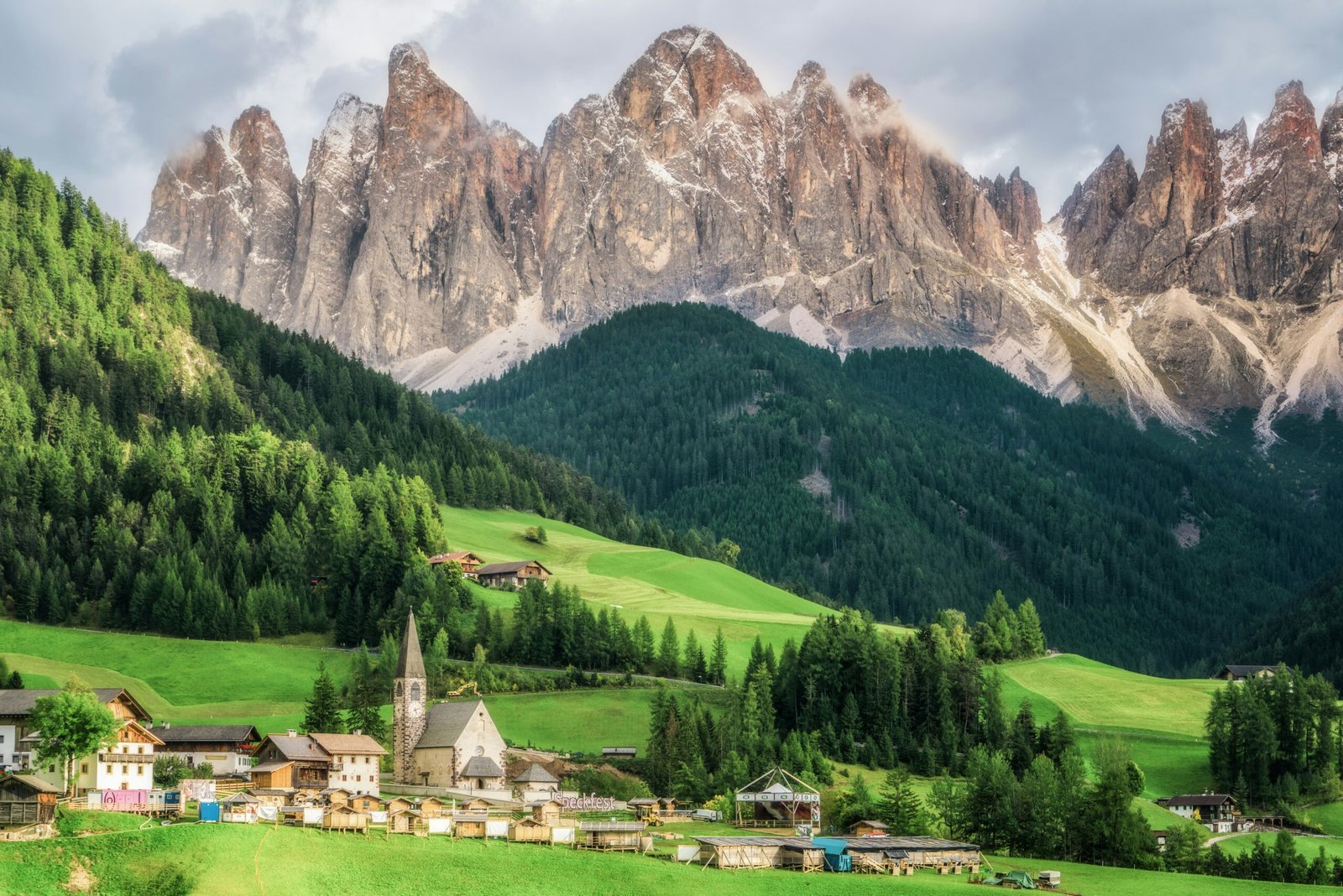
Alto Adige and the Dolomites are the definitive answer for practitioners who want winter in its fullest expression. Bolzano’s Christmas market — the Mercatino di Natale, which has been running in the Piazza Walther since 1990 and draws on a tradition of Germanic Christmas markets that predates the town’s Italian identity — is the finest in Italy and among the best in Europe. The stalls sell handmade wooden decorations, locally produced foods, and the mulled wine and spiced pastries of the Tyrolean tradition in a setting — the Gothic cathedral on one side, the Dolomite peaks visible above the roofline on a clear day — that requires nothing added to be exceptional. Retreat centres in the Val Gardena and the Badia valleys, an hour from Bolzano by road, offer ski and yoga programmes from the first snowfall of the season, with morning practice in a warm studio before the slopes open and restorative sessions in the afternoon after the day’s skiing. The skiing in the Dolomites Superski area, which covers twelve valleys and nearly 1,200 kilometres of marked runs, is among the finest in Europe, and the combination of serious alpine winter sport with serious practice is one that December and January alone in the Italian calendar provide.
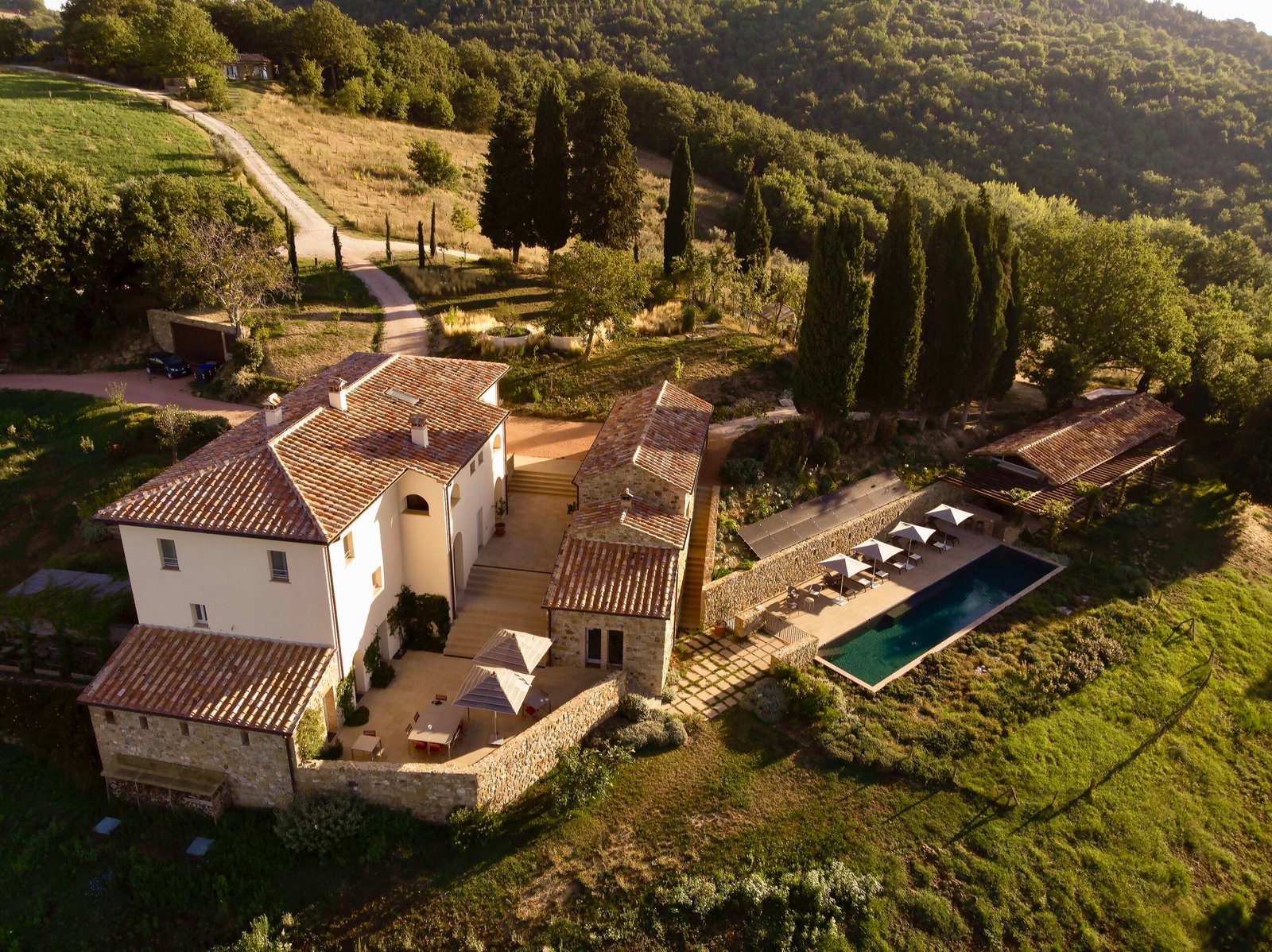
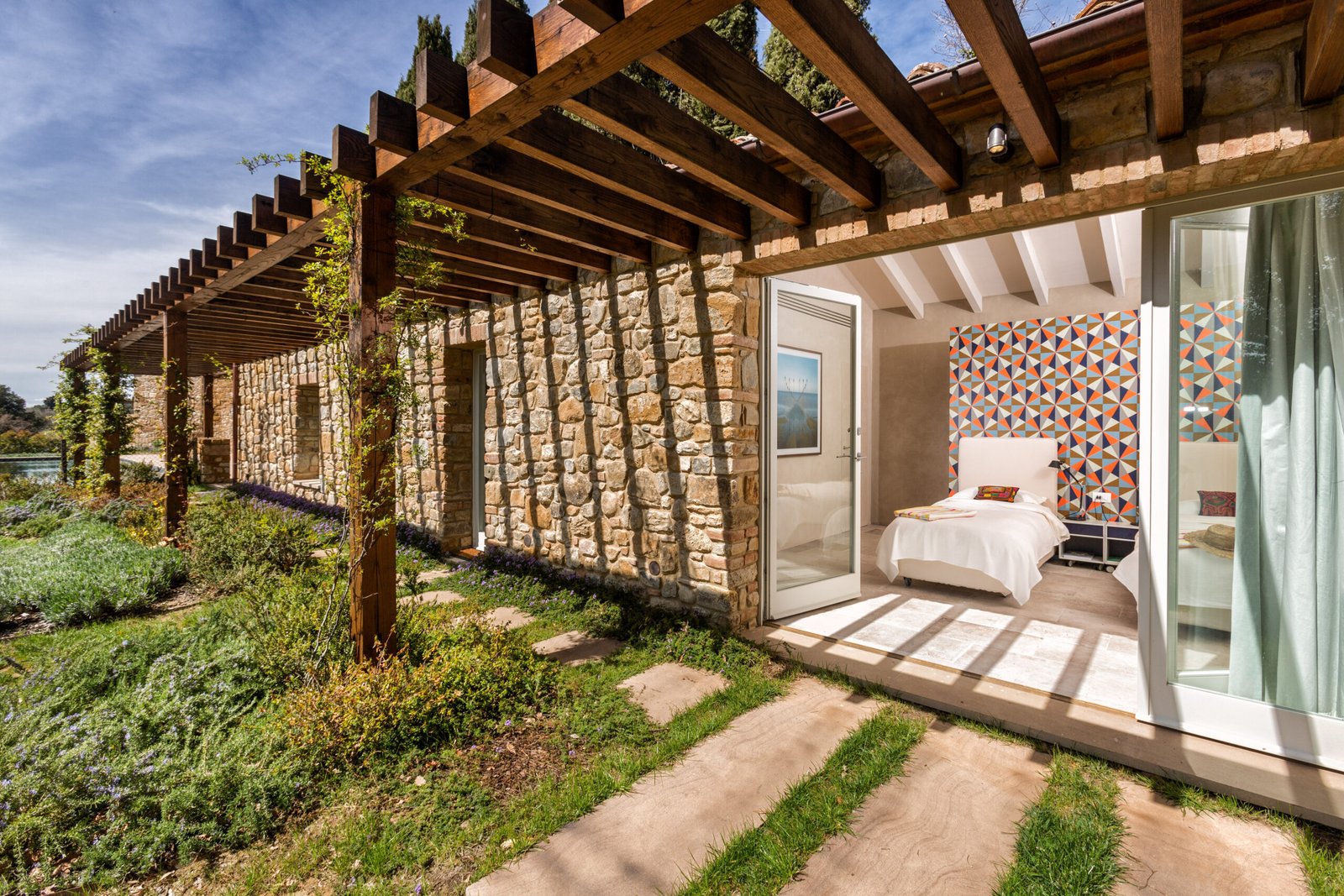
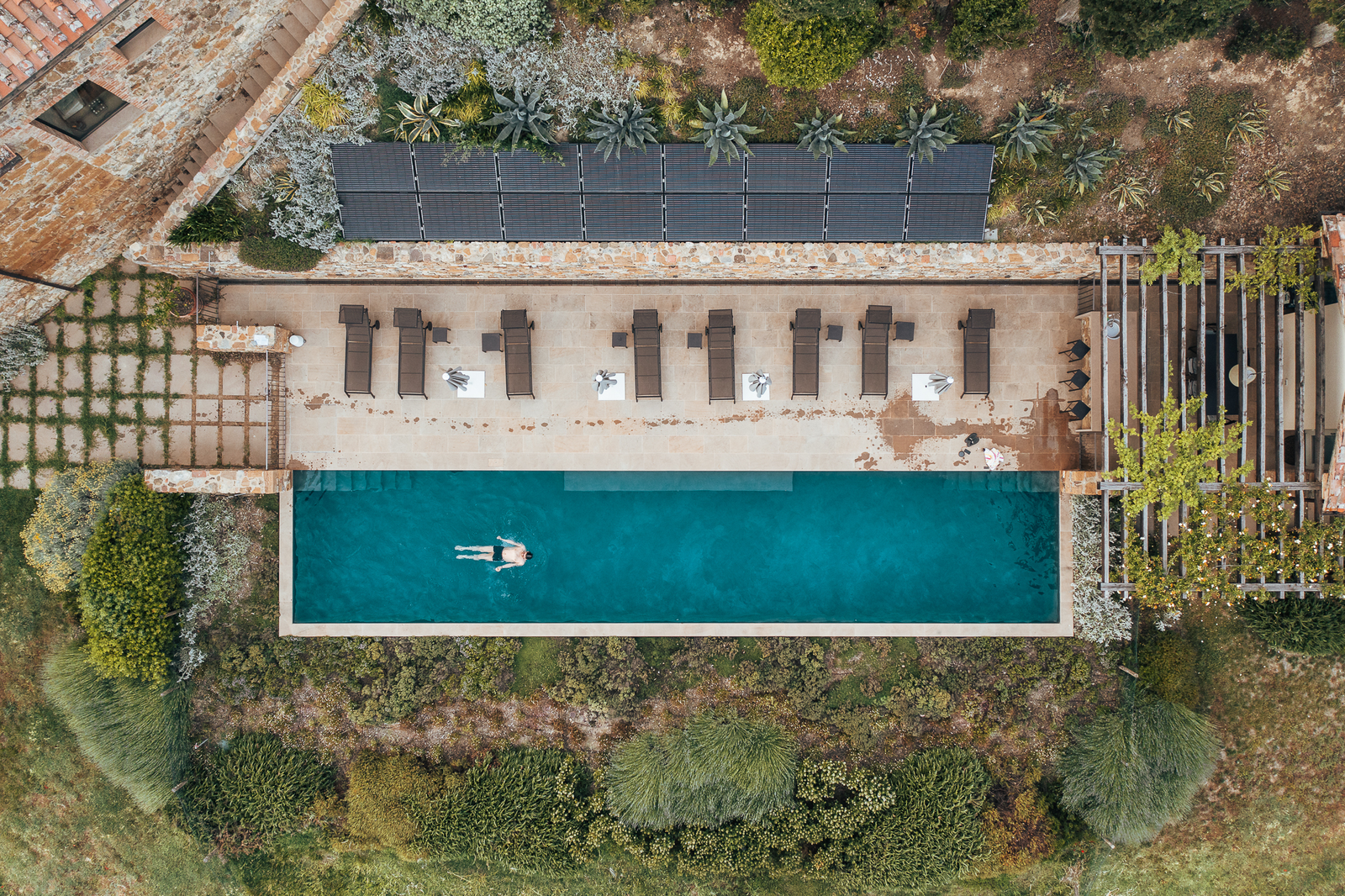
Tuscany in December concentrates its retreat culture in the inland countryside rather than the coast, which by this point belongs to a different season entirely. The Val d’Orcia under a thin covering of snow — which arrives several times each December in most years — is among the most visually extraordinary landscapes in Italy, the cypress stands and the pale limestone farmhouses and the road curves that the summer photographs have made familiar appearing in a state of suspension that the warm months never produce. Retreat centres in the Crete Senesi and around Pienza run December programmes built around the deep winter quality of this landscape, and the Maremma further west offers a different version of the same character: wilder, less curated, with the hunting season producing wild boar, venison, and the game birds that appear on Tuscan tables exclusively in these months. The culinary tradition of December in the Maremma — cinghiale in umido with juniper berries, the cured meats produced from the November’s pig slaughter, the strong cheeses that have been ageing since the autumn — is as grounding and seasonally specific as any food culture in Italy. For those drawn to Tuscany at any time of year, the range of retreat experiences available across all seasons is at yoga retreats in Tuscany.
Sicily in December makes the most distinctive case of any region for those who want warmth without the full weight of Italian winter. The island’s southern coast around Agrigento and Ragusa registers daytime temperatures of 14 to 16 degrees in December — cold by Sicilian standards, genuinely mild by the rest of Italy’s — and the particular quality of the winter light on the Baroque architecture of the Val di Noto, which summer’s overhead brightness flattens, is in December directional and warm-toned in a way that photographers and practitioners who have experienced it find difficult to describe without resorting to the word “painterly.” Taormina in particular, on the northeastern coast above the sea with Etna visible across the bay, is in December close to empty of tourists and entirely itself: the Greek theatre, the corso Umberto, the terraced gardens falling toward the sea are navigable without negotiation, and the New Year celebrations that the town hosts on December 31st — with the theatre lit and the bay below reflecting the fireworks from Catania — have a quality of spectacle and scale that the more famous Italian New Year events in Rome and Florence, compressed into city streets, cannot achieve. The full range of Sicilian retreat options through the winter months is at yoga retreats in Sicily.
Umbria in December completes the harvest cycle that September and October began. The black truffle of Norcia — Tuber melanosporum, which reaches its peak from December through February — is in December at the height of its season, and the weekly market in Norcia that operates through the winter months offers the truffle at its best: the large, firm specimens that the November rains and the early cold have produced, shaved over the handmade pasta and the risottos that the local restaurants have built their reputations on. A retreat in the Valnerina or the hills above Spoleto in December encounters this as part of the daily food culture rather than as a tourist experience, and the quality of the ingredient in its actual season, in the places where it is grown and prepared by people who consider it a staple rather than a luxury, is different in kind from what any imported truffle product can provide.
Two December Patterns
Retreat availability and character differ dramatically between early/mid December and the holiday weeks.
Early December (first two weeks): Quiet, affordable, genuine low season. Few tourists, no holiday pressure, lowest prices of the year. Retreats attract serious practitioners seeking intensive work without distractions. The atmosphere is contemplative, inward, focused.
Holiday weeks (mid-December through early January): Higher prices, advance booking required, festive energy. Many retreat centers offer special programs. The mood shifts from introspective to celebratory, though within wellness framework. Expect fuller accommodation and more structured programming.
Choose based on what you’re seeking. Deep practice and maximum quiet? Early December. Marking the year-end transition with community and intention? Holiday weeks.
The mercatini di Natale that appear across Italy from early December belong to two distinct traditions. In the northeast — Alto Adige, Trentino, and the Veneto — the markets draw directly from the Germanic and Austro-Hungarian culture of the region, and the Bolzano market, the Trento market, and the smaller markets of the Dolomite valleys have an authenticity of craft and food that the more recently established markets in Florence, Rome, and Milan approximate with varying success. The wooden toys, the carved nativity figures, the Lebkuchen and the Zelten — the dense fruit and nut bread that Alto Adige bakes specifically for Christmas — are the products of a tradition that long preceded the market as a commercial event.
In central and southern Italy, the Christmas market tradition is more recent but has developed its own character. Florence’s market in the Piazza Santa Croce, Rome’s in Piazza Navona, and Naples’ market along the Via San Gregorio Armeno — the street of the presepe craftsmen, where nativity figures have been made and sold for four centuries — each reflect the city that contains them. Via San Gregorio Armeno in December is one of the most concentrated expressions of Italian artisanal culture available: the workshops on either side of the narrow street producing presepe figures of varying degrees of elaboration, the more irreverent ones including contemporary political figures and celebrities alongside the traditional shepherds and magi, the smell of terracotta and paint and the shouts of the vendors filling the lane from morning until late in the evening. A retreat with a free afternoon in Naples in December that includes an hour on this street has encountered something that exists nowhere else and at no other time of year.
The winter solstice falls on December 21st, and its significance in the yogic calendar — as the point of maximum darkness and the beginning of the return toward light — mirrors its importance in the pre-Christian traditions that Italian rural culture has never entirely abandoned. Where the June solstice is a celebration of light at its peak, the December solstice is a more complex and arguably more resonant moment: the acknowledgement that the darkness has reached its furthest extent and that the direction is about to change. Retreat programmes built around the December solstice tend to be among the most carefully designed in the Italian winter calendar, working with the symbolic weight of the date in ways that the summer solstice programmes, with all their celebratory energy, sometimes gloss over. A pre-dawn practice on December 21st — the longest night of the year, in darkness, with the practice moving toward the moment of sunrise — is an experience that has no summer equivalent and that the yogic tradition’s deep relationship with the solar calendar makes entirely natural.
The ten days between the solstice and the first of January carry a particular quality of suspension that the Italian word for it — il periodo tra Natale e Capodanno, “the period between Christmas and New Year” — acknowledges without quite capturing. Time feels differently calibrated in these days: the ordinary social and professional obligations are suspended, the normal rhythms of the week are dissolved by the proximity of the holiday, and a quality of permission to exist outside the usual structures settles over the country. Retreat programmes designed for this window understand that their participants arrive carrying this permission already, and the best ones use it to structure practice with more depth and more time than any other week in the year typically allows.
December practice is shaped by two competing facts: the darkest days of the year and the most socially intense weeks of the year. For practitioners who come to a retreat specifically to escape the social intensity, the darkness is an asset — the long evenings, the early mornings that begin in full darkness, the candlelit practice room where the ordinary visual world is replaced by the immediate space of the mat and the body on it all conspire to produce a quality of internal attention that the illuminated months cannot. For those who want to mark the year’s end with something beyond the usual, the festive energy that surrounds even the quietest December retreat becomes part of the practice rather than a distraction from it.
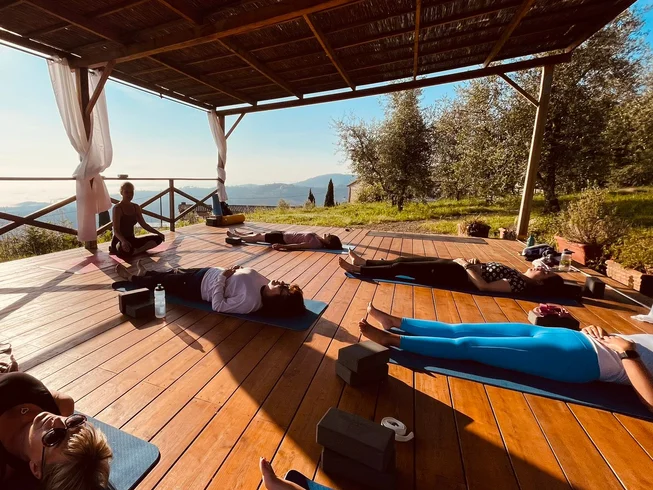
The body in December has been managing cold for at least two months, and the particular physical character that sustained cold produces — the deeper holding in the shoulders and the upper back, the contracted quality of breath, the reluctance to move into open poses that requires more preparation than September’s warmer body needs — is at its most pronounced. December morning practice accordingly requires a longer and more deliberate warm-up than any other month: ten minutes of gentle movement before the breath comes freely, fifteen before the shoulder girdle releases, twenty before the hips are sufficiently warm for deep openers. Teachers who know this build it into the session architecture without apology, understanding that the slow unfolding of a December practice — from the contracted cold-body of the first minutes to the full openness of the final sequence — is itself a model of what the season asks: patience with the process, trust that the warmth will come.
The food in December is the most elaborate and the most specifically festive of any month in the year. The panettone — the Milanese dome of brioche enriched with eggs, butter, and candied fruit — and the Veronese pandoro, dusted with icing sugar, are both in their proper context in December and both better in Italy than their exported versions by a significant margin; the artisanal versions produced by the pasticcerie of Milan, Verona, and the pastry shops of every Italian town are made with ingredients and attention that the industrial products exported internationally cannot replicate. The Christmas Eve dinner — La Vigilia — is built around fish in the Catholic tradition: baccalà in multiple preparations, the eel from the rivers and lakes of central Italy that appears on this single night of the year, the various cured and fresh fish preparations that regional tradition has accumulated over centuries. Christmas Day brings the meat feasts — the cappone in broth of Emilia-Romagna, the abbacchio of Lazio, the roast of the Piedmontese tradition with its accompaniment of bagna cauda. A retreat kitchen that engages with this calendar does not pretend it isn’t Christmas; it serves the season’s food with the same attention to provenance and preparation that it brings to every other week of the year.
November is the quieter and less complicated version of the winter retreat: no festive pressure, no pricing spike in the final weeks, no need to navigate the Christmas and New Year calendar. Those who want the deep winter quiet without the holiday dimension will find the full case at November yoga retreats in Italy. December adds the festive layer — the lights, the markets, the Christmas table, the solstice, the New Year — and whether that enriches or complicates the retreat experience depends entirely on what the practitioner is seeking.
January, which follows, is when the festive period ends and a different kind of winter begins — stripped of decoration, post-resolution, with a quality of genuine new beginning that December, still carrying the year just passed, cannot offer. The full case for what January yoga retreats in Italy provide is made in its own article; what matters here is that December’s end-of-year quality is specific and unreplicable. No other month asks the practitioner to sit with both the completion of what has been and the approaching beginning of what is to come. For the full picture of the Italian retreat year and how December sits within it, the overview at yoga retreats in Italy covers all twelve months.
December’s logistics divide along the same line as its character. Early December — up to roughly the 18th — is as straightforward as November: last-minute booking is possible, flights are cheap, trains are uncrowded, car hire is readily available. From the 19th onward, the dynamic reverses sharply: Christmas and New Year flights to Italian airports are among the most expensive of the year, trains require booking weeks in advance, and the most popular retreat programmes for the festive period will have been full since October. The practical rule is to decide by September whether you want the festive window and book accordingly, or leave it until early December and accept that early-month availability is what remains.
A note on the Feast of the Immaculate Conception on December 8th: it is a national public holiday, and transport and services operate on holiday schedules on the day itself. Many Italian families use this long weekend for the first Christmas decorating and market visiting, which animates the towns and cities in a way that makes the 7th to 9th window particularly festive. Any retreat beginning around this date should account for potential delays in transport on the 8th.
Packing for December requires the most substantial clothing of any month in the retreat calendar, with significant variation by region. For Alto Adige and the Dolomites, a proper winter coat, thermal base layers, waterproof snow boots, hat, gloves, and scarf are all non-negotiable; the temperatures can drop to minus ten at altitude and rarely rise above five even in the valley floors. For central Italy, a warm coat, wool sweater, and waterproof footwear with grip cover the range — the temperatures are cold but rarely extreme, and the greater challenge is rain and damp rather than frost. For Sicily and the south, a mid-weight winter jacket and a waterproof layer handle what the weather will actually produce. In all regions, a swimsuit for thermal baths remains worth including, and for the festive weeks, a single evening outfit that is warmer and slightly more dressed than practice clothes serves the Christmas and New Year dinners that most retreat centres offer as part of their end-of-year programming.
1. What is the difference between an early December retreat and a Christmas/New Year retreat in Italy?
The difference is substantial and worth understanding before booking. Early December — up to roughly the 18th — is the quietest and most affordable period of the Italian retreat year, with low prices, high availability, and a contemplative atmosphere undisturbed by festive activity. Retreat programmes in this window attract serious practitioners seeking intensive work or rest. The Christmas and New Year programmes, from around December 21st through January 2nd, are specifically designed around the year-end transition: they tend to be fuller, more expensive, more intentionally thematic, and more socially engaged as a group experience. The practices are often structured around the solstice and the new year as anchor points. Both types have genuine value; the choice between them is about what kind of December retreat you are actually seeking.
2. Which Italian Christmas markets are worth visiting from a retreat base?
Bolzano in Alto Adige is the most historically rooted and aesthetically complete, drawing on a Germanic tradition that predates the town’s Italian identity. Trento’s market is similar in character and slightly less visited. For those based in central Italy, Florence’s Piazza Santa Croce market is well-organised and less touristy than it appears; the smaller markets in Lucca, Arezzo, and the hilltowns of Umbria are more intimate and more connected to local artisanal production. Naples’ Via San Gregorio Armeno is not technically a Christmas market but is essential viewing for the presepe workshops alone: the street of the nativity craftsmen produces figures of extraordinary variety and skill, and a December afternoon spent there is a genuine encounter with Italian artisanal culture rather than a tourist experience.
3. What is the winter solstice retreat experience like, and which centres offer it?
The winter solstice on December 21st anchors an increasing number of Italian retreat programmes, particularly those in Tuscany, Umbria, and Alto Adige. Common elements include a pre-dawn practice beginning before the sunrise — in central Italy this falls around seven-forty-five in late December — designed to move from darkness into light as a physical metaphor for the solar turning. Some centres incorporate fire ceremonies, extended meditation, and intention-setting practices for the coming year. The solstice programmes attract practitioners who take the yogic relationship with the solar calendar seriously, and the group dynamics in these programmes tend toward the focused and the serious rather than the festive. Centres in rural Tuscany and Umbria with low light pollution offer an outdoor evening component — sitting in the darkness of the longest night — that the more developed tourist destinations cannot provide.
4. Is the skiing in the Italian Dolomites in December reliable, and how does it combine with a yoga retreat?
Snowfall in the Dolomites is generally reliable from mid-December onward, and the Dolomiti Superski area — which connects twelve valleys and nearly 1,200 kilometres of marked runs — has invested heavily in snowmaking infrastructure that ensures core routes are operational regardless of natural snowfall. December skiing is early season, meaning the snow is good but not yet at the depth of February and March, and some higher routes may not be fully open until after the New Year. The combination with yoga practice is physiologically sound: skiing taxes the anterior chain and the lower back in ways that a morning yin session specifically addresses, and the combination of physical exertion outdoors and restorative practice in a warm studio creates the daily fatigue-and-recovery cycle that makes the body feel genuinely used and genuinely rested by the end of the week.
5. What is the Italian Christmas table like, and how do retreat kitchens handle the festive period?
The Italian Christmas table varies significantly by region but shares a common seriousness about the quality of the ingredients and the length of the meal. The Christmas Eve dinner — La Vigilia — is built around fish in the Catholic tradition: baccalà prepared in multiple ways, fresh or marinated anchovies, and in the regions bordering freshwater, eel (anguilla) in umido or roasted. Christmas Day brings the meat preparations that vary by region: cappone in broth in Emilia-Romagna, abbacchio al forno in Lazio, roast meats with the accompaniment of regional condiments across the north. Retreat kitchens that engage with this calendar adapt the tradition to the dietary preferences of their participants — vegetarian and vegan versions of the Vigilia fish feast are increasingly common — while maintaining the spirit of abundance and intention that the Italian Christmas table embodies. The panettone and pandoro that close the meal are served throughout the festive period and are, at their best, among the finest baked goods that the Italian tradition produces.
6. How far in advance should I book a December retreat in Italy?
For early December programmes — up to around the 18th — two to four weeks is sufficient for most established centres, and in some cases last-minute availability exists. For the Christmas and New Year window — roughly December 21st through January 2nd — two to three months is the reliable lead time for quality programmes, with the most sought-after centres in Tuscany, Umbria, and the Dolomites filling their festive weeks by October. If you have a specific centre or programme in mind for the New Year week, September or October contact is safer. Flights for the Christmas and New Year period should be booked as soon as the retreat is confirmed: the price gap between early and late booking for Italian flights in the festive window is larger than at any other point in the year.
Your email address will not be published. Required fields are marked *