yoga retreats in the sahara desert

yoga retreats in the sahara desert

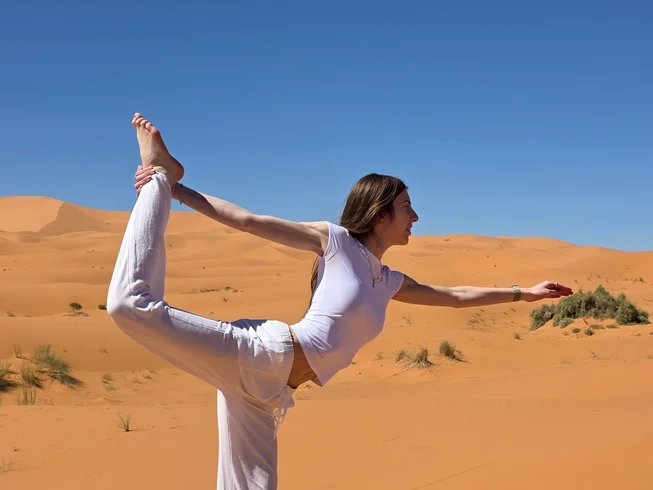
The Sahara Desert: endless dunes, absolute silence, and star-filled skies. Yoga here means sunrise on golden sands, meditation under acacia trees, and nights in Berber tents. No Wi-Fi. No distractions. Just wind, light, and space. Best in spring and autumn — summer is extreme, winter is cold but magical.

AUTHOR

Om Away

DATE PUBLISHED

January 17, 2026

CATEGORY

Share This Article

Yoga & wellness in the Sahara Desert

There’s a special hush to the Sahara that works like a reset button: wide sand, an enormous sky, and a slow rhythm that asks less of you than any city ever did. If your idea of wellness includes spaciousness — long breaths, silent mornings, starlit nights and movement practiced with nothing but sand under your feet — the Sahara (particularly the Moroccan edges around Merzouga and Erg Chebbi, and more remote Erg Chigaga near M’hamid) is one of those rare places that blends raw landscape with surprisingly thoughtful wellness offers. Below is a practical guide to what’s possible there, where to go, what to wear, and how to stitch a real reset into a desert trip.

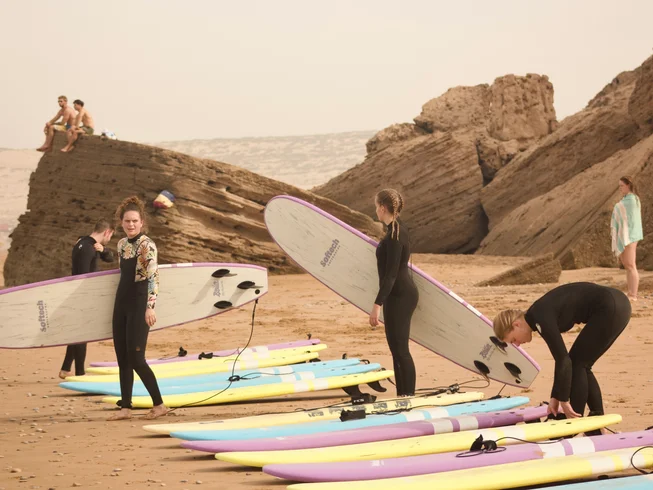
7 Day Surf and Yoga Package with Personalized Beginner Surf Coaching in Taghazout, Morocco

6 Day ‘Body & Mind Awareness’ Yoga Holiday in the Atlas Mountains, Morocco

4 Day Yoga Retreat in Marrakech Oasis, Morocco

8-Day All-Inclusive Horse Riding Holiday With Yoga and Stretching in Oceanfront Riad, Agadir Morocco

10 Day Unforgettable Luxury Yoga Trip, Culture and Nature Adventure in South of Morocco

9 Day Sahara Soul Journey Luxury Yoga Retreat with Cultural Tours in Morocco

Where to go — shortlist & why

Merzouga / Erg Chebbi — the most accessible and organized hub for desert camps, yoga groups, and overnight experiences. Most yoga-desert retreats in Morocco you’ll find online center around this area, because transfer logistics from cities like Marrakech or Fez are easier and camps are plentiful.


Erg Chigaga / M’hamid — wilder, more remote, better for people who want a quieter, more “nomadic” feel. Expect fewer luxury options but an authentic, spacious desert experience; transfers are longer and usually require 4×4.


Nearby day-trip highlights:
– Tafilalt oasis / Rissani — date palms, local markets and a reality check on oasis life; great for sensory contrast.
– Todgha & Dades valleys — if your itinerary includes a road trip, these gorges and palmeries are healing landscape detours after the sand.

 
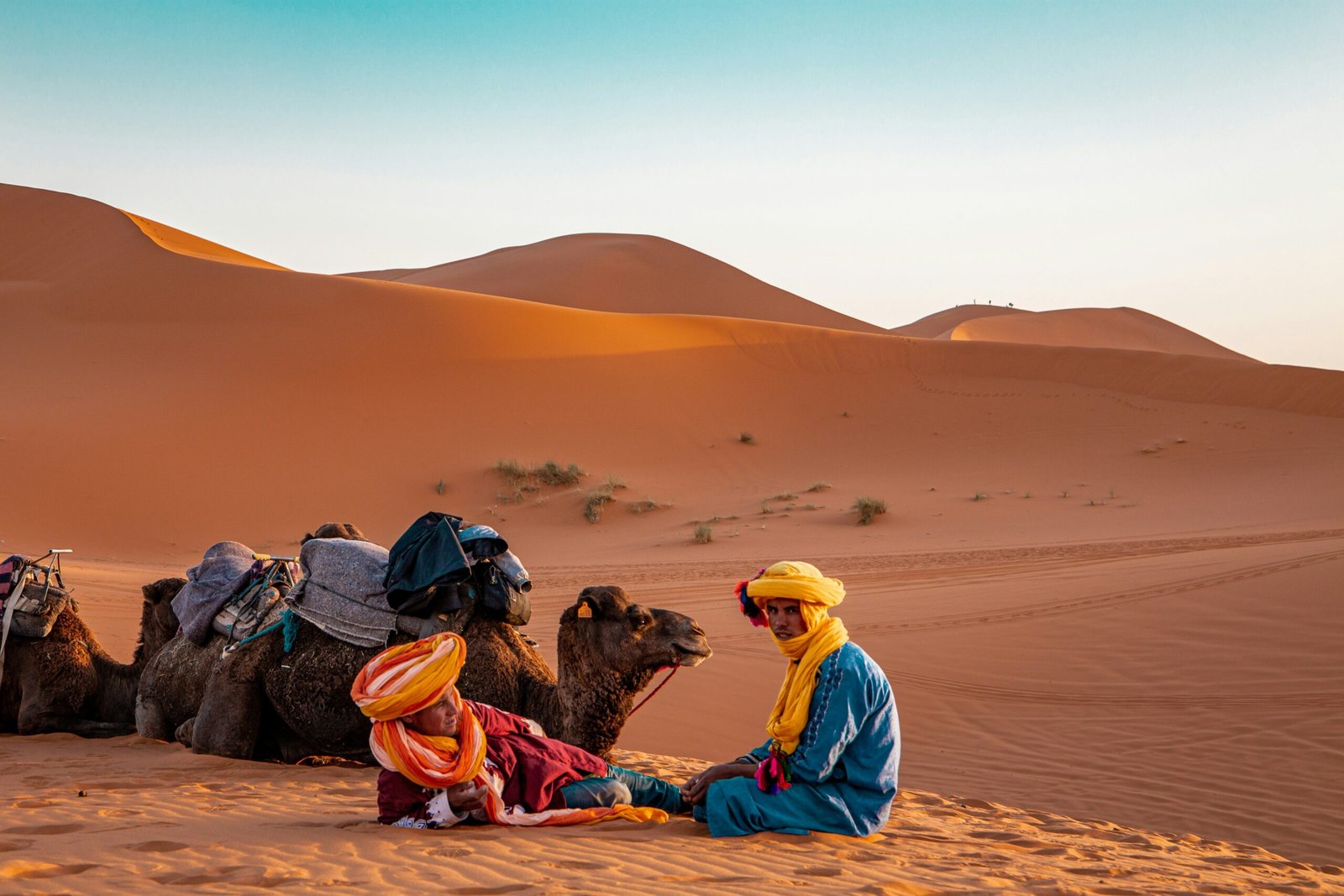
nomads in the sahara desert in morocco

Practical wellness options (how it’s offered)

– One-off sessions: many camps offer single sunrise or sunset yoga classes that non-residents can sometimes join. Good for a taste.
– Retreat packages: 3–7 day programs combining yoga, meditation, guided walks, and two to three spa treatments. These are the go-to if you want a package that holds your days.
– Luxury spa days: bookable at higher-end camps; usually include massage, aromatherapy and private relaxation spaces.
– Cultural-wellness blends: music sessions with Gnawa musicians, breathing circles, and simple cooking or herb walks with local guides — these experiences root your wellness in place.

What to wear (desert-smart, and polite)

– Layers are everything. Days can be hot (especially April–October) and nights cold — pack lightweight long sleeves, breathable trousers, and a warm mid-layer for after-sunset. Breathable linen or technical fabrics work best.
– Sun protection: wide-brim hat, high-SPF sunscreen, and a large scarf (a shemagh or pashmina). Scarves are practical for sand, sun and layering.
– Yoga kit: simple activewear (leggings/shorts + tank), plus a light fleece for early-morning savasana. Camp classes are casual; mats are usually provided but check ahead.
– Shoes: closed sandals or lightweight trainers for walking dunes (sand gets hot and can burn feet at midday), plus flip-flops for camp and hammam.

When to go & timing tips

– Best seasons: spring (March–May) and autumn (September–November) — days are warm and nights cool, with gentler winds. Summer can be intensely hot; winter nights are cold.
– Timing your practice: sunrise and the hour before sunset are gold for yoga — soft light, cooler temperatures, and silhouettes of dunes that steady the mind. Midday is for spa, hammam or rest.

What to visit & little rituals

– Climb a dune at dawn or dusk. The view is the breath-work: silence magnified, horizon to horizon. Try a short walking meditation on a ridge.
– Gnawa music evening in Khamlia. A grounding ritual: rhythmic music, communal energy, and a reminder of the region’s cultural layers.
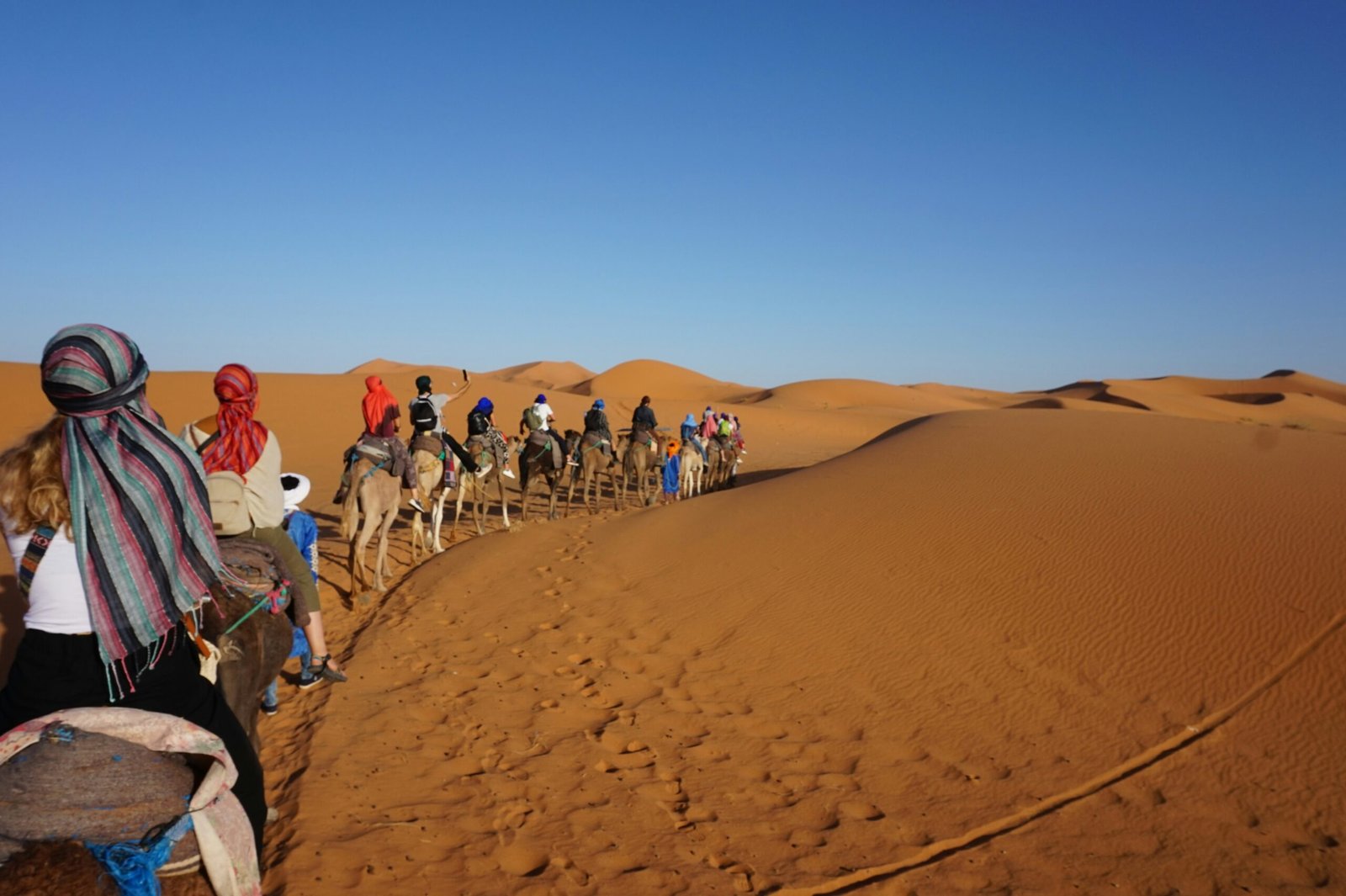
– Camel trek & camp night. A classic: camel to camp, dinner under stars, and morning yoga as the dunes shift color. It’s simple but transformative.
– Local market visit (Rissani). Root your trip in food, spice, and human rhythm; buy dates, sample mint tea, and practice mindful walking among stalls.

nomads i the sahara desert in a caravan
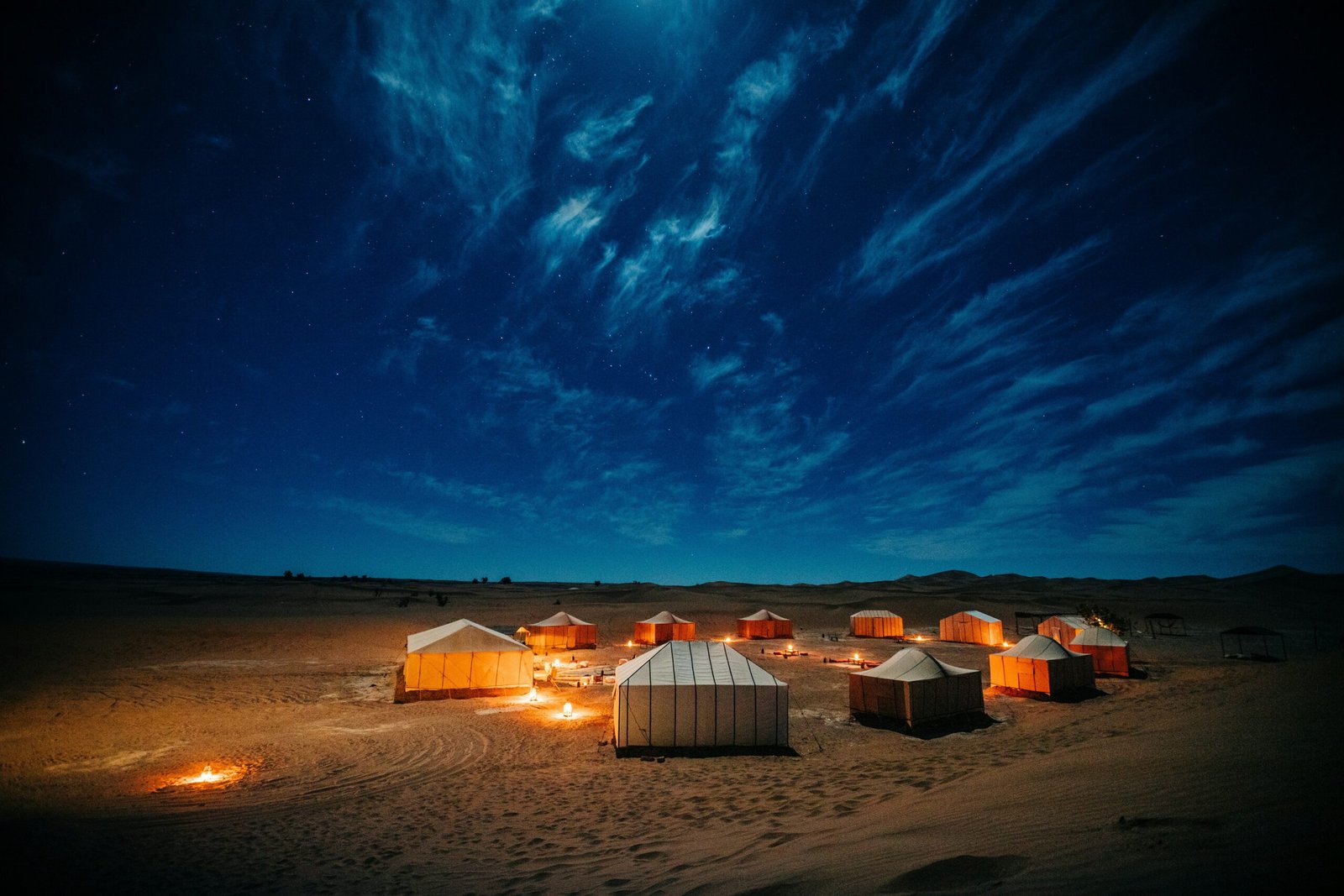
starred night in the sahara desert

Safety, booking & etiquette

– Book reputable operators for anything that involves overnight stays or long transfers — the best camps have clear pickup logistics, water and safety plans. Luxury camps and long-established operators are easy to find online.
– Hydration & sun: carry water and sip constantly; the desert dehydrates fast. Shade and slow movement are part of the practice.
– Respect local norms: modest clothing in villages and markets, ask before photographing people, and tip service staff for exceptional care.

Final note — how to craft a short desert wellness stay

If you have 3–5 days: arrive via a city (Marrakech or Fez), transfer to Merzouga, do a night in camp with camel trek + stargazing, join sunrise yoga, take a Gnawa music evening, and end with a hammam in town. For a deeper reset, choose a 5–7 day retreat that mixes daily yoga, two spa treatments and at least one prolonged silent walk through the dunes.

The Sahara’s wellness promise isn’t a spa menu — it’s a structural kindness: the land narrows the noise, the rhythm slows the body, and even a single breath under a wide sky can feel like the main event. If your wellness practice thrives on space and presence, the desert is one of the most potent studios you can find.

Why the Sahara Desert for Yoga Retreats

The Sahara offers something no ocean or mountain can: profound, uninterrupted silence and a horizon that goes on forever. Unlike Morocco’s coast or cities, the desert strips away everything unnecessary. Yoga here becomes elemental — your breath against the wind, your movement echoing open space. Most retreats take place in southern Morocco, near the Erg Chebbi dunes (near Merzouga) or Erg Chigaga (more remote, near M’Hamid). The best seasons are spring (March–May) and autumn (September–November) , with daytime temperatures of 22–30°C (72–86°F) and cool nights (10–15°C / 50–59°F). Winter (December–February) offers mild days (15–22°C / 59–72°F) but very cold nights (0–8°C / 32–46°F) — possible with proper bedding and fire-heated tents. Summer (June–August) is extreme (35–45°C+ / 95–113°F+) — only suitable for sunrise/sunset practice with long indoor breaks in air-conditioned lodges. Most retreats are 4–8 nights, often combined with camel treks, overnight dune camping, and visits to nomadic Berber families.


What to Expect from a Yoga Retreat in the Sahara

Expect simplicity, adventure, and deep disconnection. Accommodation ranges from standard desert camps (fixed tents with beds, shared bathrooms, basic but comfortable) to luxury camps (private en-suite tents, hot water, real mattresses, lanterns, traditional Berber rugs) to mobile trekking camps (you walk or camel-trek to a new spot each day, sleeping under canvas). Most retreats are based near Merzouga (easiest access, 8–9 hours from Marrakech by car or 1.5-hour flight to Errachidia plus 2-hour drive). A typical day: sunrise yoga on the dunes (5:30–6:30 AM), generous breakfast, free time (reading, resting, or exploring), lunch in shade, afternoon meditation or breathwork, sunset yoga (5–6 PM), dinner under the stars (tagine, bread, mint tea, often vegetarian), and evening activities (drumming, stargazing with a guide, or silent meditation). Some retreats include a night of glamping deeper in the dunes, accessible only by camel or 4×4. Prices: budget €400–700 for 4 nights, mid-range €700–1,500 per week, luxury €1,500–3,000 per week (including private guide, camel trek, luxury camp). Transfers from Marrakech (8–9 hours by car or minibus) are usually included or offered as an add-on (€50–100 each way). Wi-Fi does not exist in the deep desert — prepare for a true digital detox.

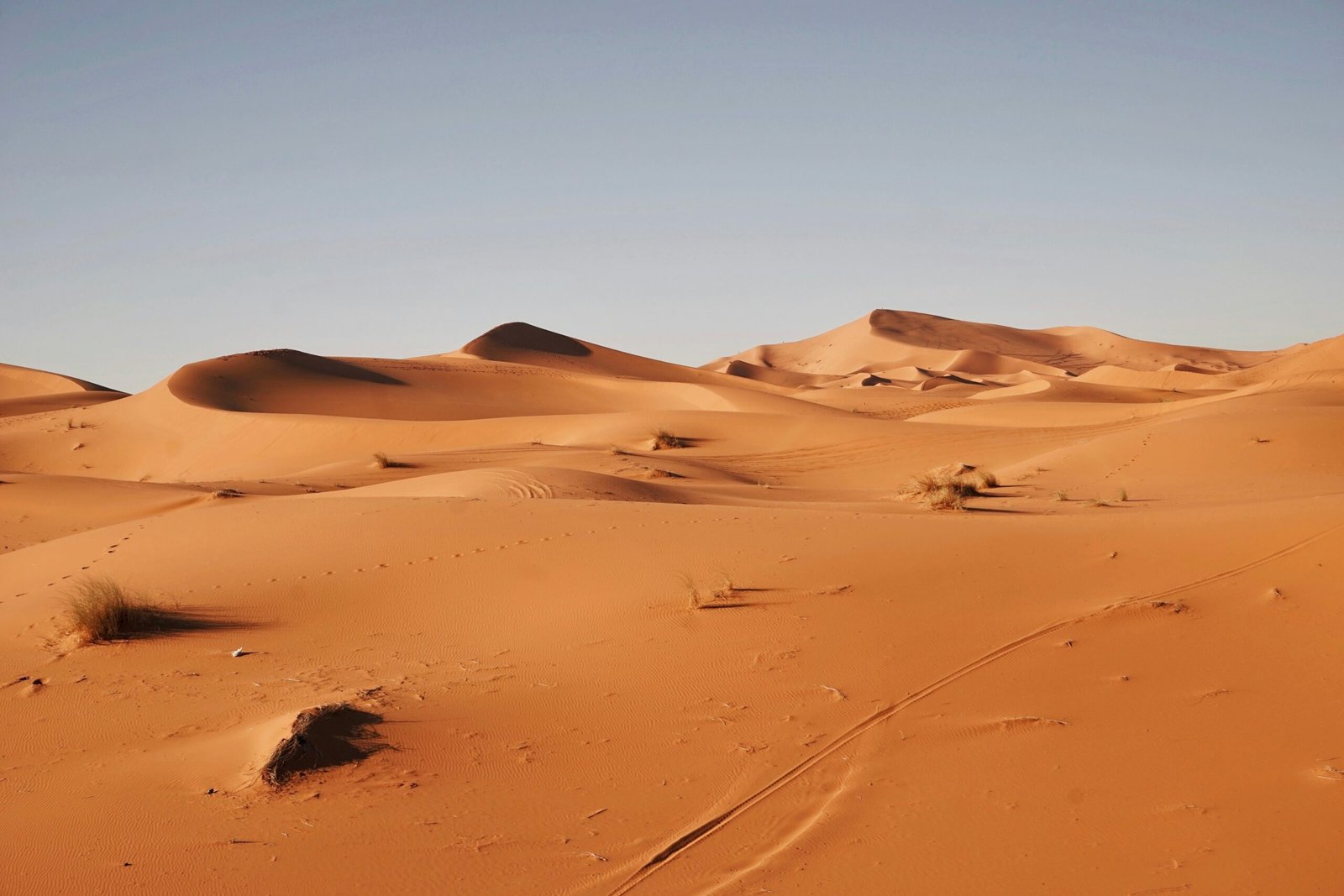
yoga retreats in the sahara desert

faqs: yoga retreats in the sahara desert

1. When is the best time for a yoga retreat in the Sahara?
Spring (March–May) and autumn (September–November) are ideal. Daytime: 22–30°C (72–86°F) — warm enough for outdoor yoga, not too hot. Nights: 10–15°C (50–59°F) — cool but comfortable with proper bedding. Winter (December–February) offers mild days (15–22°C / 59–72°F) but very cold nights (0–8°C / 32–46°F) — magical for stargazing but bring thermal layers and a good sleeping bag. Summer (June–August) is extremely hot (35–45°C+ / 95–113°F+) — only recommended if the retreat has air-conditioned indoor spaces and schedules outdoor practice at sunrise (5–6 AM) and sunset (7–8 PM). Many camps close in July and August.


2. How do I get to a Sahara yoga retreat?
Most Sahara retreats are based near Merzouga (Erg Chebbi dunes), approximately 8–9 hours by road from Marrakech (550 km / 340 miles). Options: (1) Retreat transfer — most organize shared minibuses for €50–100 each way, often including stops at Aït Benhaddou, Dades Valley, or Todra Gorge. (2) Private driver — €200–350 each way, more comfortable and flexible. (3) Fly to Errachidia (ERH) from Marrakech (1.5 hours, around €100–150 round trip), then a 2-hour drive to Merzouga — retreats can arrange pickup. (4) Rent a car — possible but roads are long, and desert driving requires experience. For Erg Chigaga (more remote), allow an extra 2–3 hours of off-road driving. Always arrange pickup in advance — there is no public transport to the dunes.


3. Is the Sahara safe for a solo traveler on a yoga retreat?
Yes — with a reputable retreat operator. The desert is sparsely populated and local Berber communities are welcoming and accustomed to tourists. Solo travelers should: choose a retreat that handles all logistics (transfers, guides, meals, camping), avoid traveling alone into the desert without a guide, book through established platforms or well-reviewed retreats, and share your itinerary with someone at home. Most Sahara retreats are small groups (6–15 people), making them social and safe for solo participants. Single rooms are rare in desert camps — expect shared tents (same gender) or pay a supplement for a private tent. The biggest risk is not crime but logistics: dehydration, getting lost, or lack of medical facilities. Your retreat operator will manage all of this.


4. What types of yoga are commonly offered in the Sahara?
Hatha and gentle Vinyasa are most common — slow, breath-focused, suitable for all levels. Yin yoga is very popular in the desert because the stillness and silence naturally support longer, passive holds. Restorative yoga (using bolsters and blankets) works well on sand. Many retreats emphasize Pranayama (breathwork) — the dry, clean desert air is perfect for deep breathing practices. Meditation is central, often held at sunrise or under the stars. Power yoga, Ashtanga, and hot yoga are not suitable — the desert is hot enough, and the vibe is introspective, not athletic. Some retreats offer “sand yoga” (directly on the dunes) — bring a thick mat or blanket.


5. Can I combine yoga with a camel trek or desert camping?
Yes — this is the classic Sahara experience. Most retreats include: a 1–2 hour camel trek to a deeper dune camp, one night camping under the stars (or in basic tents), sunrise yoga on a remote dune, and a camel ride back. Some luxury retreats offer 2–4 day trekking experiences , walking or camel-trekking between camps, with yoga at each stop. Camel treks are gentle (camels walk slowly) and suitable for beginners, but be prepared for a bumpy, swaying ride — some people find it uncomfortable on hips and lower back. Always ask if the trek is optional; many retreats offer a 4×4 transfer as an alternative for those who prefer not to ride camels.


6. What can I eat at a yoga retreat in the Sahara?
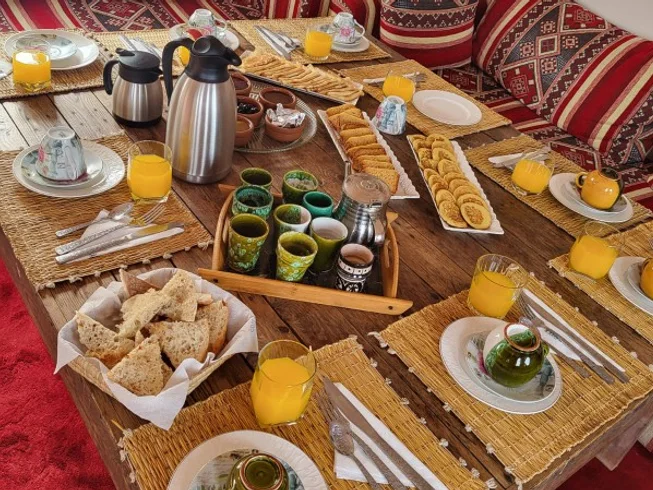
Simple, hearty, vegetarian-friendly Berber cuisine. Expect: vegetable tagines (potatoes, carrots, zucchini, sweet potatoes, chickpeas, olives, preserved lemons), lentil or bean soupscouscous with seven vegetables (Friday specialty), Berber omelette (eggs with tomatoes, onions, spices), fresh bread (baked daily in sand-covered ovens), mint tea (served throughout the day — the “Berber whiskey”), seasonal fruit (oranges, dates, pomegranates in autumn), and sometimes Berber pizza (a stuffed flatbread baked in embers). Meat (chicken, lamb, or goat) is available at some camps but usually not included in standard packages — ask if you want it. Vegetarian and vegan options are easy to accommodate — desert cooking is naturally plant-based. Everything is cooked slowly over fire or gas. No alcohol in traditional camps (some luxury camps may offer wine or beer — ask ahead). Water is provided (bottled or filtered) — stay hydrated in the dry air.


7. Is the Sahara good for a silent or meditation retreat?
Yes — the Sahara is arguably the best place on earth for silence. There is no traffic, no wind (at night), no call to prayer (no mosques in the deep desert), no airplane noise, no insects (too dry). Just absolute stillness. Many retreats offer dedicated silent retreats (3–7 days) with noble silence, no eye contact, no phones, no reading — just sitting, walking, and breathing. Even non-silent retreats are naturally quiet. The stars at night are unparalleled (no light pollution for hundreds of kilometers) — many retreats include guided stargazing or astronomy sessions. For the deepest silence, choose Erg Chigaga over Erg Chebbi — Chigaga is more remote, harder to reach, and has fewer tourists. Winter (November–February) is the quietest season (fewer visitors). The only “noise” is your own mind — which is exactly why people come to the desert.

Share Your Thoughts

Your email address will not be published. Required fields are marked *

Leave a Reply

Your email address will not be published. Required fields are marked *

Leave a Reply

Your email address will not be published. Required fields are marked *