

The words wellness and yoga are used interchangeably in travel marketing so often that the distinction has almost disappeared. Scroll through any retreat platform and you’ll find spa weekends, silent monasteries, surf camps, and detox programs all filed under the same label.
But while a wellness retreat and a yoga retreat both promise restoration, they serve different needs, operate from different philosophies, and deliver different kinds of change. Choosing between them without understanding that difference is one of the main reasons people come home from a retreat feeling like something was slightly off — even when the setting was beautiful and the intentions were good.
This guide draws the distinction clearly, so you can choose by intention rather than by photographs.


The words wellness and yoga are often used interchangeably — especially in travel marketing.
Scroll through Instagram and everything from a spa weekend to a silent monastery now calls itself a “wellness retreat.”
But while both promise restoration, they serve different needs and operate from different philosophies.
Understanding that difference helps you spend consciously, travel intentionally, and choose experiences that actually change something, rather than just fill a week.
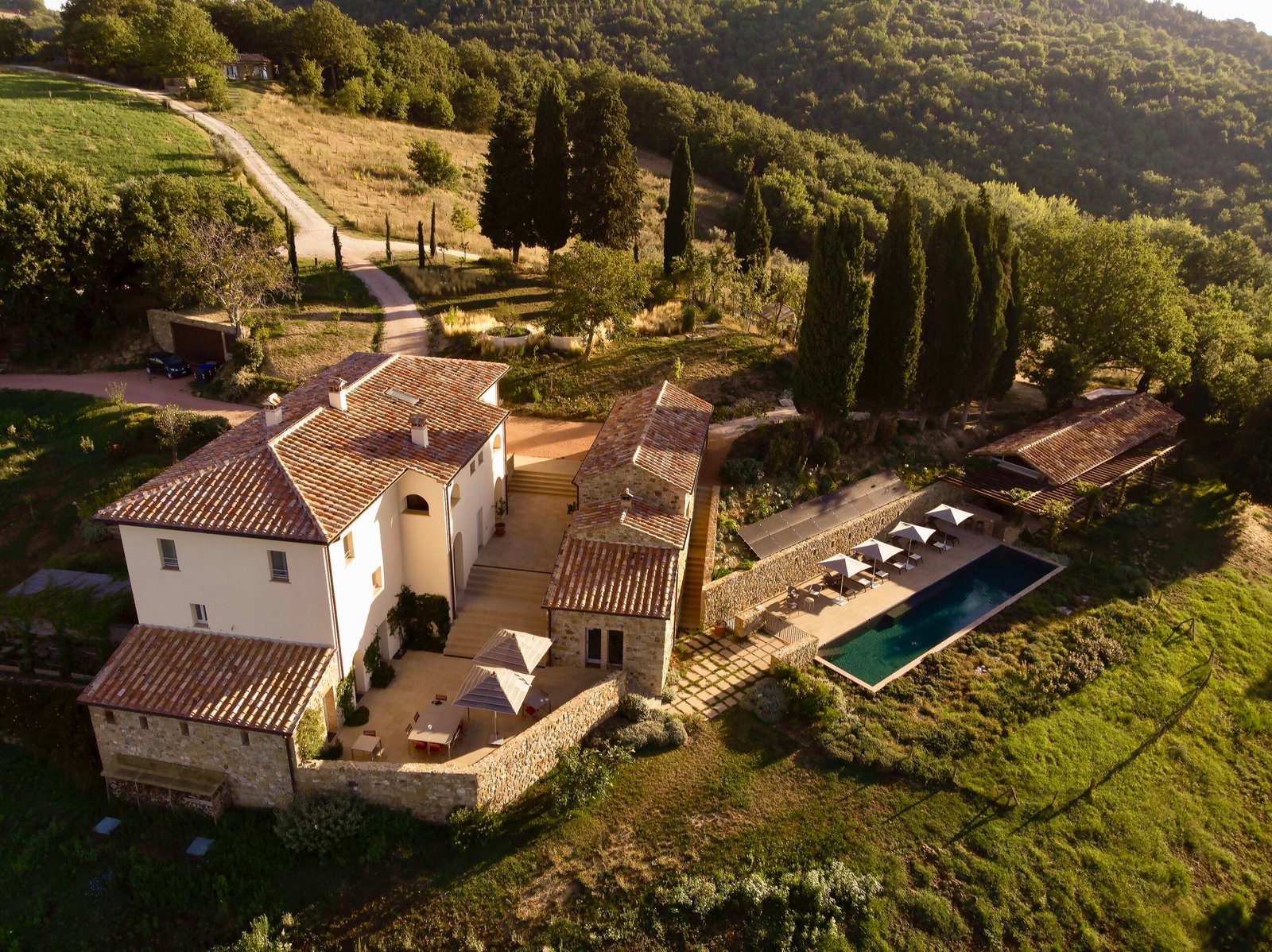
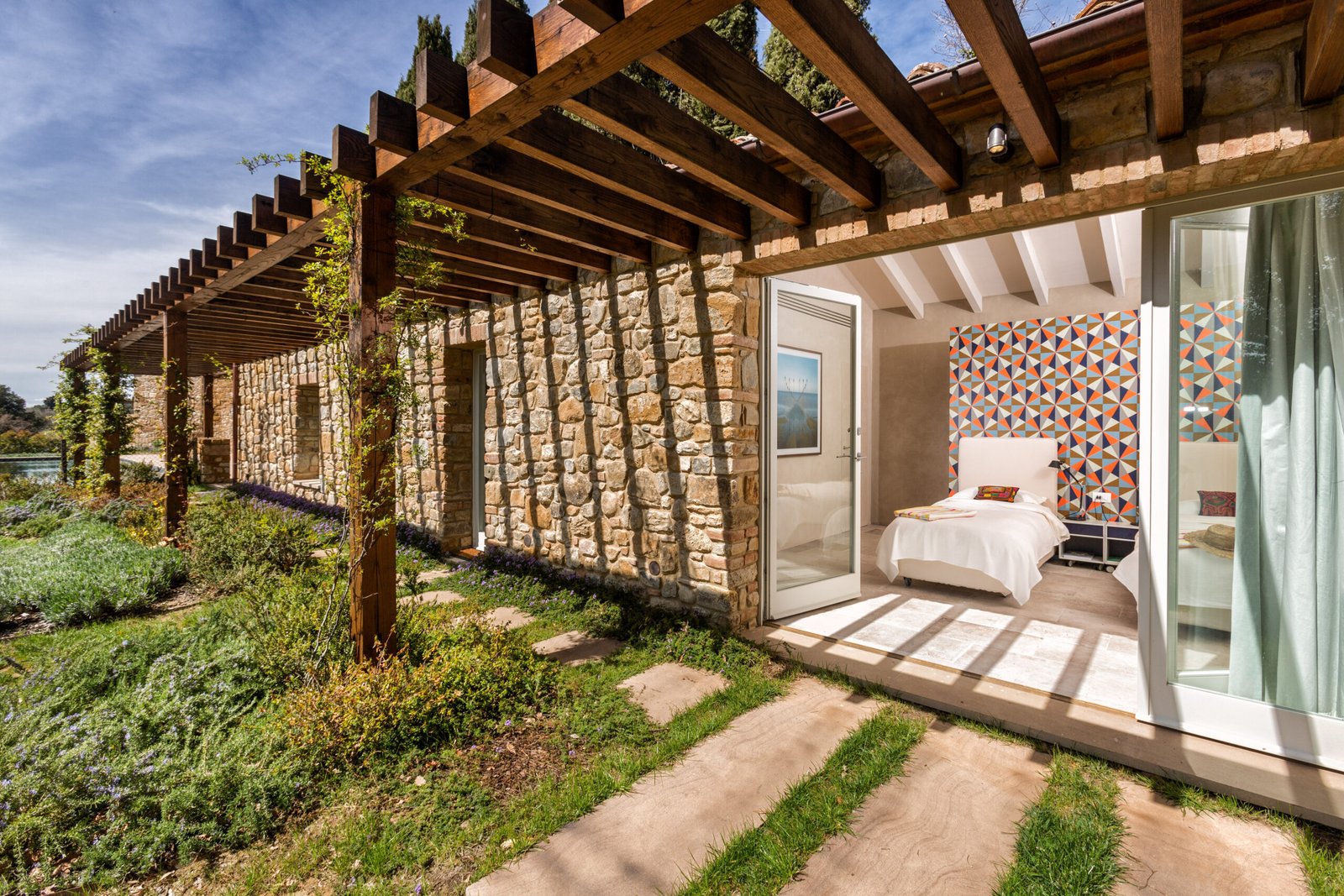
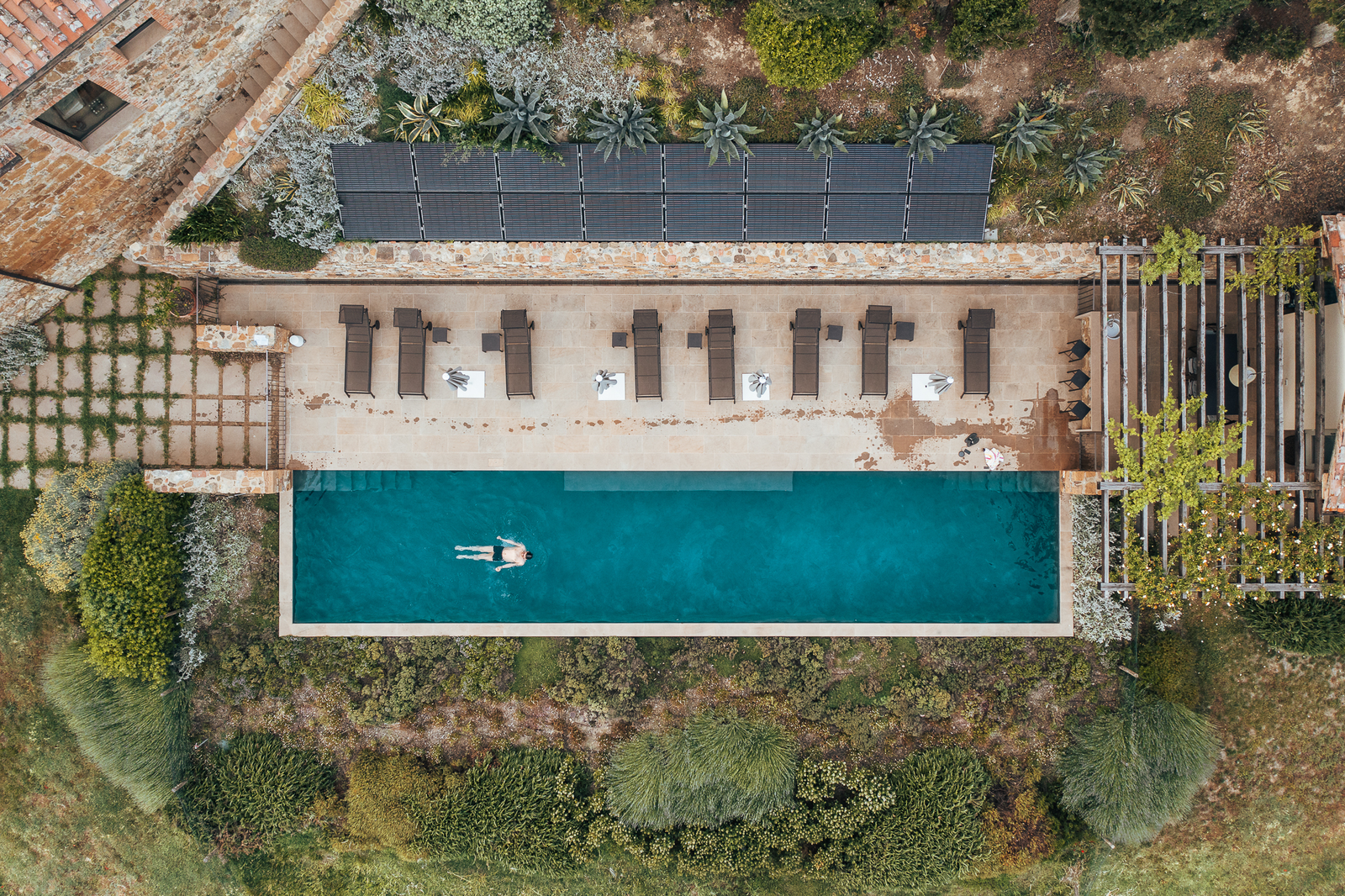
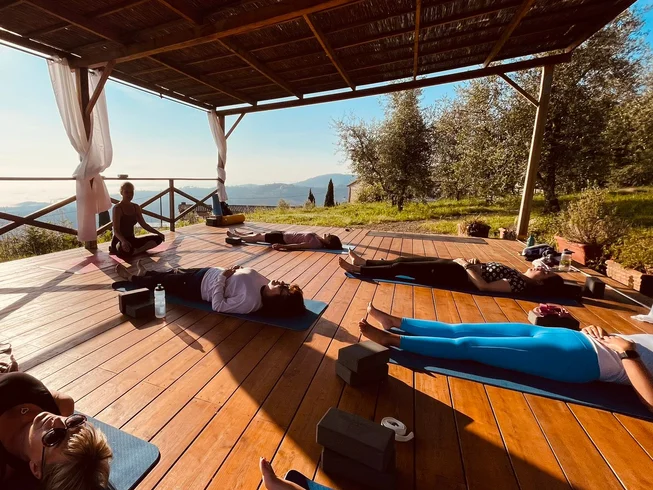

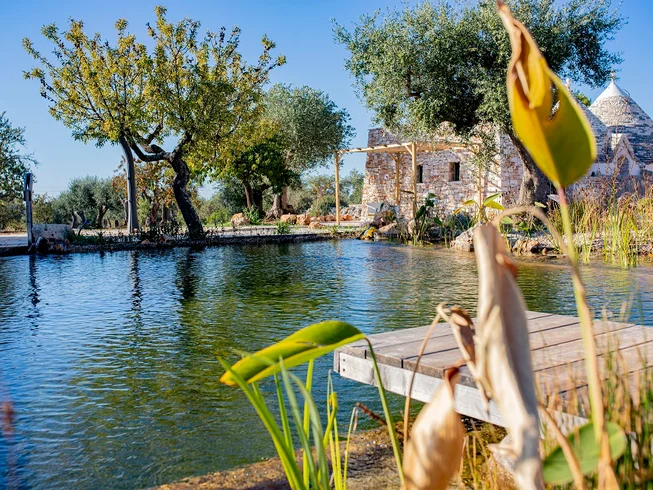
A yoga retreat is an immersive experience built around yoga as its central practice. Not yoga as one activity among many — yoga as the organising principle of the entire week. The daily schedule, the food, the pace, the silences between sessions: all of it is designed to support and deepen the practice.
Most yoga retreats offer two sessions per day — a dynamic or vinyasa practice in the morning to activate and build heat, and a restorative or yin session in the evening to release and integrate. Between them, there is usually significant unstructured time: space to rest, to journal, to walk, to sit with whatever the morning session brought up. That unstructured time is not filler. It is part of the design.
The atmosphere at a yoga retreat tends to be quieter and more inward than at other retreat formats. Conversations are more likely to circle around philosophy, breath, anatomy, or personal practice than around activities or logistics. The experience can be confronting — without the ordinary distractions of daily life, you meet yourself more directly — but that confrontation is precisely the point. Yoga retreats create change through repetition, consistency, and sustained attention. The same mat, the same teacher, the same time of day: that structure builds a subtle internal awareness that is genuinely difficult to access any other way.

If you have decided on a yoga retreat, yoga retreats in Greece and yoga retreats in Spain offer the widest range of formats in Europe. If a wellness retreat is the right fit, our wellness retreats in Italy cover the full spectrum from thermal spa programmes to mountain wellness.
Wellness is a more recent and considerably broader category. It blends elements of spa culture, lifestyle medicine, psychology, and somatic practice into curated experiences aimed at resetting stress, rebuilding energy, and introducing sustainable habits.
A wellness retreat might include yoga — but also Pilates, breathwork, coaching sessions, sauna rituals, cold water immersion, nutrition workshops, sound healing, or forest bathing. Its purpose is not to teach a lineage or refine a technique. It is to rebalance the nervous system through variety, and to leave guests with a wider toolkit than the one they arrived with.
Where yoga retreats create change through repetition, wellness retreats create relief through diversity. By alternating modalities — movement, rest, treatment, conversation, solitude — they prevent the resistance that a single repeated practice can generate, and sustain curiosity throughout the week. This makes them more accessible, particularly for people who are new to structured self-care or who are emerging from a period of significant stress.
The trade-off is depth. A week spent moving between seven different practices produces breadth and refreshment. It rarely produces the same quality of internal shift as a week spent going deeper into one.
Most yoga retreats offer two sessions per day — a dynamic or vinyasa practice in the morning to activate and build heat, and a restorative or yin session in the evening to release and integrate. Between them, there is usually significant unstructured time: space to rest, to journal, to walk, to sit with whatever the morning session brought up. That unstructured time is not filler. It is part of the design.
The atmosphere at a yoga retreat tends to be quieter and more inward than at other retreat formats. Conversations are more likely to circle around philosophy, breath, anatomy, or personal practice than around activities or logistics. The experience can be confronting — without the ordinary distractions of daily life, you meet yourself more directly — but that confrontation is precisely the point. Yoga retreats create change through repetition, consistency, and sustained attention. The same mat, the same teacher, the same time of day: that structure builds a subtle internal awareness that is genuinely difficult to access any other way.
The fundamental distinction between a yoga retreat and a wellness retreat is one of method, not intention. Both aim for the same outcome: a quieter nervous system and a clearer sense of self. They just take different roads.
A yoga retreat asks for commitment to a single path. The depth that emerges from that commitment — the growing sensitivity to breath, the gradual release of held patterns, the moments of genuine stillness — is only available through repetition over consecutive days. It cannot be rushed or substituted.
A wellness retreat offers exploration across multiple paths. The benefit is cumulative and experiential rather than technical: you discover what works for your body, you experience modalities you might not have encountered before, and you leave with options. The week functions as an introduction to a wider landscape of self-care rather than a deep dive into one territory.
A useful shorthand: a yoga retreat trains awareness through discipline. A wellness retreat cultivates wellbeing through variety. One asks for commitment; the other offers exploration. Neither is superior — they serve different seasons of a person’s life.
A yoga retreat suits you if you already have some relationship with the practice — even a casual or lapsed one — and you want time to reconnect with it away from the noise of ordinary life. It also suits people who are specifically drawn to the philosophical and somatic dimensions of yoga: the breath work, the stillness, the internal attention. Expect structure, some degree of early rising, and an atmosphere that takes practice seriously.
A wellness retreat suits you if you are new to structured self-care, recovering from burnout or illness, or simply not ready for the intensity of a dedicated practice format. It is the more accessible entry point — gentler, more varied, and less demanding in terms of what you bring to it. Wellness retreats are also well suited to people who know what they don’t want (stress, noise, overcommitment) but haven’t yet found a single practice they want to go deeper into.
Both suit you if you are at a significant transition point — a career change, a relationship ending, a period of grief or uncertainty — and you need a container that is both structured enough to hold you and flexible enough to meet you where you are. Many blended formats are specifically designed for exactly this profile.

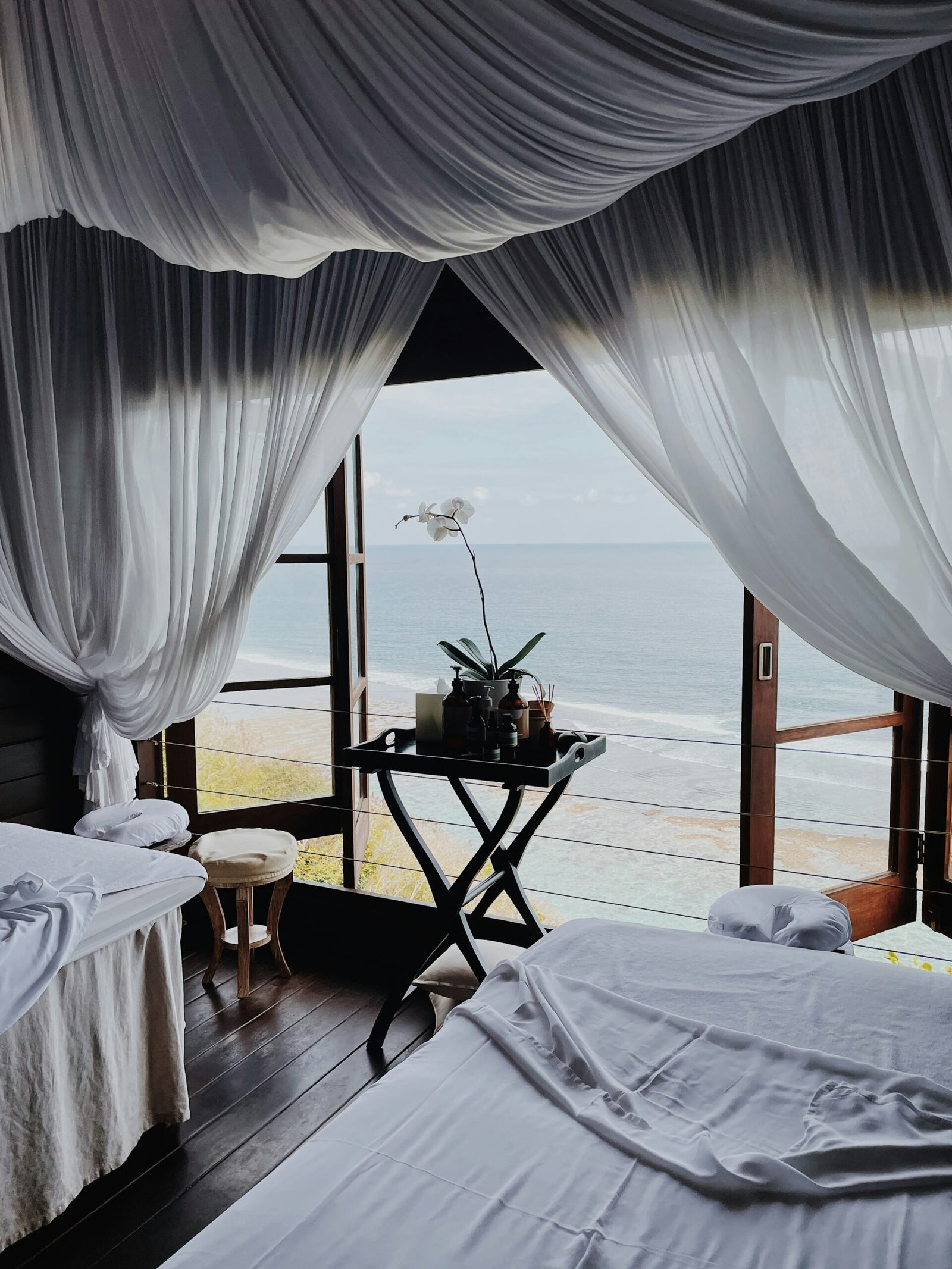
The difference in philosophy shows up directly in price and infrastructure.
Yoga retreats tend to cost less when hosted by independent teachers working in smaller, simpler venues — farmhouses, eco-lodges, converted village properties. In Europe, a week-long yoga retreat typically runs between €800 and €1,600. You are paying primarily for the teacher’s knowledge and time, and for the container they create. The environment is intentionally simple because simplicity supports the practice.
Wellness retreats require more infrastructure: multiple specialists, spa facilities, treatment rooms, saunas, equipment, and sometimes medical or nutritional licensing. A week-long wellness retreat in Europe typically starts around €1,500 and can reach €3,500 or more for premium programs. You are paying for services and environment as much as for guidance.
Neither is over- or underpriced. They allocate value differently — one toward human expertise, the other toward environment and variety of provision. The question is which allocation matches what you’re actually looking for.
Environment shapes outcome more than most booking decisions acknowledge.
Yoga retreats tend to thrive in simple, quiet spaces: mountain chalets, rural farmhouses, eco-lodges with minimal amenity. The minimalism is functional — it removes distraction and supports the inward attention the practice requires. When the setting is beautiful but austere, you have fewer places to hide from yourself, which is the point.
Wellness retreats more often favour amenity-rich venues: properties with spas, pools, treatment rooms, and on-site therapists. The comfort is also functional — it signals safety to the nervous system and lowers the threshold of surrender. For people who are highly stressed or physically exhausted, that permission to simply receive care is not indulgent. It is the necessary first step.
Choosing between them is really a question of how you access calm: through simplicity or through comfort. There is no moral hierarchy between the two — only different gateways into the same destination.
Yoga retreats tend to initiate inner confrontation. Silence, routine, and sustained focus act as mirrors — unresolved emotions and habitual patterns surface more readily when the usual distractions are absent. This is why experienced yoga teachers talk about “holding space”: the transformation that becomes possible in a retreat container requires someone who can recognise and support what emerges.
Wellness retreats are generally gentler in their psychological impact. They emphasise self-compassion, nervous system repair, and the gradual rebuilding of a sense of ease. For people emerging from chronic stress, grief, or emotional exhaustion, that softness is not a lesser version of healing — it is the appropriate medicine. The nervous system needs to feel safe before the mind can open.
In short: yoga retreats stretch you. Wellness retreats soothe you. Most people need both at different points in their lives, which is why the two formats complement rather than compete with each other.
The most interesting development in the retreat market over the past five years is the growth of formats that don’t fit cleanly into either category. Yoga-centred wellness programs that keep the philosophical depth of a traditional yoga retreat but soften the edges with spa rituals, hiking, or coaching. Wellness retreats that use yoga as the structural backbone rather than just one item on the menu.
These blended formats work well when yoga remains the spine of the experience and other modalities orbit around it in support. They work less well when yoga becomes a token morning class between massages — present in the branding but absent from the design. The question to ask when evaluating a blended program is: what does the daily schedule actually prioritise? The answer is usually visible in the timetable, not the description.
Rather than approaching the choice as a comparison of features, approach it as a question of honest self-assessment. Four questions tend to clarify most situations quickly.
Do you crave discipline or rest? If you are looking for focus, structure, and a sense of earned progress, a yoga retreat will serve you better. If you are looking for permission to stop, be cared for, and decompress without demands, a wellness retreat is more appropriate.
Are you looking to learn or to recover? Yoga retreats build skills and deepen practice. Wellness retreats rebuild capacity and restore baseline function. Both are valuable — but they address different deficits.
Do you need silence or gentle stimulation? Yoga retreats are quieter by design; unstructured time and internal focus are central to the experience. Wellness retreats offer more variety and tend to be more socially interactive.
How much structure do you want? Yoga retreats ask you to show up at specific times, in a specific way, for specific sessions. Wellness retreats are usually more flexible — activities are available rather than required, and the pace is more self-directed.
There is no wrong answer. The choice is simply about alignment between where you are and what the format offers.
Misaligned expectations are the most common reason people leave a retreat feeling like something was missing. Someone seeking deep teaching feels underwhelmed by a spa-based wellness week. Someone who needed rest feels overwhelmed in a disciplined yoga program. The experience was fine — it just wasn’t designed for what they actually needed.
Understanding the difference between a wellness retreat and a yoga retreat is not about finding the better option. It is about finding your option — the format that matches your current season, your actual need, and the kind of change you are genuinely ready for.
When that alignment is right, the retreat begins working before you even arrive.
What is the main difference between a wellness retreat and a yoga retreat? A yoga retreat is built around yoga as its central and organising practice — daily sessions, breath work, meditation, and a quiet inward atmosphere designed to deepen the practice over consecutive days. A wellness retreat is a broader format that uses multiple modalities — movement, spa treatments, coaching, nutrition, sound healing — to restore overall wellbeing. Yoga may be included in a wellness retreat, but it is one element among many rather than the foundation of the experience.
Which is better for someone who has never done a retreat before? It depends more on your current state than your experience level. If you are depleted, overwhelmed, or new to structured self-care, a wellness retreat’s gentler and more varied format is usually the easier entry point. If you already have some relationship with yoga — even a casual one — and you want to go deeper into it, a yoga retreat will deliver more. Neither requires prior retreat experience.
Do wellness retreats always include yoga? Many do, but not all. When yoga is included in a wellness retreat, it typically appears as one session among several daily options rather than as the structural core of the program. If yoga is important to you, check the daily schedule carefully before booking — the balance between yoga and other activities varies significantly between programs.
Are yoga retreats more expensive than wellness retreats? Generally the opposite is true. Yoga retreats are often less expensive because they require less infrastructure — a qualified teacher, a suitable space, and a supportive environment are the primary costs. Wellness retreats require multiple specialists, spa or treatment facilities, and sometimes medical or nutritional licensing, which increases operating costs and therefore prices. A week-long yoga retreat in Europe typically runs €800–€1,600; a wellness retreat of equivalent length more often starts at €1,500 and rises from there.
Can a retreat be both a yoga retreat and a wellness retreat? Yes. Blended formats that combine the depth of a yoga-centred program with the variety and care of a wellness offering are increasingly common and often the most satisfying option for people at significant life transitions. The key is to evaluate the actual daily schedule rather than the label — a well-designed blended retreat keeps yoga as the structural backbone and adds other modalities in genuine support of it, rather than reducing yoga to a token element in a spa program.
How do I know which format is right for me right now? Ask yourself two honest questions: do you need to go deeper into something, or do you need to be restored before you can go anywhere? If the answer is depth and focus, choose a yoga retreat. If the answer is restoration and relief, choose a wellness retreat. If you’re genuinely uncertain, a well-designed blended program — or a boutique yoga retreat with significant unstructured time — tends to serve both needs adequately.
Your email address will not be published. Required fields are marked *