
Moroccan hammam + yoga = the ultimate reset. Steam opens your pores and muscles. Yoga lengthens and strengthens. Together, they detox, relax, and reconnect. From Marrakech’s riads to Taghazout’s coast, most retreats include at least one traditional hammam. Black soap, rhassoul clay, and a kessa glove — savasana can not feel deeper.


The Moroccan hammam is not a spa treatment. It is older than that, and more serious. For centuries it has been the centre of social and physical life in Moroccan cities and villages, a place where the body is cleaned with a thoroughness that weekly showering never achieves, where conversation happens without performance, and where the combination of heat, steam, and physical attention produces a quality of relaxation that is genuinely difficult to find elsewhere.
Yoga and the hammam share more than a wellness brochure. Both are rituals of release. Both ask you to be present, to attend to the body rather than ignore it, and to accept a degree of physical intensity in the service of something quieter on the other side. In practice, the combination works better than either alone: yoga opens the body from the inside, the hammam cleanses and releases it from the outside. By the end of a retreat that incorporates both seriously, most participants feel a physical and mental lightness that takes a few days to arrive but is unmistakable when it does.
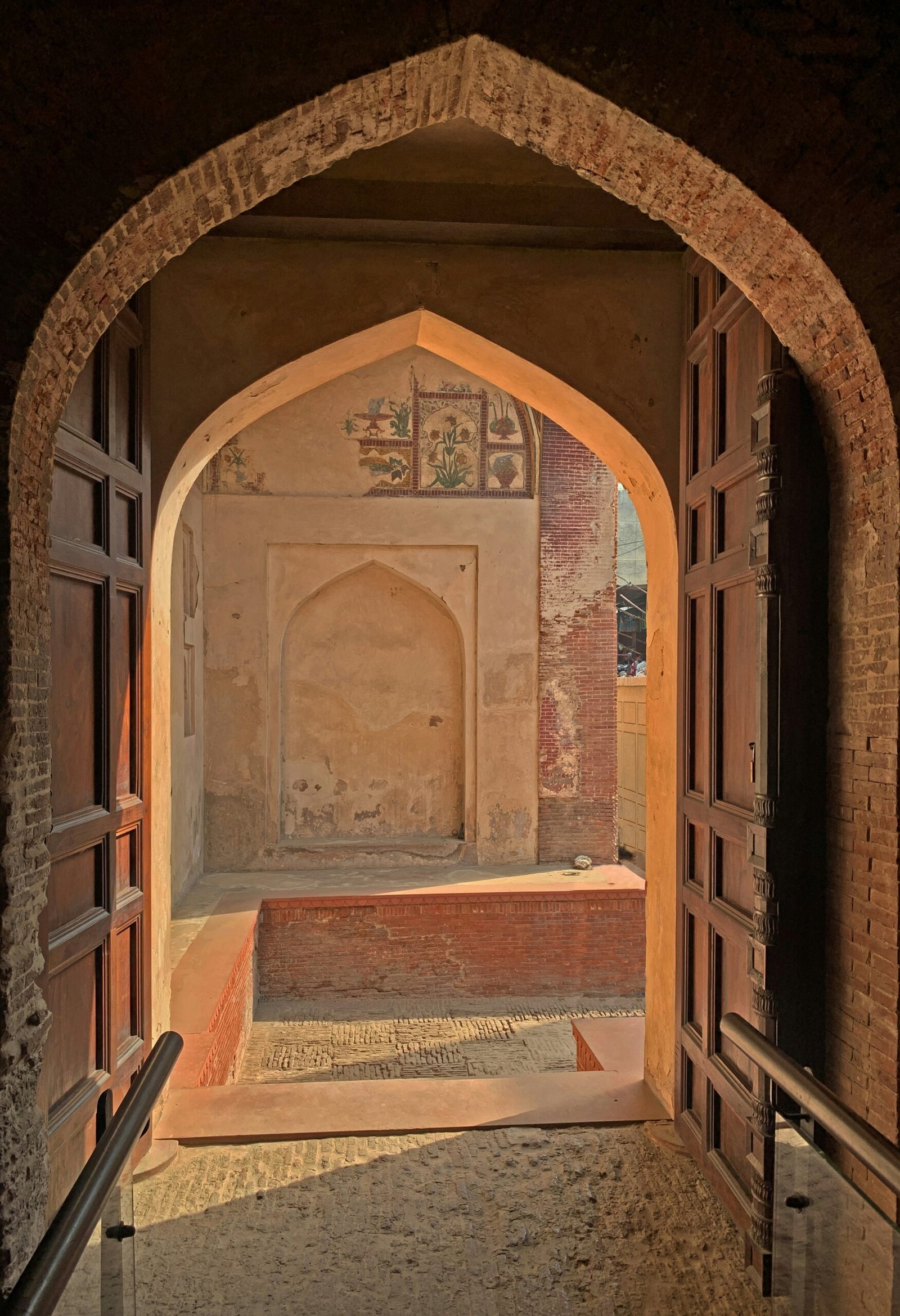
Morocco is the right place for this combination. The hammam tradition here is among the most developed in the world, the riad architecture that houses most retreat centres was literally designed around the hammam, and the culture of hospitality means that what you receive is not a commercial imitation of a ritual but the thing itself.
Before anything else, it helps to understand what a Moroccan hammam actually involves, because the experience varies enormously depending on where you go and what you book.
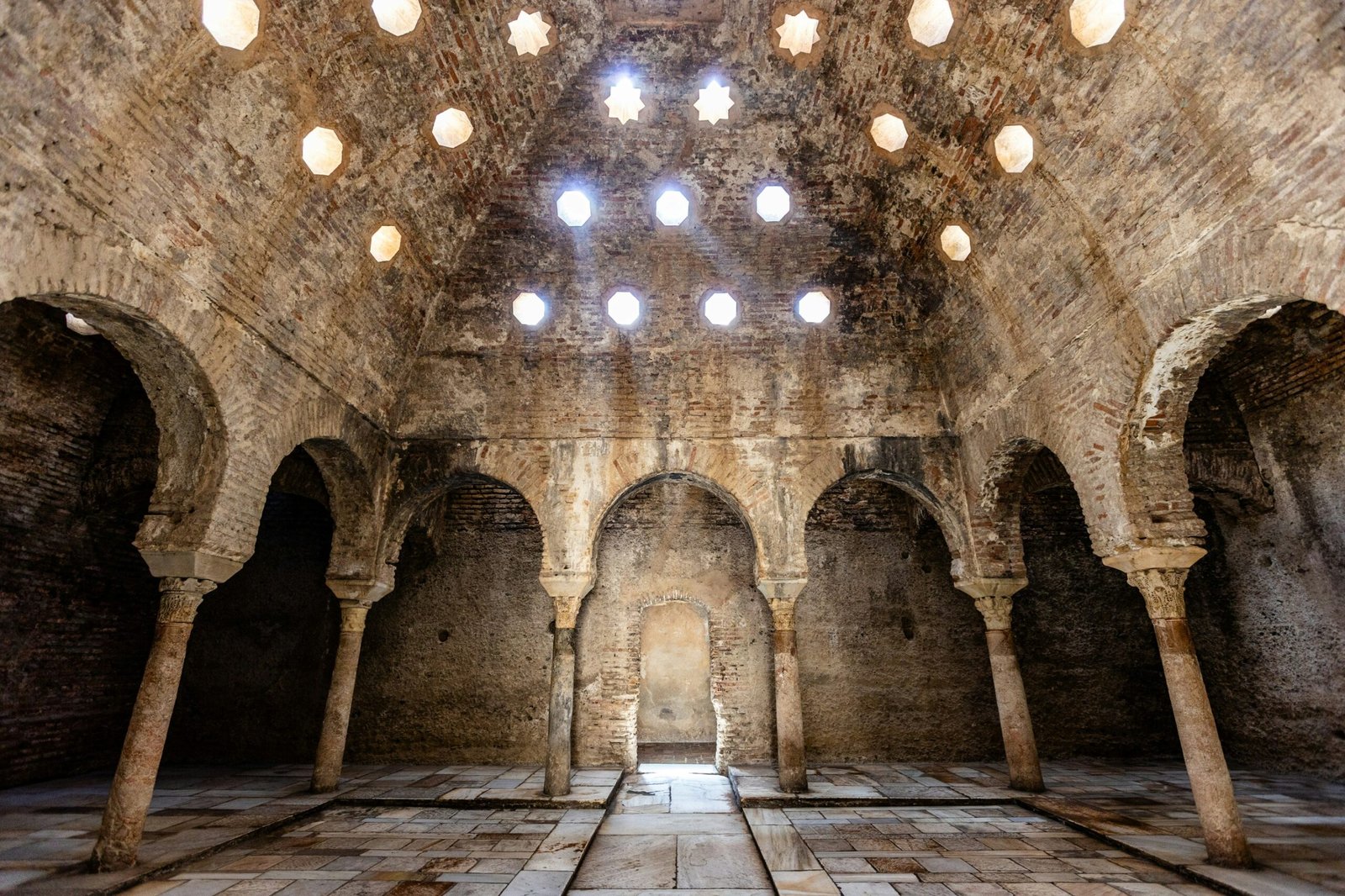
The traditional neighbourhood hammam (hammam beldi) is what most Moroccans use. It is a public bathhouse, gender-segregated by time of day or by separate facilities, with a sequence of rooms at different temperatures: a cold room, a warm room, and a hot room. You bring your own black soap (savon beldi, made from olives and potassium), your kessa mitt, and your bucket. You move between rooms, soaking in the progressive heat, softening the skin, then scrubbing with the kessa mitt to remove dead cells. The process takes 45 to 60 minutes and costs almost nothing. The experience is communal, functional, and without ceremony. It is also one of the most direct encounters with daily Moroccan life available to a visitor.
The private riad hammam is what most retreats offer. A private or semi-private steam room within the riad, followed by a sequence delivered by an attendant: black soap applied and left to work in the heat, then vigorous kessa exfoliation that removes dead skin in visible rolls, then a rinse, then a rhassoul clay mask (optionally), then argan oil massage. The whole process takes 60 to 90 minutes and leaves the skin in a state that is genuinely different from anything achieved by conventional washing. These hammam sessions within retreats range from careful and traditional to luxurious, depending on the property.
The luxury hammam spa found in higher-end riads and hotels adds further elements: rose water rinses, essential oil treatments, extended massage, facial treatments using local ingredients. The ritual is preserved but the setting is deliberately beautiful and the experience curated for maximum comfort. Less authentic than the neighbourhood hammam but not without its own integrity.
The combination is not marketing. There is a genuine physical logic to it.
Yoga practice, especially in a retreat context where you are doing two sessions a day over several days, creates significant physical load on the muscles and connective tissue. The heat and steam of the hammam are among the most effective tools available for recovery: moist heat penetrates deeper than dry heat, relaxing muscle fibres and increasing circulation in ways that allow faster recovery and reduced soreness. Athletes who use steam rooms and saunas regularly for recovery are applying the same principle.
Beyond recovery, there is a sequencing effect. A yoga session before the hammam prepares the body: circulation is elevated, joints are warm, and the body is already in a mode of physical attention. The hammam then extends and deepens this state. The heat encourages the muscular release that yoga was working toward. The kessa scrub stimulates the skin and lymphatic system. The argan oil massage that follows works into tissue that is genuinely receptive in a way it would not be cold.
In the other direction, going into a yoga session after a hammam produces a different quality of practice: the body is warmer, muscles are more pliable, and there is a quality of calm attention that the hammam induces which translates directly into more present, more absorbed yoga. Experienced retreat programmers schedule hammam sessions in the afternoon specifically so that the evening yoga session benefits from this effect.
Marrakech Marrakech is the spiritual centre of the Moroccan hammam tradition and the city with the deepest concentration of riad-based yoga retreats. The combination here is natural and easy: almost every serious riad has its own hammam, and many have yoga terraces or courtyard spaces suitable for practice. The neighbourhood hammams in the medina are some of the finest examples of the traditional experience in Morocco. For the most culturally embedded version of hammam-and-yoga, Marrakech is the right base. Our yoga retreats in Marrakech guide covers the city in full detail.
The Atlas Mountains Mountain retreat centres often incorporate wood-fired hammams using spring water, with herbs gathered from the surrounding hillsides added to the steam. The combination of mountain air, physical hiking, and a properly hot hammam at the end of the day produces a quality of exhaustion and subsequent rest that is almost impossible to replicate elsewhere. The hammam experience in the mountains is less luxurious than in Marrakech’s riads but more elemental, and many people find it more satisfying for that reason.
Essaouira The Atlantic coast town has developed a strong wellness culture built around its mild climate and creative community. Boutique riads here incorporate hammam sessions into weekly retreat programmes, and the salt air and ocean energy add their own dimension to the recovery process. The hammam after a morning yoga session and a windswept beach walk is a particularly Essaouira-specific pleasure.
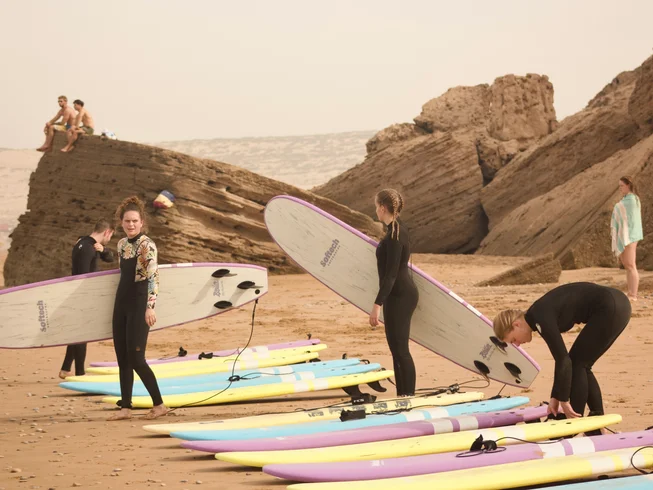
Agadir and Taghazout The surf-and-yoga retreats of the Atlantic coast increasingly include hammam and massage facilities, recognising that post-surf recovery is as important as the surf itself. Eco-resorts like Paradis Plage have proper hammam facilities integrated into their wellness programmes. The combination of surfing (high physical demand), yoga (recovery and mobility), and hammam (deep tissue recovery) creates one of the more complete physical wellness programmes available in Morocco.
For those unfamiliar with what to expect, a traditional Moroccan hammam session within a retreat typically proceeds as follows.
You enter the hammam room, which is hot and steamy, and spend ten to fifteen minutes allowing the heat to work on the skin, opening pores and beginning to soften the outermost layers of dead cells. This is not uncomfortable, though it is warm.
Black soap (savon beldi) is applied to the entire body. This dark, soft soap is made from partially fermented olives and potassium and has a particular smell, earthy and slightly medicinal. It is left on the skin for five to ten minutes while the heat continues to work.
The kessa exfoliation begins. The kessa mitt is a coarse-weave glove, and when drawn firmly across skin that has been prepared by heat and black soap, it removes dead cells in grey-brown rolls that are immediately visible and somewhat startling. This is the core of the hammam process: the removal of the outermost skin layer reveals the newer skin beneath, which is softer, more receptive, and glowing in a way that is immediately visible in a mirror afterward. This process takes fifteen to twenty minutes and covers every part of the body.
A thorough rinse follows, often with warm water poured from a bucket in the traditional manner.
Rhassoul clay, if included, is applied next. This mineral-rich clay from the Atlas Mountains is mixed with water into a paste and applied to the skin and hair, left briefly, then rinsed. It draws out further impurities and leaves the skin with a mineral smoothness.
The session concludes with argan oil massage. The oil, warm and fragrant, is worked into the skin that has just been prepared by everything that preceded it. It absorbs almost immediately and completely. This is when most people fall asleep, or want to.
The whole process takes 60 to 90 minutes. The hour or two afterward, lying quietly or moving into a gentle yoga session, is when the full effects register.
Hammam-and-yoga retreats in Morocco typically take the relationship between food and physical wellbeing seriously. The cuisine that emerges from this tends to be Moroccan in character but lighter than the rich tagines of city restaurants.
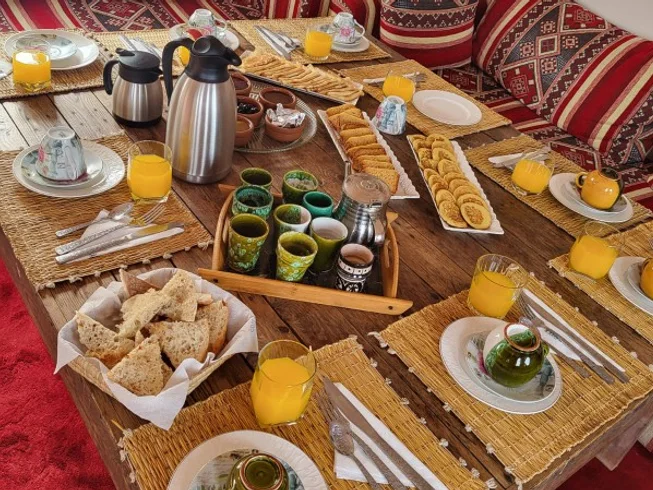
Breakfast is usually the most substantial meal: fresh fruit, Moroccan pancakes (msemen or beghrir) with argan oil and honey, eggs, yoghurt, and mint tea. The emphasis is on energy that sustains a morning yoga session without heaviness.
Lunch after the hammam tends toward the lighter end of the Moroccan repertoire: lentil soup, vegetable tagines, couscous with roasted vegetables, salads with preserved lemon dressing. The body after a hammam session has little appetite for weight.
Dinner is communal and unhurried: tagines, couscous, freshly baked bread, seasonal vegetables, and usually fresh fruit. Retreat kitchens on this circuit have become genuinely good at producing food that is both Moroccan in character and appropriate for the physical context of a wellness retreat.
Key ingredients that appear throughout: preserved lemon, argan oil, ras el hanout spice blend, fresh coriander and parsley, black olives, local honey, and the mint that appears in tea at every hour. These are the flavours of Moroccan wellness cooking, and they are genuinely good.
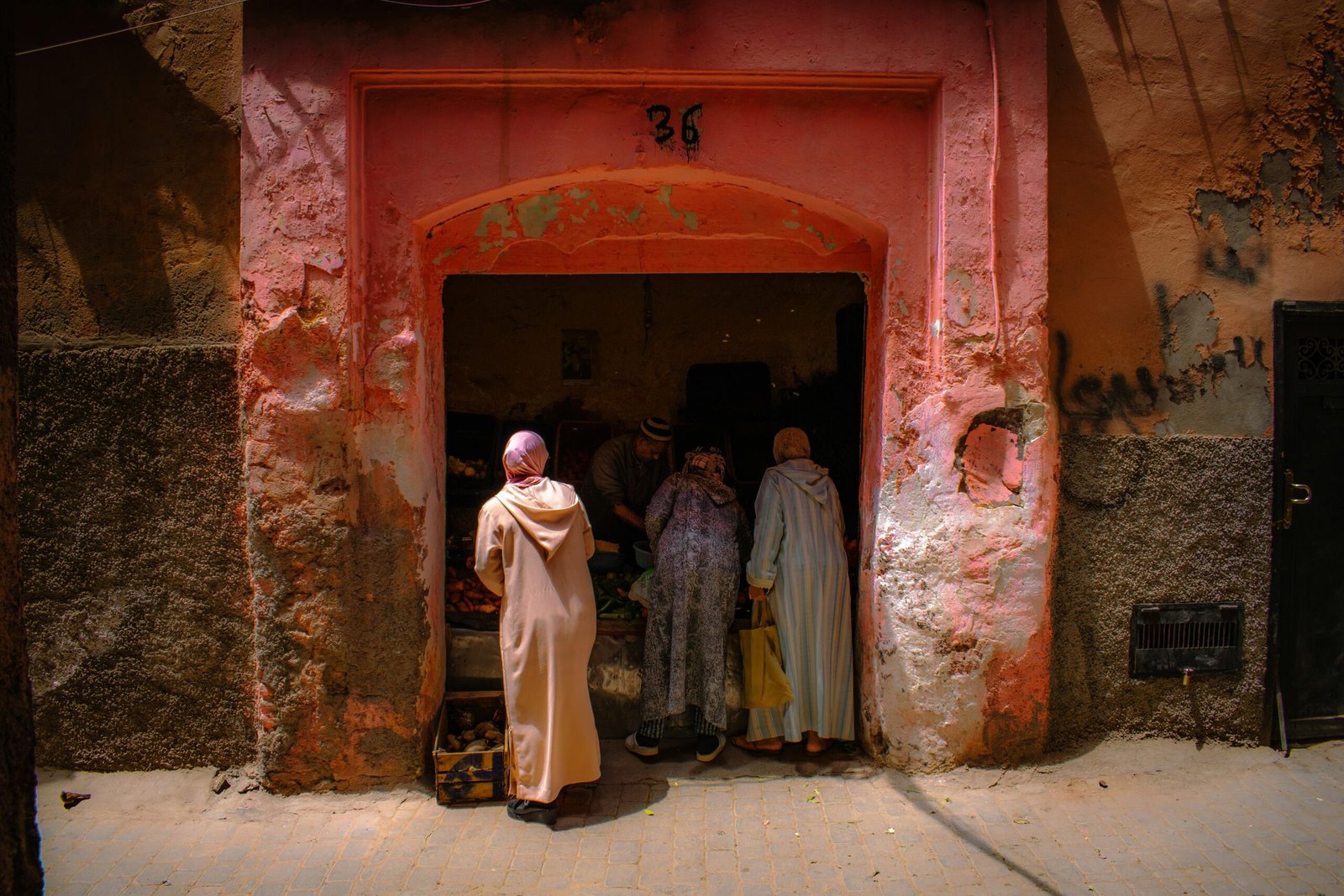
Hammam-and-yoga retreats are not purely physical programmes. The spaces between sessions are as important as the sessions themselves.
Medina exploration in Marrakech is the standard daytime activity for city-based retreats: the souks, Jardin Majorelle, Bahia Palace, the spice market in Rahba Kedima. Moving through a complex, beautiful, sensory-rich environment at walking pace, without agenda, is its own form of mindfulness.
Cooking classes are offered by many riads and retreat centres in Marrakech and Essaouira, and they connect directly to the food dimension of the retreat. Learning to make a proper tagine, or the pastry layers of a bastilla, is a practical skill with a cultural depth that cooking classes in other countries rarely achieve.
Argan oil cooperative visits outside Essaouira and in the Souss plain around Agadir allow you to understand the source of one of the hammam’s key ingredients. Women’s cooperatives produce the oil by hand, cracking shells, grinding kernels, and pressing oil in processes unchanged for centuries. Most retreats in the Essaouira area include a visit.
Meditation and breathwork sessions are increasingly incorporated into hammam-and-yoga retreat programmes, recognising that the physical work of yoga and hammam creates a receptive state that meditation can deepen. Evening sessions under Moroccan stars, or in the tiled courtyard of a riad, are the setting that makes these practices feel natural rather than effortful.
Souk walks and market visits provide an antidote to the cocoon quality that intensive retreat programmes can create. An hour in a Moroccan souk, dealing with real life at real prices and real energy, provides useful counterpoint to the cushioned introspection of retreat and helps integrate rather than escape.
The hammam is a year-round experience, but the retreat setting it occupies has seasonal character.
October and November are excellent for this kind of retreat: warm days, cool evenings that make the hammam’s heat feel particularly welcome, and the Moroccan landscape at its most golden and settled after summer. April is the other peak of quality for similar reasons.
December to February is the time when the hammam dimension of the retreat becomes most central: cold riad nights, the particular pleasure of stepping from winter air into a heated hammam room, and an introspective quality that matches the season. Winter retreats in Marrakech specifically can feel like the most complete version of this experience. For what Morocco offers at this time of year, our yoga retreats in Morocco in April guide covers the spring version in detail.
March to May brings warm days and blooming gardens to Marrakech and the Atlas region, and is the most popular season for retreats generally. The hammam is no less welcome in spring, and the post-session rest in a riad garden with orange blossom in the air is one of the finer pleasures this country offers.
June to September is summer: hot in Marrakech and the interior, mild on the Atlantic coast. Summer hammam in a Marrakech riad, where even the hammam room may feel modest compared to the outdoor temperature, is a different experience from winter. The coast is the better choice in summer.
Is the hammam experience appropriate for everyone? The traditional hammam is safe for most healthy adults, but there are contraindications: avoid it if you have cardiovascular conditions, very high blood pressure, skin conditions that are aggravated by heat, or if you are pregnant. If in doubt, check with your doctor before booking. Most retreat centres ask about health conditions at the time of booking and can advise on what level of hammam treatment is appropriate.
Is the kessa exfoliation painful? It should not be. The kessa mitt removes dead skin cells efficiently, and the sensation is vigorous rather than painful on properly prepared skin. If you find it uncomfortable, a good hammam attendant will adjust the pressure immediately on request. The skin afterward is not raw or sensitive; it is smoother and more receptive than before.
Do I need to bring anything for the hammam? Most retreat centres provide everything needed: black soap, kessa mitt, rhassoul clay, argan oil, and towels. For neighbourhood hammams, you bring your own soap and kessa. A swimsuit or disposable paper underwear is usual for mixed-nationality retreat settings; traditional neighbourhood hammams are typically attended naked within the gender-segregated space. Your retreat centre will brief you on what is appropriate for their specific hammam.
How many hammam sessions should I expect in a week-long retreat? Most week-long retreats include two to three hammam sessions. One is typically traditional and thorough; others may be shorter or combined with massage. Some retreats include daily hammam access as part of the infrastructure; others schedule specific sessions within the programme. Check the retreat description carefully, as this varies significantly.
Can I experience a neighbourhood hammam independently, outside the retreat? Yes, and it is worth doing. The neighbourhood hammam experience is different from the private riad version: more communal, less curated, and for that reason more authentic. Your retreat host or local guide can direct you to a reputable local hammam and brief you on the etiquette and process. The cost is a fraction of the private version and the experience is genuine rather than designed.
Your email address will not be published. Required fields are marked *