
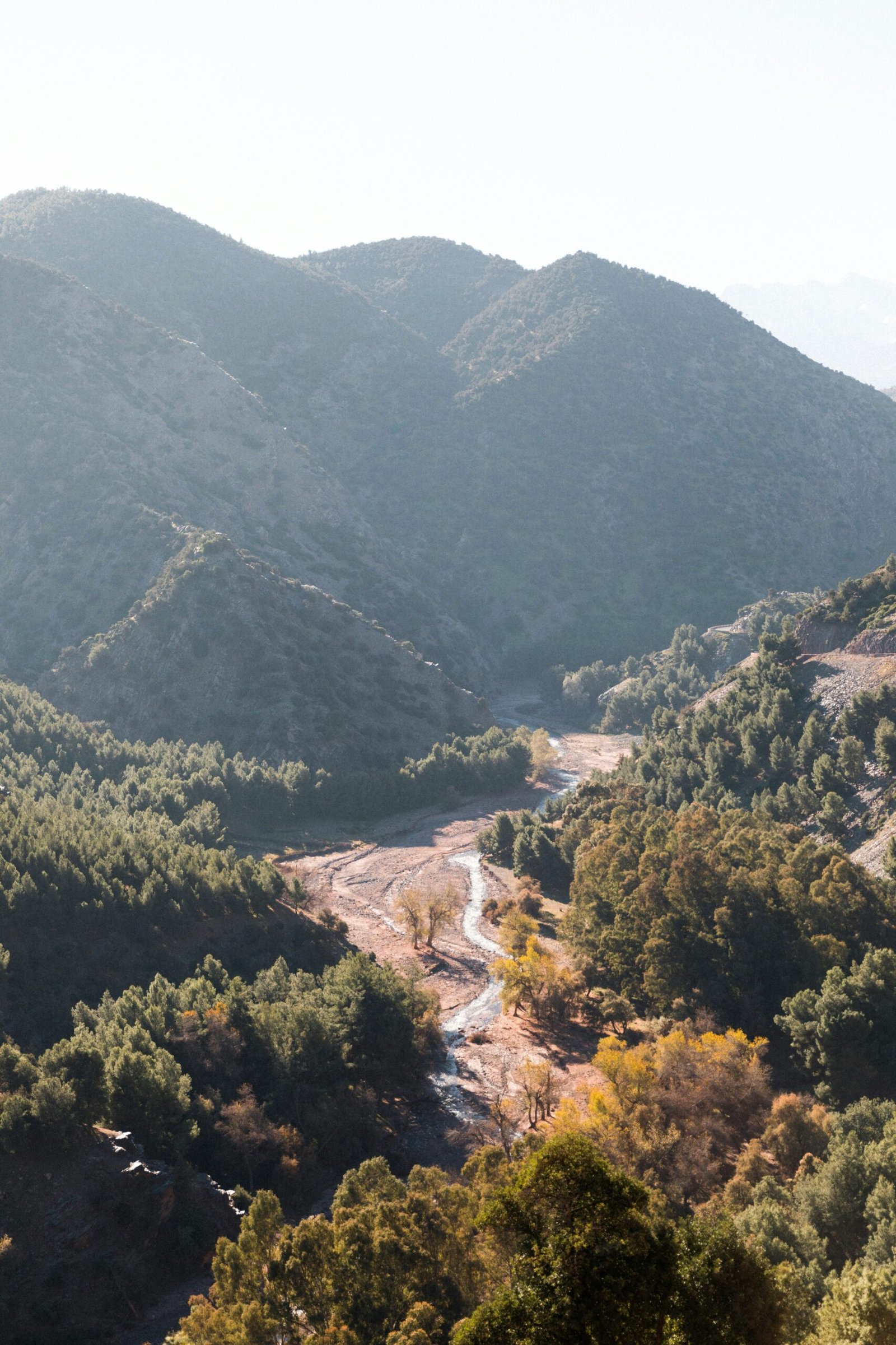
Ninety minutes south of Marrakech, the city ends and the mountains begin. The High Atlas rises to over four thousand metres — North Africa’s highest peaks, Berber villages unchanged for centuries, valleys fed by snowmelt, and a silence so complete it takes a day or two to stop waiting for it to be interrupted.
This is the Morocco most visitors never reach. For yoga, it might be the best place in the country.


The Atlas is not one range but three, each with a distinct character and a different retreat experience. Knowing which part you are going to matters.
The High Atlas — Drama and altitude The High Atlas is what most people picture: Jbel Toubkal (4,167m, the highest peak in North Africa), the villages of Imlil and Aroumd at its base, the Azzaden and Ourika valleys, and the dramatic gorges of the Todra and Dadès further east. This is the Atlas of serious hiking, mountain passes, and genuine altitude. Retreat centres here tend to be more remote, more rustic, and more physically demanding — in the best sense. Imlil, just 60km south of Marrakech, is the most accessible entry point and has the highest concentration of retreat infrastructure. Kasbahs here sit at 1,700–2,000m, high enough that the air feels noticeably thinner and cooler from the moment you arrive.
The Ourika Valley — Lush and accessible Thirty minutes south of Marrakech, the Ourika Valley runs along a river that stays green year-round. Terraced fields, waterfalls at Setti Fatma, and a string of restaurants serving freshly caught trout make it a popular day trip from the city. Retreats in the Ourika tend to be more comfortable and accessible than those higher up — set in renovated kasbahs and guesthouses along the valley floor, with easier road access and more reliable electricity. Less dramatic than Imlil, more lush and gentle. The right choice for those who want mountain atmosphere without the commitment of high altitude.
The Anti-Atlas — Austere and empty South of the High Atlas, the Anti-Atlas is a different landscape entirely — lower, drier, more lunar, and far less visited. Ochre and red rock, argan forests, Berber villages that see almost no foreign visitors, and a silence that makes the High Atlas seem busy by comparison. Retreats here are rare and genuinely remote. For those wanting total disconnection and a Morocco that feels completely unfiltered, this is where to look.
The Middle Atlas — Forests and lakes North of Marrakech, the Middle Atlas is Morocco’s least known range — cedar forests where Barbary macaque monkeys live wild, mountain lakes, and high plateau landscapes. Ifrane, sometimes called “the Switzerland of Morocco” for its incongruous Alpine architecture, is the main town. Retreat infrastructure here is limited but growing, and the landscape offers a completely different quality from the dramatic south — greener, cooler, with more European flavour.
For a complete picture of all Morocco’s retreat destinations — coast, desert, and city — our Morocco yoga retreats guide covers everything in one place.
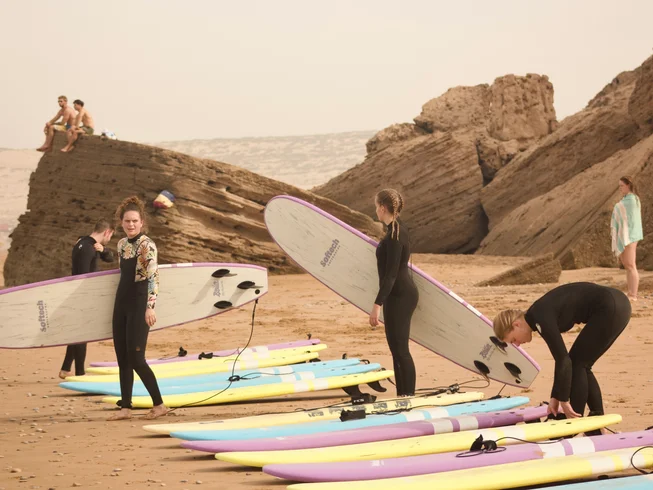
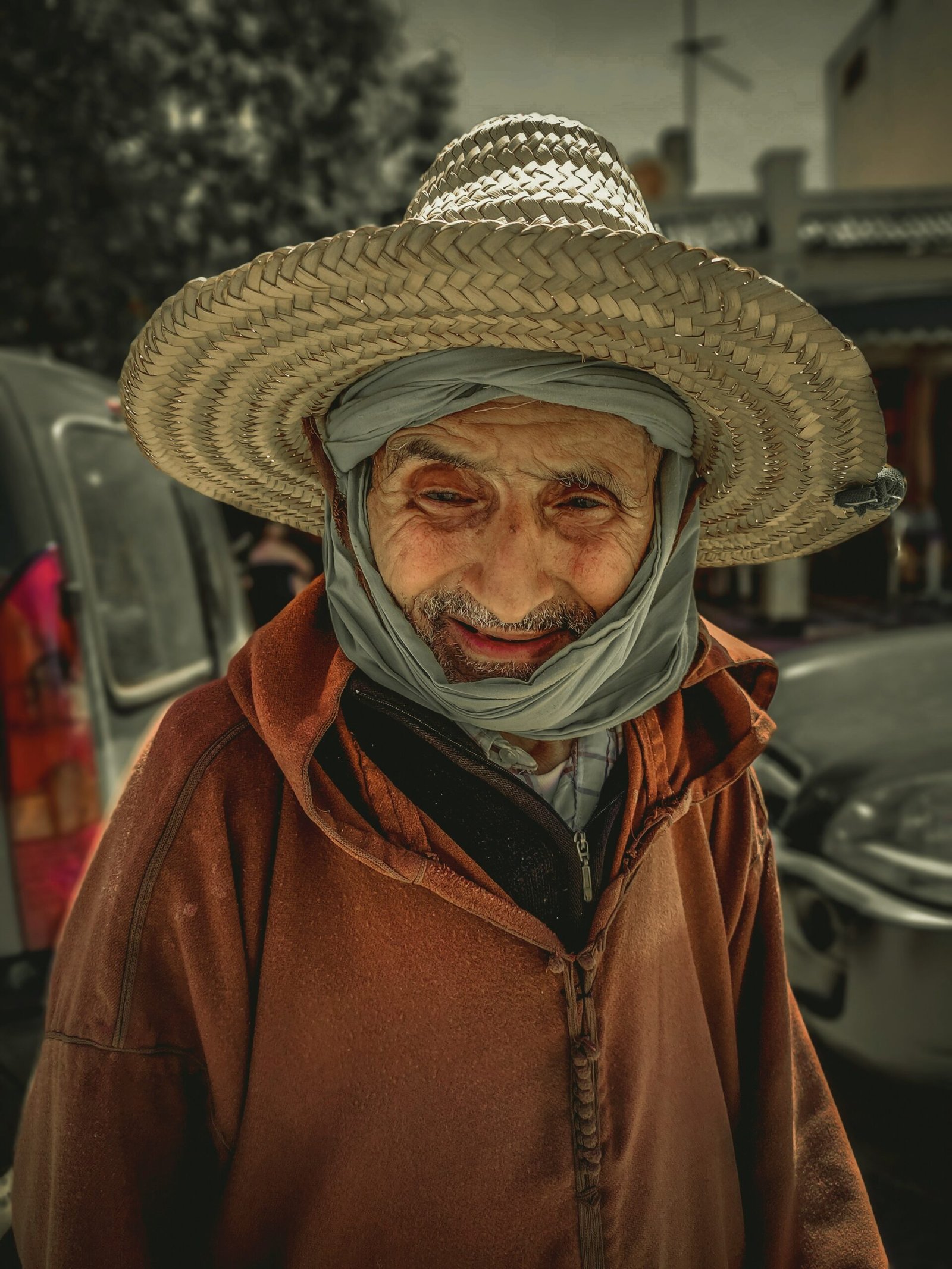
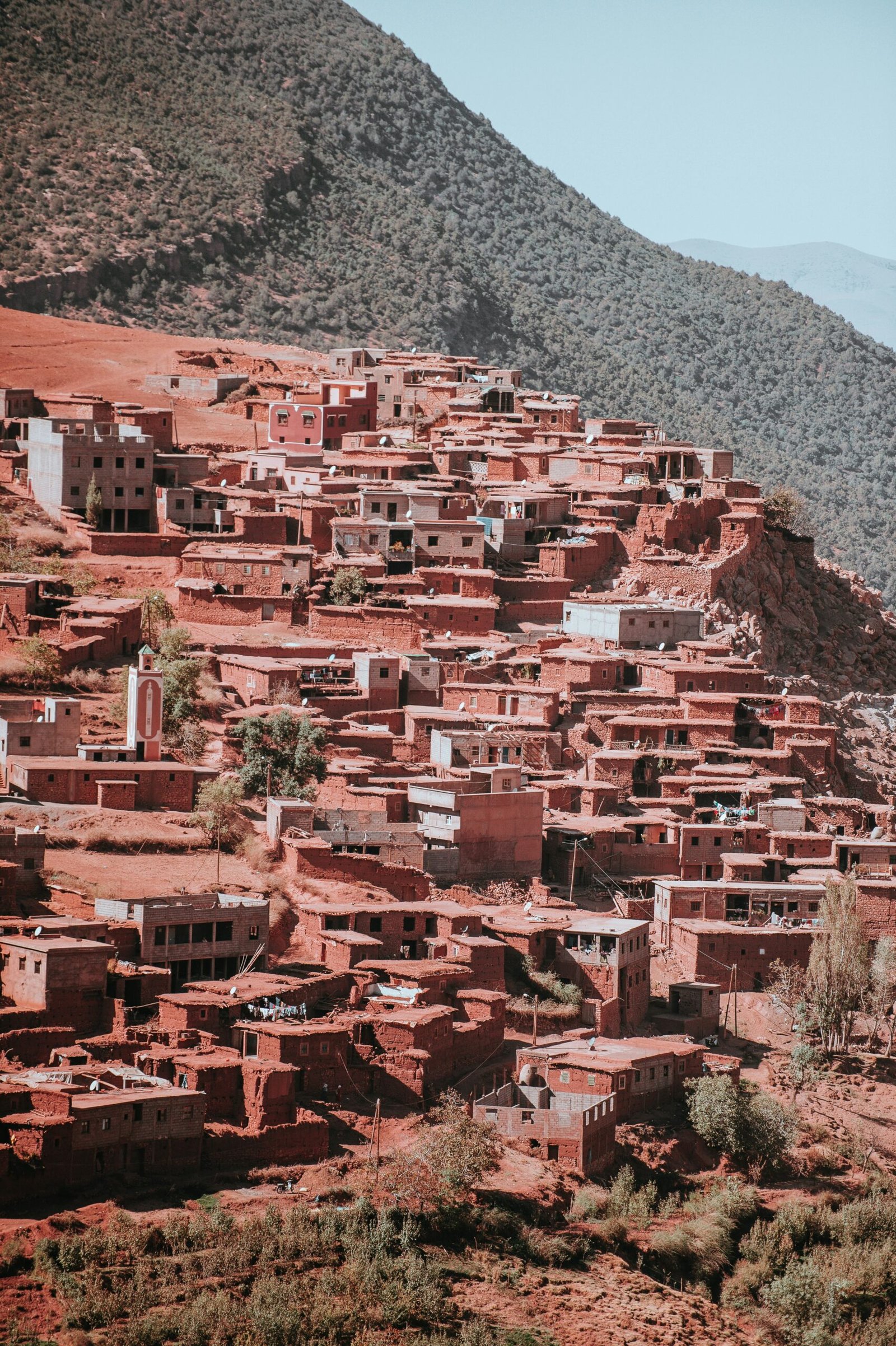
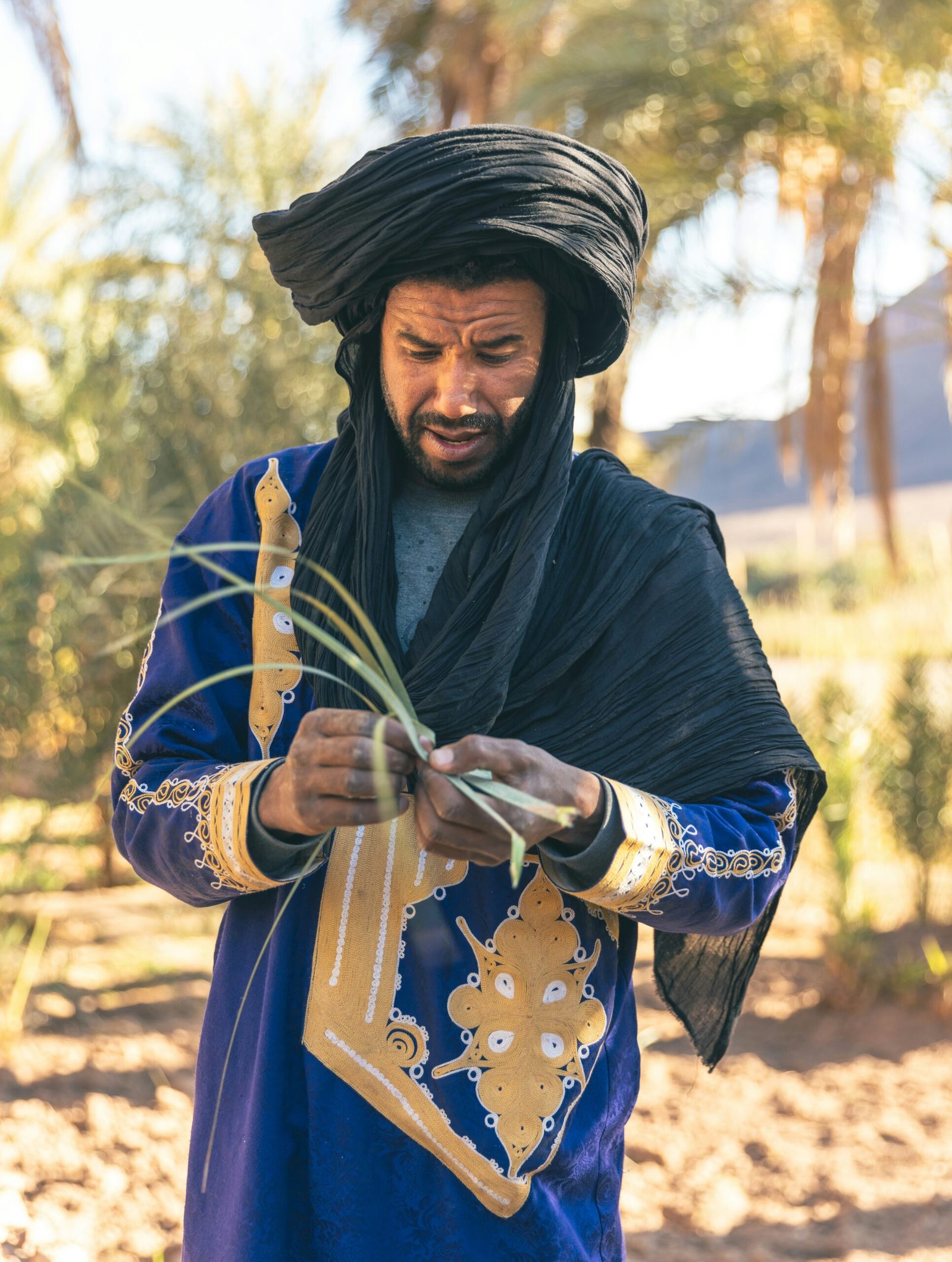
The Atlas Mountains are Berber territory — the indigenous North African people who inhabited these mountains long before Arabs arrived. Berber culture emphasises hospitality, simplicity, and deep connection to land. Many mountain retreats are family-run operations where your hosts are local Berbers who have lived in these valleys for generations, who know every trail and plant, and who extend the kind of genuine welcome that transcends language barriers.
Daily life in mountain retreats often includes participation in local rhythms — helping bake bread in outdoor ovens, learning about medicinal herbs that grow wild on hillsides, sharing mint tea with neighbours who drop by, understanding how communities function when self-sufficiency is not lifestyle choice but necessity. This immersion in traditional life provides context that makes yoga practice feel less like imported wellness trend and more like part of humanity’s long search for balance and meaning.
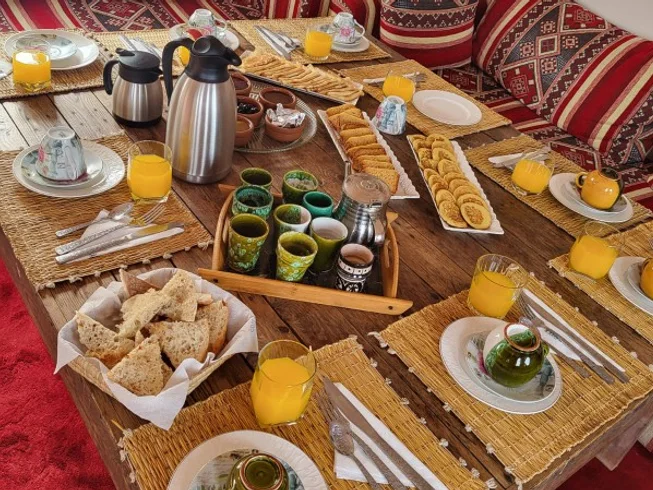
Atlas Mountain food is the food of subsistence and hospitality — straightforward, seasonal, and genuinely good. What distinguishes it from city Moroccan cooking is the proximity to the source: most of what arrives on the table came from the garden, the orchard, or the river within the last 24 hours.
Tagine over wood fire takes on a different quality in the mountains than in city restaurants. Slow-cooked in clay pots over charcoal or wood, with whatever is seasonal and local: lamb with prunes and almonds, chicken with preserved lemon and olives, or a vegetable version with whatever the garden is producing. The long cooking time and wood smoke create a depth that gas burners cannot match. This is the dish that makes you understand why Moroccan cuisine is considered one of the great culinary traditions.
Berber omelette (Tagine Bayd) is a mountain breakfast staple — eggs cooked directly in the tagine pot with tomatoes, onions, green peppers, and cumin. Served with fresh bread baked in an outdoor oven and a dish of local olive oil. Simple, filling, and exactly right after a cold mountain morning on the mat.
Harira appears at every meal and as the fast-breaking soup during Ramadan — thick with chickpeas, lentils, tomatoes, and lamb, scented with cinnamon and coriander. In mountain guesthouses it tends to be more robust than city versions, made with the confidence of people who eat it every day.
Mountain honey from hives kept in almond and wildflower terrain has a complexity that lowland honey lacks. It appears on breakfast tables drizzled over msemen (flaky griddle bread) or amlou — a paste of ground almonds, argan oil, and honey that is one of Morocco’s great simple pleasures and almost impossible to find outside the mountain regions where it is made.
Walnuts and almonds grow in valley orchards throughout the High Atlas. During autumn retreats, you may walk past trees being harvested by families with long poles. The nuts appear at every table, cracked and fresh, with a sweetness that packaged versions never replicate.
Trout from the cold mountain rivers appears on menus throughout the Ourika Valley and wherever rivers run clear and fast. Simply grilled with chermoula — a marinade of coriander, parsley, garlic, cumin, paprika, and lemon — it is some of the best fish eating in Morocco, and a surprise to those who associate the country only with tagine.
Mint tea takes on ritual significance in mountain guesthouses. The three glasses that tradition demands — the first bitter as life, the second strong as love, the third sweet as death — poured from a height to create foam, served at every visit and every meeting. In the mountains, where visits from neighbours are genuine social events and hospitality is a matter of honour, the tea ceremony is never rushed.
The Atlas Mountains offer extraordinary hiking — from gentle valley walks suitable for anyone to challenging summit attempts requiring fitness and acclimatisation. Most retreats incorporate guided hikes as essential practice rather than optional recreation, understanding that moving through mountain landscapes at walking pace creates conditions for meditation that seated practice sometimes cannot.
A typical mountain hike might involve four to six hours of walking through varied terrain — following irrigation channels through villages, climbing switchbacks to ridges with panoramic views, descending into valleys where rivers run cold and clear, stopping for lunch under walnut trees while your guide prepares mint tea on a portable stove. The rhythm of footsteps, the need to watch footing on rocky trails, the views that keep revealing themselves around each bend — these naturally quiet the mental chatter and create the absorption that meditation seeks.
Local guides — often young Berber men who know these mountains intimately — share knowledge about plants, point out distant villages, tell stories about the land’s history and mythology. Their ease in terrain that challenges visitors, their generosity in slowing pace to accommodate different fitness levels, and their genuine pride in sharing their home creates connections that enrich the retreat experience beyond the physical landscapes.
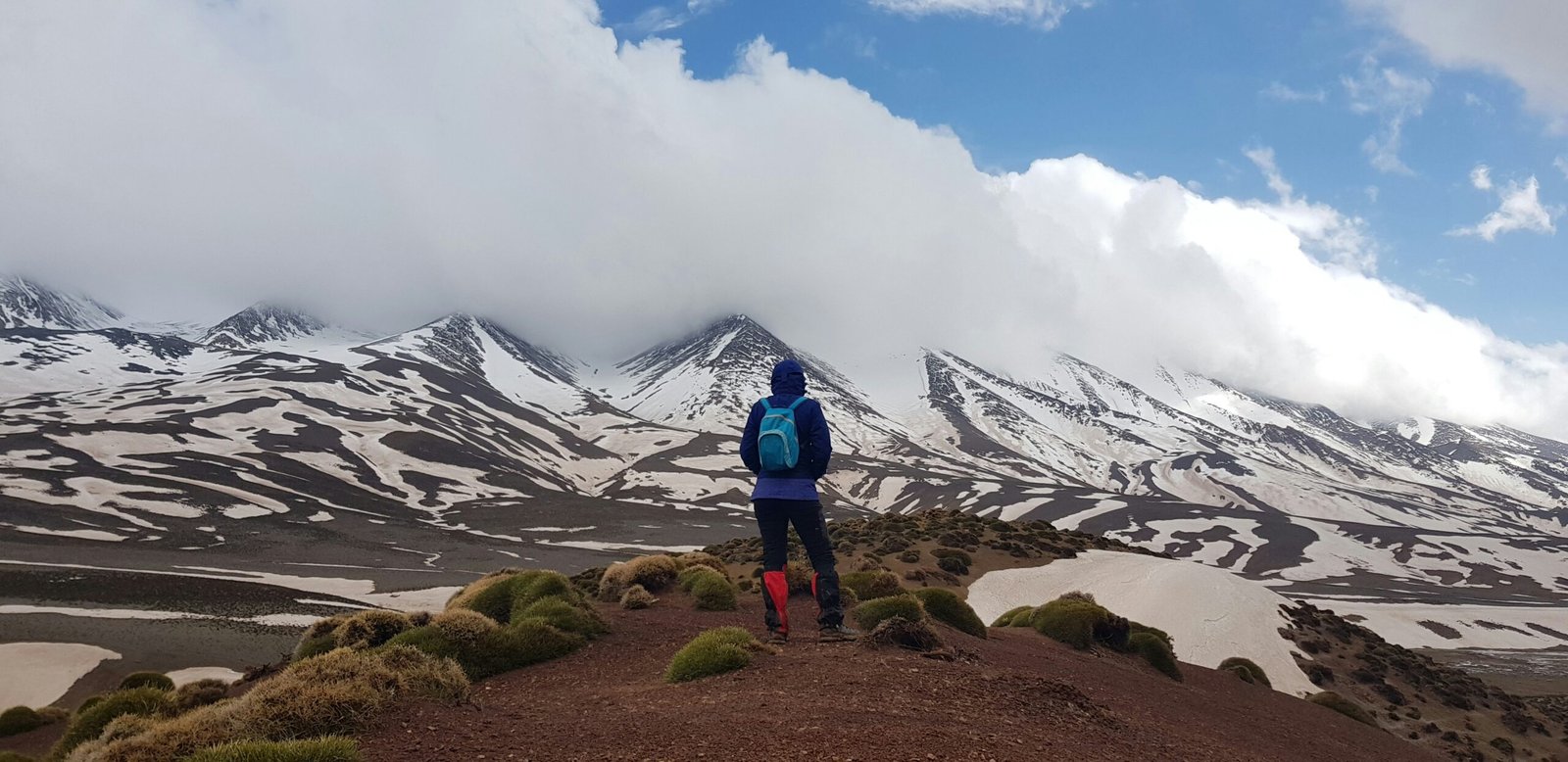
Climbing Jbel Toubkal: North Africa’s highest peak (4,167m) is a non-technical climb that requires two days and reasonable fitness rather than mountaineering experience. The standard route goes through Imlil to the Toubkal Refuge at 3,207m (where you sleep), then a pre-dawn summit push to catch sunrise over the Atlas and — on clear days — the distant Sahara. It is one of the more remarkable experiences available within two hours of a major international airport.
Berber Village Visits: Most retreats incorporate guided walks through local villages — not staged cultural performances but genuinely functional communities where the 21st century has arrived unevenly. Children doing homework in a one-room school. Women carrying water from a communal tap. Men repairing irrigation channels that have served the same terraces for centuries. Your guide provides the context that makes these encounters meaningful rather than intrusive.
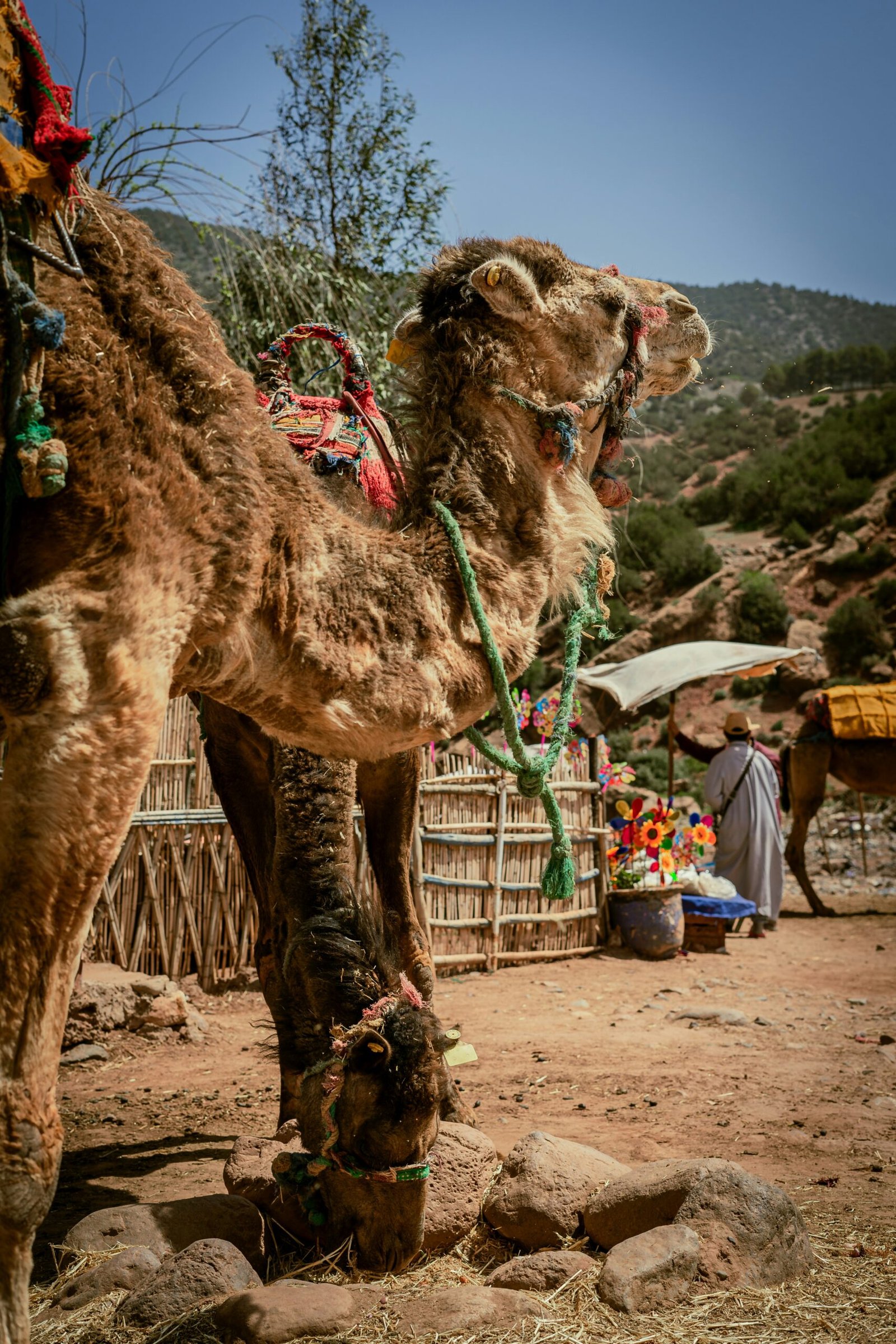
Mule Trekking: For those who want mountain access without the physical demand of serious hiking, mule trekking through the Atlas valleys follows river valleys and ancient trading routes between villages, covers terrain inaccessible by road, and moves at exactly the right pace for paying attention to the landscape. Historically accurate — mules have been the primary means of transport in these mountains for millennia.
Fossil Hunting: The Anti-Atlas and pre-Saharan regions south of the High Atlas sit on some of the world’s richest Devonian fossil deposits — trilobites, orthoceras, ammonites — embedded in black limestone that local artisans cut and polish. Guided fossil-hunting walks in the right geological zones turn up specimens 350–500 million years old, which does something useful to one’s sense of proportion.
Stargazing: Mountain elevation, absence of light pollution, and the clarity of Moroccan air combine to produce night skies of extraordinary quality. The Milky Way is visible to the naked eye with a clarity that most urban visitors have never seen. Many retreat centres provide blankets and an informal astronomy guide. Schedule at least one evening specifically for sitting outside after dark.
Hammam in a Mountain Village: Village hammams in the Atlas operate on a schedule — women’s hours and men’s hours. The experience is not the luxury spa version of Marrakech but the genuine communal bathing tradition: hot room, kessa scrub with black soap, cold rinse, rest. It costs almost nothing, requires no Arabic, and is one of the most direct encounters with daily Berber life available to a visitor.
Day Trip to Ouarzazate and the Kasbah Circuit: South of the High Atlas, the road descends through the dramatic Tizi n’Tichka pass (2,260m) to Ouarzazate — the gateway to the Sahara and Morocco’s film production centre (Gladiator, Game of Thrones, Lawrence of Arabia were all shot here). The Kasbah Ait Benhaddou, a UNESCO World Heritage site, is one of the most photographed buildings in Africa. Worth a full day. If the desert draws you further, our yoga retreats in the Sahara guide covers what extending into the dunes looks like.
Setti Fatma Waterfalls: At the head of the Ourika Valley, seven waterfalls require a 45-minute climb from the village. Past the inevitable vendors and into actual wilderness, the reward is cold water, deep shade, and the satisfaction of having earned a view. Most impressive in spring when snowmelt keeps them full.
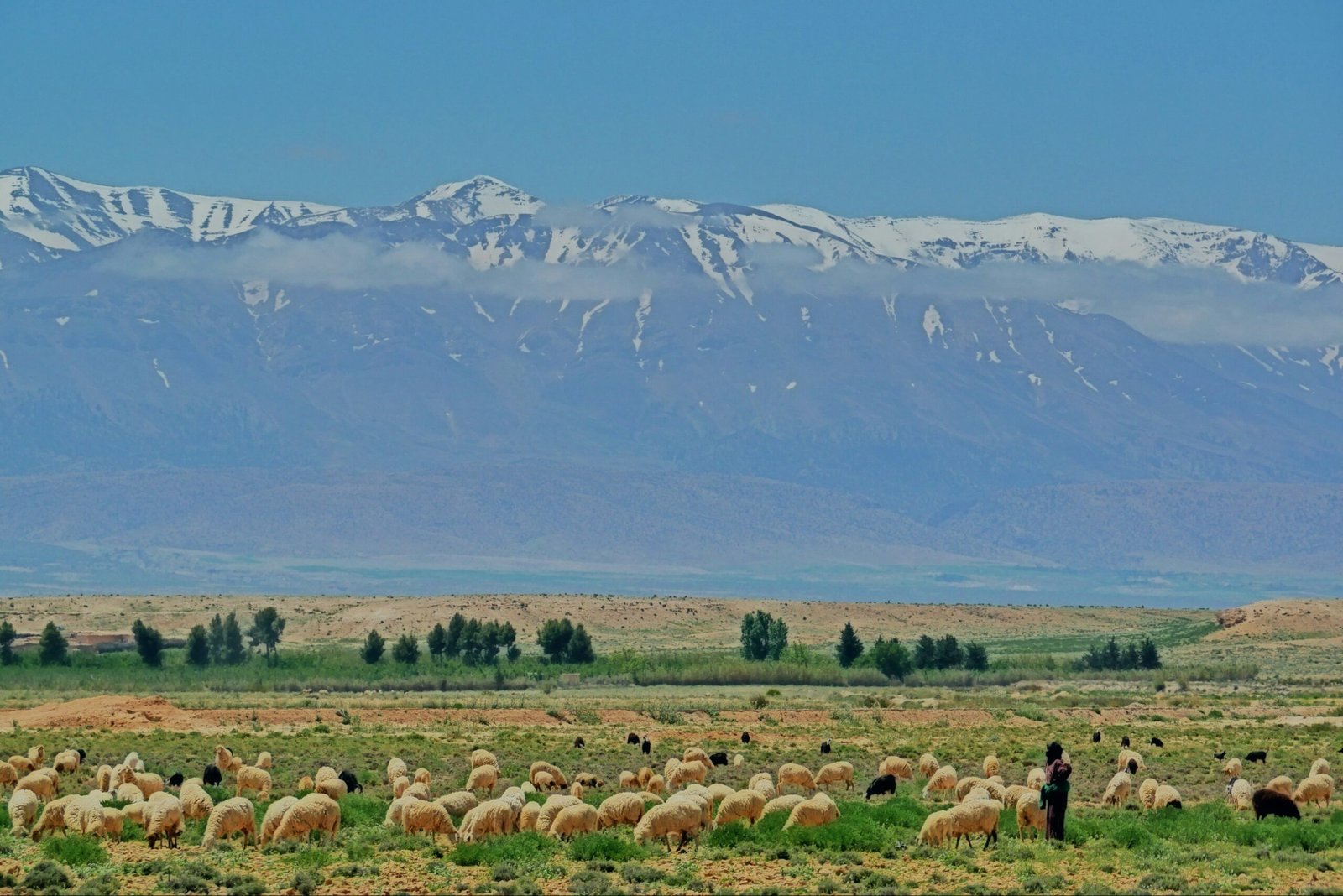
The Atlas Mountains show dramatically different faces across seasons, each with distinct appeal and challenges.
Spring (March to May) brings snowmelt feeding the valleys, wildflowers carpeting hillsides, and weather that alternates between warm sunny days and cool nights. The mountains are at their greenest, trails are accessible, and the contrast between snow-capped peaks and flowering valleys creates stunning visual drama. April is the peak of spring beauty — roses blooming in the Dadès Valley, almond trees already past blossom, and a quality of light that photographers chase specifically.
Summer (June to August) offers the most stable weather and warmest temperatures, making it ideal for those wanting guaranteed sunshine. Lowland heat drives Moroccans to mountain escapes, meaning popular areas see more visitors than other seasons. The higher elevations provide genuine relief — daytime temperatures rarely exceed 25°C even in July and August at altitude, while Marrakech below bakes at 38–42°C. The highest trails are at their most accessible and the rivers at their lowest and clearest.
Autumn (September to November) brings harvest season — walnuts being collected, last vegetables picked before winter, a sense of preparation and completion. The light takes on a golden quality, lower in the sky and warmer in tone. There is often a window of perfect weather in September and October before winter arrives. This is arguably the best time for mountain retreats: comfortable temperatures, autumn colours on the valley trees, fewer visitors than spring, and the particular energy of harvest time in communities that still live by agricultural rhythms.
Winter (December to February) transforms the Atlas into a different world — snow covering peaks and often reaching into valleys, cold that is genuine rather than merely cool, and the challenge of accessing remote areas. Some retreat centres close entirely; others remain open for those seeking solitude and dramatic winter beauty. Snow-season retreats appeal to those wanting intensive indoor practice, the cosiness of fires and thick blankets, and mountain landscapes in their most austere and powerful state. If choosing a winter retreat, confirm that your centre is properly equipped and open before booking.
Atlas Mountain retreat accommodation is specific to the landscape and the culture in a way that city riads are not — and the range is wider than most visitors expect.
Converted kasbahs are the most distinctive option. A kasbah is a fortified earthen structure — thick walls, small windows, flat roofs, internal courtyards — designed to regulate temperature in a climate of extremes. Many have been carefully renovated into retreat centres and guesthouses while maintaining their architectural integrity. Inside, you find whitewashed walls, carved cedar wood ceilings, kilim rugs, and the particular coolness that metre-thick earthen walls provide in summer and the warmth they hold in winter. These are not luxury hotels — bathrooms may be basic, hot water solar-powered and therefore unreliable on cloudy days — but they are genuinely rooted in place in a way that purpose-built properties rarely achieve.
Traditional guesthouses (dar and auberge) run by local Berber families offer the most authentic experience — and often the best food, cooked by women who learned from their mothers and grandmothers in this specific valley. Rooms are simple: good mattresses, warm blankets, shared bathrooms in smaller properties. The warmth of the welcome compensates for whatever modern conveniences are missing.
Purpose-built eco-lodges are more recent and more comfortable — designed for retreat use from the ground up, with proper yoga studios, reliable hot water, good mattresses, and often some form of spa or hammam facility. These sit at higher price points but deliver reliability that converted kasbahs sometimes cannot. The better ones are architecturally sensitive — using local stone and earth construction, integrating into the landscape rather than sitting on top of it.
Luxury mountain lodges exist but are rare — the Atlas does not have the luxury infrastructure of Marrakech. What you find is thoughtful, unpretentious comfort: excellent food, beautiful design using local materials, attentive hosting — without the spa brochure excess of a resort. Kasbah du Toubkal near Imlil is the most celebrated example: a converted kasbah at 1,800m, with Toubkal views, exceptional Berber hospitality, and standards that belie its remote location.
The consistent variable across all categories is electricity and connectivity. Solar power means that charging devices and running hot water depend on sunlight. Generator backup covers cloudy days at better properties. Mobile signal is unreliable above certain elevations. Factor this in — or embrace it as part of the point.
From Marrakech by road: Most retreat centres arrange transfers from Marrakech, typically 90 minutes to 3 hours depending on the specific location. Many pick up from the airport. The Tizi n’Test and Tizi n’Tichka passes offer dramatic driving if you are going further south.
Independently: Grand taxis from Marrakech’s Bab Rob station serve Asni (gateway to Imlil), Ourika Valley destinations, and other mountain towns. Renting a car gives the most flexibility. The road to Imlil is paved and manageable in any car; tracks to more remote locations may require a 4×4 or the willingness to travel the last section by mule.
Flying in: Marrakech Menara Airport (RAK) is the entry point for virtually all international visitors — direct flights from London (3.5hrs), Paris (2.5hrs), Amsterdam, Madrid, and most major European cities. Budget carriers including Ryanair, easyJet, and Transavia serve the route alongside Royal Air Maroc. From the airport to the mountains, you are two to three hours.
Do I need to be fit for a yoga retreat in the Atlas Mountains? It depends on the retreat. Many mountain programmes are appropriate for any fitness level — the yoga itself is not mountain-specific, and most retreats offer hiking as optional rather than mandatory. If you want to reach high elevations (above 3,000m), reasonable cardiovascular fitness matters. Check what level of physical activity is expected versus optional before booking.
Is altitude a concern? Most retreat centres sit between 1,200m and 2,000m — high enough to feel the difference from sea level (slightly less oxygen, stronger UV, cooler temperatures) but not high enough to cause altitude sickness in healthy adults. Those planning to climb Toubkal (4,167m) should allow a day or two of acclimatisation at lower elevation first.
How remote are Atlas Mountain retreats? This varies enormously. Some are accessible via paved road in 90 minutes with mobile signal and reliable electricity. Others require a 4×4 on unpaved tracks, have no signal, and use solar power only. The degree of remoteness is usually clearly stated and is a major part of what distinguishes one programme from another. Decide how remote you actually want to be before booking.
What should I pack for a mountain retreat? Layers are essential — mountain temperatures drop significantly at night even in summer. Bring a warm fleece or down jacket, thermal base layers, a waterproof outer layer, good walking boots with ankle support, and high-factor sunscreen (UV is stronger at altitude). A headtorch is useful. Bring any medications you might need — pharmacies are not accessible from remote locations.
Can I visit the Atlas Mountains as a day trip from Marrakech? Yes — the Ourika Valley and lower Atlas villages are within 90 minutes of the city. But a day trip only scratches the surface. The mountains require time. The quality of silence, the adjustment to altitude and pace, the relationships that form with local hosts — none of these happen in a day. If your schedule only allows a day trip, go — but consider it an introduction rather than the experience itself.
Your email address will not be published. Required fields are marked *